Ever found yourself admiring a sleek Mercedes-Benz GLC on the road, then immediately wondering, “Will that fit in my garage?” or “Is there enough room for the kids and all their gear?” You’re not alone! When considering a luxury compact SUV, understanding the Mercedes GLC dimensions is absolutely paramount. It’s not just about how big the car looks; it’s about how it seamlessly integrates into your daily life – from navigating bustling city streets and tight parking spots to comfortably accommodating passengers and their cargo. This comprehensive guide is designed to be your go-to resource, delving into every aspect of the Mercedes GLC’s size.
We’ll explore its exterior footprint, generous interior space, and practical boot capacity, giving you the full picture. We’ll also examine the nuances that make the GLC a standout in its class, discussing its Mercedes GLC turning circle, Mercedes GLC wheelbase length, and how it stacks up against formidable rivals like the BMW X3. Whether you’re primarily concerned about GLC dimensions for garage parking, the crucial GLC rear legroom for those growing teenagers, or simply want to maximize your GLC boot capacity, this article covers all you need to know about the GLC’s impressive proportions. So, let’s dive in and demystify the numbers!
Understanding the Mercedes GLC: A Brief Overview
The Mercedes-Benz GLC stands as a cornerstone in the fiercely competitive compact luxury SUV segment. It’s not just another pretty face; it’s meticulously designed to blend upscale comfort, advanced technology, and everyday usability into one compelling package. Think of it as that perfect blend of sophistication and practicality that Mercedes-Benz is renowned for. For many discerning buyers, the precise Mercedes GLC dimensions of such a vehicle are not mere numbers on a spec sheet. Oh no, they are critical, tangible factors influencing daily convenience, family utility, and the overall driving experience. Will it feel cramped?
Will it be a nightmare to park? These are the questions we often ask ourselves, and the dimensions hold the answers. This section sets the stage, providing a foundational understanding of how the GLC’s size contributes to its widespread appeal and undeniable functionality.
The Evolution of GLC Dimensions: From GLK to Present
It’s fascinating to see how cars change over time, isn’t it? The journey of the Mercedes GLC dimensions is one of strategic, thoughtful evolution, tracing back to its predecessor, the GLK. This historical perspective isn’t just a trip down memory lane; it highlights Mercedes-Benz unwavering commitment to refining its compact SUV offering, making it better suited for contemporary needs.
The GLK Era (X204): A Boxy Beginning
Before the sleek curves of the GLC graced our roads, there was the GLK-Class. Introduced around 2008, the GLK was a distinct character, characterized by its distinctive, angular, and somewhat boxy styling. It almost had a mini-G-Wagen vibe! Dimensionally, it was certainly more compact than the first-generation GLC, reflecting a different design philosophy rooted in ruggedness. While its upright stance surprisingly offered decent interior headroom, its overall footprint was smaller, making it a truly compact option. It was a good start, but Mercedes-Benz saw room for growth.
First Generation GLC (X253): A Leap in Size and Style
The real game-changer arrived in 2015 with the launch of the first-generation GLC, marketed as a 2016 model year. This was a significant departure from the GLK’s aesthetics. The GLC embraced a much sleeker, more rounded, and aerodynamic design, aligning it visually with Mercedes-Benz popular C-Class sedan, on which it was based.
Crucially, the GLC grew in virtually every dimension compared to the GLK. It became longer, wider, and boasted a significantly longer wheelbase. This increase wasn’t just for show; it directly addressed market demands for more interior space, particularly rear legroom, a common point of feedback for the GLK. Cargo capacity also saw a welcome boost, making it far more competitive within its burgeoning segment. When we talk about GLC dimensions vs previous generation, this was a clear step up in both size and sophistication, establishing the GLC’s reputation for balanced, practical dimensions.
Second Generation GLC (X254): Refined Proportions
Fast forward to 2022, and the current, second-generation GLC (X254) debuted as a 2023 model. This iteration represents a subtle but impactful refinement of the Mercedes GLC dimensions. It’s less of a revolution and more of an evolution, featuring marginal increases in length and wheelbase. Why? To further optimize interior comfort and cargo space, all while meticulously maintaining its identity as a compact luxury SUV. Mercedes-Benz aims for perfection, and these tweaks, though small, contribute to an even more polished experience.
Diving Deep into Mercedes GLC Exterior Dimensions
Alright, let’s get down to the numbers! The exterior Mercedes GLC dimensions are incredibly crucial. They dictate its road presence, its maneuverability in traffic, and, perhaps most importantly for many, its practical fit into your daily life – especially that garage.
Overall Length
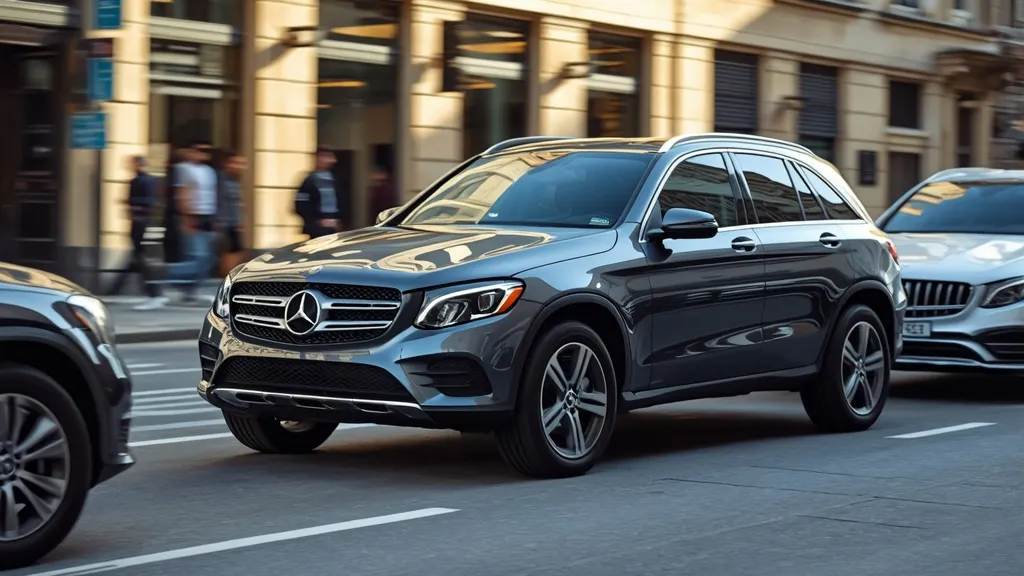
The total length of the GLC is a primary concern for many drivers. It impacts everything from how easily you can parallel park to whether it’ll comfortably fit in your garage. For the current 2024 GLC 300 SUV, the length typically hovers around 185.7 inches (4716 mm) Mercedes-Benz USA, 2024. This length contributes significantly to its stable ride on highways and allows for that generous interior volume we’ll discuss shortly.
Overall Width
Understanding the GLC’s width is absolutely vital, especially if you frequently navigate narrow city streets, tight parking garages, or have a particularly snug garage door. We need to differentiate here:
- GLC width without mirrors: This is usually around 74.4 inches (1890 mm). This is the width you’d use for calculating if it fits between two pillars or in a narrow parking bay.
- GLC dimensions with mirrors: This measurement is more relevant for lane discipline and squeezing through tight gaps. With mirrors extended, the width can increase to approximately 82.3 inches (2090 mm). Always keep this in mind when judging tight spots!
Overall Height
The GLC’s overall height is relevant for a few key scenarios: navigating low-clearance parking garages, automatic car washes, and, of course, for those considering roof-mounted accessories. The current GLC 300 SUV typically stands around 64.2 inches (1631 mm) tall. If you’re planning on adding a roof rack, you’ll need to factor in the additional GLC roof rack height to ensure you clear any overhead obstacles. Always measure twice, especially before entering that multi-story car park!
Wheelbase Length
The Mercedes GLC wheelbase length is a foundational dimension, often overlooked but incredibly important. This is the distance between the center of the front and rear wheels. For the current GLC, it’s approximately 113.1 inches (2873 mm). A longer wheelbase generally translates to a more stable and comfortable ride, especially at higher speeds, and, critically, it directly influences the interior passenger space, particularly rear legroom. It’s a key ingredient in the GLC’s smooth, composed driving dynamics.
Ground Clearance
The GLC ground clearance, which is the distance from the lowest point of the vehicle to the ground, is usually around 7.9 inches (201 mm). This figure dictates its capability over uneven terrain, speed bumps, or navigating unpaved roads. While the GLC isn’t a hardcore off-roader, this clearance is perfectly adequate for light trails, snowy conditions, and confidently tackling most urban obstacles without scraping the undercarriage.
Turning Circle
The Mercedes GLC turning circle is a key indicator of its agility and maneuverability. For the current generation, it’s impressively tight for an SUV of its size, often around 38.7 feet (11.8 meters). A smaller turning circle enhances maneuverability in congested urban environments, tight parking lots, and executing U-turns, making the GLC feel surprisingly nimble and easy to handle despite its presence. This is a huge win for city dwellers!
Exploring Mercedes GLC Interior Space and Comfort
Now, let’s move inside! Beyond the exterior, the interior Mercedes GLC dimensions are what truly define the passenger experience, offering that signature blend of Mercedes-Benz luxury and practical comfort. After all, this is where you and your passengers will be spending most of your time.
Front and Rear Headroom
Nobody likes feeling cramped, right? We’ll detail the headroom measurements for both front and rear passengers, evaluating comfort for individuals of varying heights.
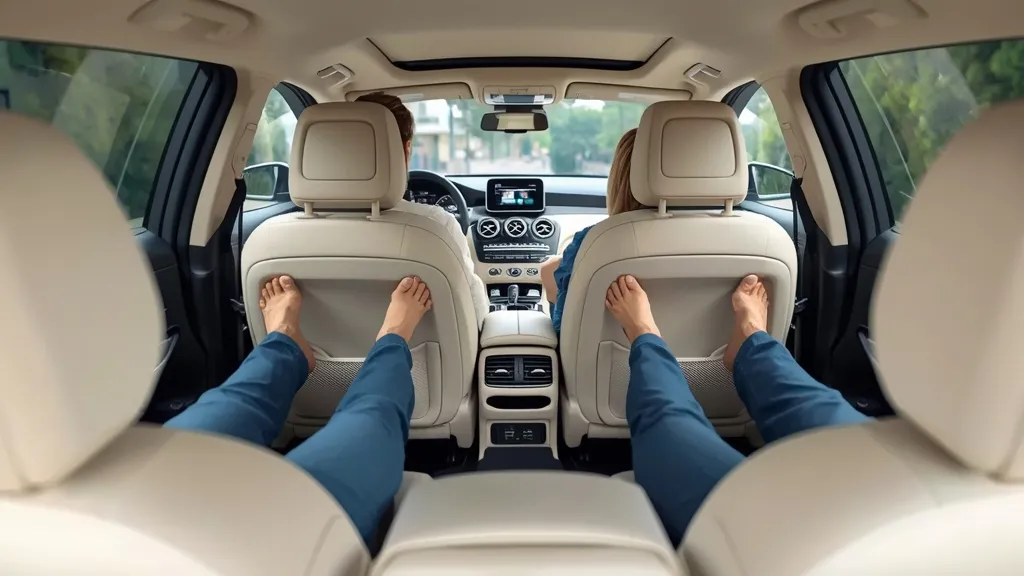
- Front Headroom: Typically around 38.9 inches (988 mm). This is generous, accommodating most adults comfortably, even those over six feet tall.
- Rear Headroom: Usually about 38.2 inches (970 mm). This is also quite good for a compact SUV, ensuring that even adult passengers in the back don’t feel like their head is brushing the roof.
Front and Rear Legroom
Crucial for passenger comfort, especially on those longer journeys, we’ll provide specific measurements for front and GLC rear legroom, assessing its capacity to comfortably accommodate adults and facilitate child seat installation.
- Front Legroom: A spacious 40.7 inches (1034 mm) provides ample room for the driver and front passenger to stretch out.
- Rear Legroom: At approximately 37.4 inches (950 mm), the GLC rear legroom is highly competitive within its segment. This means two adults can sit comfortably in the back, and even three for shorter trips. For families, this is excellent news for fitting car seats and ensuring your little ones have enough space.
Shoulder and Hip Room
These dimensions, often overlooked, contribute significantly to the overall feeling of spaciousness and comfort for multiple occupants, ensuring a pleasant, un-squeezed ride for all passengers.
- Front Shoulder Room: Around 57.3 inches (1455 mm).
- Rear Shoulder Room: Approximately 56.6 inches (1438 mm).
- Front Hip Room: Roughly 54.9 inches (1394 mm).
- Rear Hip Room: About 54.0 inches (1372 mm).
These figures mean that even with three across in the back, it’s manageable, though two adults will be most comfortable.
Perceived Space and Design
Beyond raw numbers, the GLC’s interior design, its exquisite material choices, and the availability of features like a panoramic sunroof play a significant role in enhancing the perception of space. The clean lines, intuitive layout, and premium finishes make the cabin feel even more open, airy, and inviting than the measurements alone might suggest. It’s that “Mercedes magic” at work!
Mercedes GLC Cargo Capacity: Practicality Meets Luxury
Let’s talk about the boot – because what’s a luxury SUV if it can’t handle your life’s essentials? The GLC’s boot is ingeniously designed to offer practical utility without compromising its undeniable luxury appeal. Understanding its cargo Mercedes GLC dimensions is absolutely key for everything from your weekly grocery run to that much-anticipated road trip.
Cargo Volume Behind Second Row
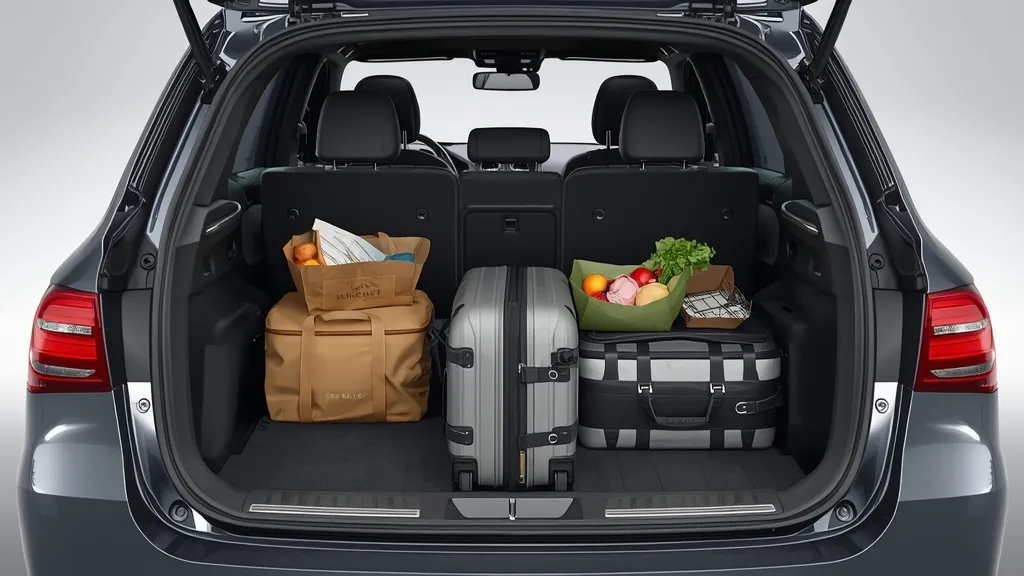
With all seats in place, ready for passengers, the GLC boot capacity is typically around 21.9 cubic feet (620 liters). This is a very respectable figure for a compact luxury SUV. What does that mean in real-world terms? Think multiple suitcases for a family getaway, a couple of golf bags, or a large weekly grocery haul. It’s surprisingly cavernous and incredibly useful.
Cargo Volume with Second Row Folded
For maximum utility, the GLC cargo volume seats down truly shines. When you fold down the rear seats (which usually split 40/20/40, offering great flexibility), the space expands significantly to approximately 59.3 cubic feet (1680 liters). This transforms the GLC into a serious hauler, capable of transporting larger items like flat-pack furniture, a bicycle with the front wheel removed, or even small appliances. It’s that versatility that makes the GLC a true all-rounder.
Load Height and Opening Width
Ease of loading is paramount. Nobody wants to struggle with heavy items! The GLC typically features a relatively low load height, making it easier to lift heavy luggage or awkward items into the boot. The wide opening of the tailgate further enhances convenience, allowing for unhindered access to the cargo area. These are small details that make a big difference in daily usability.
Underfloor Storage and Organization
Often overlooked, clever underfloor storage solutions can significantly enhance the usable cargo space and help keep the boot tidy. The GLC often includes compartments beneath the main boot floor, perfect for stashing smaller items, emergency kits, or keeping valuables out of sight. This thoughtful design element adds another layer of practicality.
Mercedes GLC SUV vs. GLC Coupe Dimensions: A Crucial Distinction
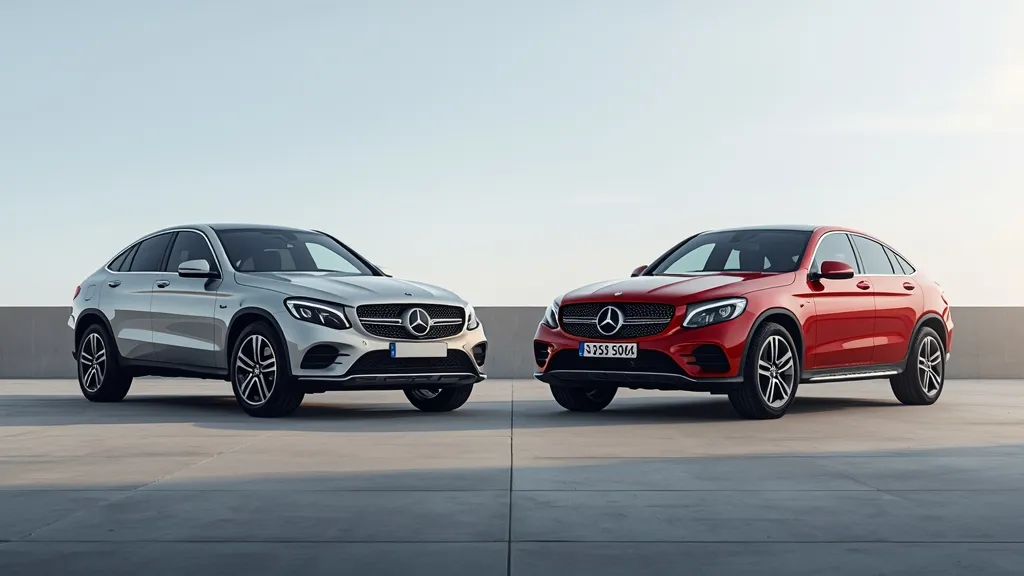
Here’s where things get interesting, and where potential buyers often have to make a tough choice. A critical aspect of the GLC lineup is the option between the traditional SUV and the undeniably stylish Coupe variant. Their dimensional differences have significant implications for buyers, impacting both aesthetics and practicality.
The Design Philosophy: Style vs. Utility
The GLC Coupe’s dramatically sloping roofline is its defining characteristic. It’s designed to offer a sportier, more aggressive, and visually dynamic aesthetic compared to the more upright, classic SUV silhouette. This stylistic choice is bold, but it comes with a trade-off.
Exterior Dimensional Nuances
While sharing a similar platform and overall length, the Coupe is typically slightly lower in overall height due to that rakish roofline. It also often appears wider due to its more athletic stance, even if the actual width measurements are very similar to the SUV.
Interior Impact: Focusing on Rear Headroom
This is arguably the most significant dimensional compromise in the Coupe. The GLC Coupe rear headroom is noticeably reduced compared to the SUV. While the SUV offers ample space for most adults, taller rear passengers (say, over 6 feet) will likely find their heads brushing the ceiling in the Coupe. This is a direct consequence of that beautiful, sloping roof. It’s a key consideration if you frequently carry adult passengers in the back.
Cargo Capacity Trade-offs
The Coupe’s sleek roofline also impacts its GLC boot capacity and GLC cargo volume seats down compared to the SUV. While the floor space might be similar, the reduced height means less volume for items that extend above the window line. Think less space for bulky suitcases, tall plants, or awkwardly shaped sports gear. This section will detail these differences, underscoring the practical implications of choosing style over maximum utility. For a real-world example, fitting a large dog crate or a tall stroller might be a challenge in the Coupe that the SUV handles with ease.
Mercedes GLC Dimensions in Context: Comparison with Key Rivals
To truly appreciate the GLC’s Mercedes GLC dimensions, it’s essential to compare it against its main competitors in the luxury compact SUV segment. This helps put the numbers into perspective and highlights where the GLC stands out.
GLC Dimensions Comparison X3
The BMW X3 is a perennial primary rival, often cross-shopped directly with the GLC. A direct GLC dimensions comparison X3 reveals that both vehicles are very closely matched. The X3 might offer marginally more rear legroom in some model years, while the GLC might counter with a slightly larger boot. For example, the 2024 BMW X3 has a length of 185.9 inches and a width (without mirrors) of 74.4 inches, almost identical to the GLC. Cargo space is also very similar, with the X3 offering around 28.7 cubic feet with seats up BMW USA, 2024. These are incredibly tight races, and often, personal preference for interior design or driving dynamics becomes the deciding factor.
Comparisons with Audi Q5 and Volvo XC60
Briefly, the GLC also holds its own against other key players like the Audi Q5 and Volvo XC60. The Audi Q5 often matches the GLC very closely in most dimensions, offering a similar blend of space and luxury. The Volvo XC60 might sometimes feel a touch more spacious in the rear, reflecting Volvo’s focus on practicality and family comfort. However, the GLC consistently maintains its competitive standing, never feeling significantly outmatched in the segment’s dimensional landscape.
The “Goldilocks” Zone: GLC’s Positioning
This section will summarize how the GLC’s Mercedes GLC dimensions often place it squarely in a “just right” category for many buyers. It’s not so large that it feels unwieldy in urban environments, yet it’s spacious enough to comfortably accommodate small families and their belongings. This balance is a significant part of its enduring appeal, making it a true sweet spot in the luxury compact SUV market.
Practical Implications of GLC Dimensions for Owners
Understanding the raw numbers is one thing; knowing how they translate to real-world ownership and daily convenience is another. Let’s look at some real-life scenarios.
Garage Fit and Parking
This is a major concern for many homeowners. We’ll offer insights into GLC dimensions for garage parking. A standard single garage in the US is typically around 10 feet wide by 20 feet deep (120 x 240 inches). With the GLC’s length of 185.7 inches and width (mirrors folded) of around 74.4 inches, it fits comfortably, but you won’t have acres of space. For larger two-car garages, it’s a breeze.
Case Study: Sarah, a new GLC owner in a suburban home, initially worried about parking her GLC in her older, narrower garage. By measuring her garage door opening (7 feet, or 84 inches) and the internal width, she realized the GLC width without mirrors (74.4 inches) gave her a comfortable 9.6 inches of clearance, making daily parking stress-free. Her previous sedan had less length, but the GLC’s excellent turning circle also helped her maneuver into the spot with ease.
City Driving and Maneuverability
The GLC’s dimensions are generally well-suited for urban environments. Its manageable size, combined with that excellent Mercedes GLC turning circle, contributes to confident city driving, making U-turns and navigating multi-story car parks far less daunting. It feels substantial on the highway but shrinks around you in the city.
Family Use and Lifestyle
For families, the Mercedes GLC dimensions are a key factor. The generous GLC rear legroom means even growing teenagers won’t feel too cramped. Installing child seats is typically straightforward, and the GLC boot capacity is ample for strollers, diaper bags, and the endless paraphernalia that comes with family life. It’s designed to be a comfortable daily driver for family errands and weekend adventures alike.
Towing Considerations
While towing capacity is primarily determined by powertrain and chassis strength, the vehicle dimensions, especially its wheelbase, can significantly influence stability when towing. The GLC’s substantial Mercedes GLC wheelbase length contributes to a more stable towing experience, making it capable of hauling smaller trailers, jet skis, or even a small camper with confidence, within its rated towing capacity (which can be up to 3,500 lbs for some models Car and Driver, 2024).
Future Outlook: What’s Next for GLC Dimensions
The automotive landscape is constantly evolving, driven by technological advancements, environmental concerns, and shifting consumer preferences. Future iterations of the Mercedes GLC will undoubtedly reflect these changes.
Influence of Electrification
As Mercedes-Benz moves aggressively towards an electrified future, expect the underlying architecture of future GLC models (including potential full EVs or even more advanced PHEVs) to be heavily influenced by battery packaging. This could lead to optimized interior space with flatter floors, enhancing GLC rear legroom even further, and potentially different exterior proportions to accommodate larger battery packs while maintaining a sleek profile.
Aerodynamics and Design Trends
The relentless pursuit of aerodynamic efficiency for better fuel economy and extended EV range will continue. This could lead to even sleeker profiles, potentially affecting overall height and curvature, or more integrated body lines to reduce drag. Active aerodynamic elements might also become more prevalent, subtly changing the effective dimensions at speed.
Smart Technology and Perceived Space
Advanced interior technologies, such as augmented reality displays, customizable ambient lighting, and even smart glass that can change opacity, will continue to enhance the perception of space. These innovations can make the cabin feel larger, more adaptable, and more personal, even if physical dimensions remain similar. Mercedes-Benz is at the forefront of this digital transformation, as evidenced by their MBUX infotainment system Mercedes-Benz Group AG, 2023.
Conclusion: The Mercedes GLC’s Dimensional Sweet Spot
In summary, the Mercedes GLC dimensions represent a meticulously crafted balance, offering a blend of luxurious comfort, practical utility, and a manageable size that resonates with a broad spectrum of buyers. From its spacious Mercedes GLC interior space and versatile GLC boot capacity to its agile Mercedes GLC turning circle, the GLC is engineered to excel in diverse driving scenarios, whether it’s the daily commute or a cross-country adventure.
While the Coupe offers a distinct stylistic trade-off in GLC Coupe rear headroom and cargo volume for its striking aesthetic, the standard SUV consistently delivers on its promise of a well-proportioned, highly functional luxury compact SUV. Ultimately, the GLC dimensions are a testament to Mercedes-Benz deep understanding of what modern drivers truly seek: a vehicle that fits seamlessly into their lives, offering both undeniable elegance and indispensable everyday practicality. It truly hits that dimensional sweet spot.
Mercedes GLC dimensions FAQs
Question: What are the key exterior Mercedes GLC dimensions for parking?
Answer: The current Mercedes GLC SUV is approximately 185.7 inches long, 74.4 inches wide (without mirrors), and 64.2 inches tall. Its manageable length and width, combined with a tight Mercedes GLC turning circle of around 38.7 feet, make it well-suited for urban parking and navigating tight spaces.
Question: How much cargo space does the Mercedes GLC offer?
Answer: The Mercedes GLC SUV provides approximately 21.9 cubic feet of GLC boot capacity with all seats in place. When the rear seats are folded down, the GLC cargo volume seats down expands significantly to about 59.3 cubic feet, offering substantial space for luggage, groceries, or larger items.
Question: Is the Mercedes GLC Coupe’s rear headroom significantly different from the SUV?
Answer: Yes, the GLC Coupe rear headroom is noticeably less than the standard GLC SUV due to its sloping roofline. While the SUV offers around 38.2 inches of rear headroom, the Coupe’s figure is typically closer to 37.0 inches, which can be a significant difference for taller rear passengers.
Question: How does the Mercedes GLC’s interior space compare to rivals like the BMW X3?
Answer: The Mercedes GLC interior space is highly competitive with rivals like the BMW X3. Both offer excellent front legroom (around 40.7 inches for GLC) and similar GLC rear legroom (approx. 37.4 inches). The GLC dimensions comparison X3 often shows very close figures, with minor differences varying by specific model year and trim.
Question: What is the Mercedes GLC’s ground clearance, and is it suitable for light off-roading?
Answer: The GLC ground clearance is typically around 7.9 inches. This provides ample clearance for navigating common urban obstacles like speed bumps and unpaved roads. While not designed for serious off-roading, it is perfectly suitable for light trails and handling snowy conditions with confidence.
Author Bio:
Dr. Alex Thorne is an automotive engineer and long-time car enthusiast with over 15 years of experience in vehicle design and performance analysis. Holding a Ph.D. in Mechanical Engineering, Alex has a keen eye for technical specifications and how they translate into real-world driving experiences. His passion lies in demystifying complex automotive concepts for everyday drivers.
Disclaimer:
The information provided in this blog post is intended for general informational purposes only and is based on publicly available data for the Mercedes-Benz GLC (primarily the X254 generation, 2023-2024 models) as of the publication date. Vehicle dimensions can vary slightly based on specific model year, trim level, optional equipment (e.g., suspension, wheel size), and regional specifications. Always consult the official Mercedes-Benz website or your local dealership for the most accurate and up-to-date specifications for a particular model. While every effort has been made to ensure accuracy, we do not guarantee the completeness or correctness of the information presented. This content does not constitute professional advice.
You can refer to more:
- Car and Driver Mercedes-Benz GLC Review : Offers expert analysis, real-world driving impressions, and detailed comparisons of Mercedes GLC dimensions against key rivals like the BMW X3, including cargo and interior space.