Choosing a luxury SUV like the Mercedes-Benz GLC involves more than just picking a color; it’s about selecting a heart for your vehicle, the very soul that defines its character. The diverse range of Mercedes GLC engine options has been a defining feature for years, offering everything from an efficient daily driver to a track-capable monster. Are you trying to understand this evolution to make an informed decision, whether you’re buying new or used?
This guide provides a comprehensive Mercedes GLC AMG engine comparison, breaks down the Mercedes GLC 300 engine specs, and explores the significant shift from the beloved previous generation GLC engine lineup to the advanced powertrains in the 2025 Mercedes GLC engine offerings. Let’s delve into the technology, performance, and philosophies behind each engine to help you find the perfect match for your driving style.
The Evolution of Power: A Tale of Two GLC Generations (X253 vs. X254)
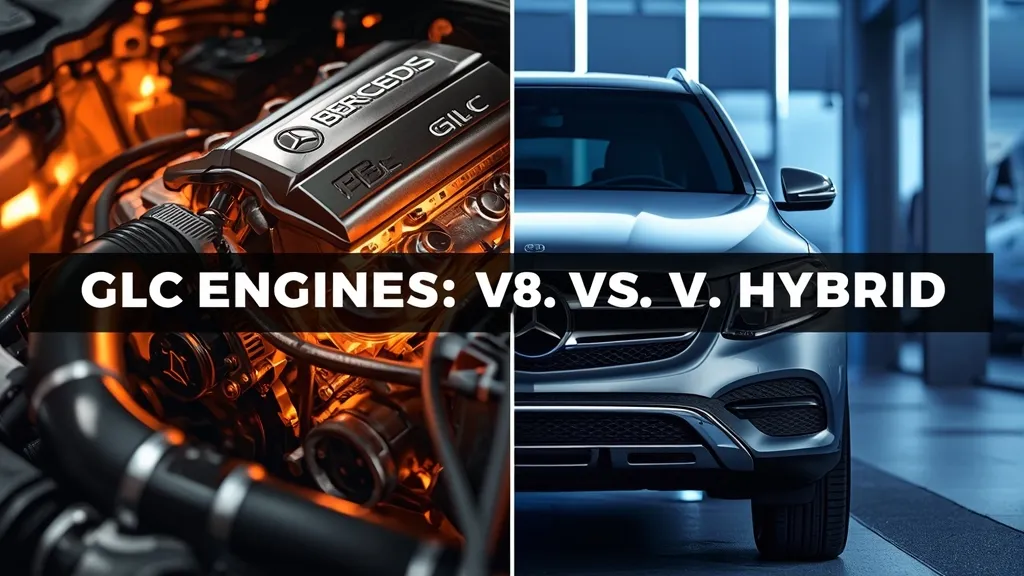
The story of the GLC’s powertrain is a perfect reflection of the automotive industry’s rapid transformation. A direct comparison of the X253 vs X254 powertrain reveals a dramatic shift from celebrated large-displacement engines to sophisticated, electrified four-cylinders. This isn’t just about changing numbers on a spec sheet; it’s a fundamental change in the philosophy of performance. One generation celebrated the visceral thrill of combustion, while the new one champions the incredible potential of hybrid technology. So, which era is right for you?
The Golden Era (X253, 2016-2022): V6 and V8 Dominance
For many enthusiasts, the first-generation GLC was the peak of traditional performance. It offered a lineup that felt intuitive: a solid four-cylinder base, a powerful V6 middle ground, and an earth-shattering V8 at the top. This was the era of character, sound, and a direct connection between your right foot and the engine’s roar. Exploring these Mercedes GLC engine options is like walking through a hall of fame.
The Workhorse: GLC 300 Turbo Four-Cylinder
Think of the GLC 300 as the foundation of the entire lineup. It was, and still is, the volume seller for a reason. Powered initially by the M274 and later the updated M264 2.0L turbocharged inline-four, it provided a perfect blend of luxury and practicality. With 241 horsepower (later upgraded to a healthy 255 hp), it never felt underpowered for daily duties. Its real strength was its refinement. The engine was smooth, quiet, and delivered its power effortlessly, making it the ideal choice for those who prioritized comfort and competence on their daily commute or long highway journeys. It did everything you asked of it with quiet confidence.
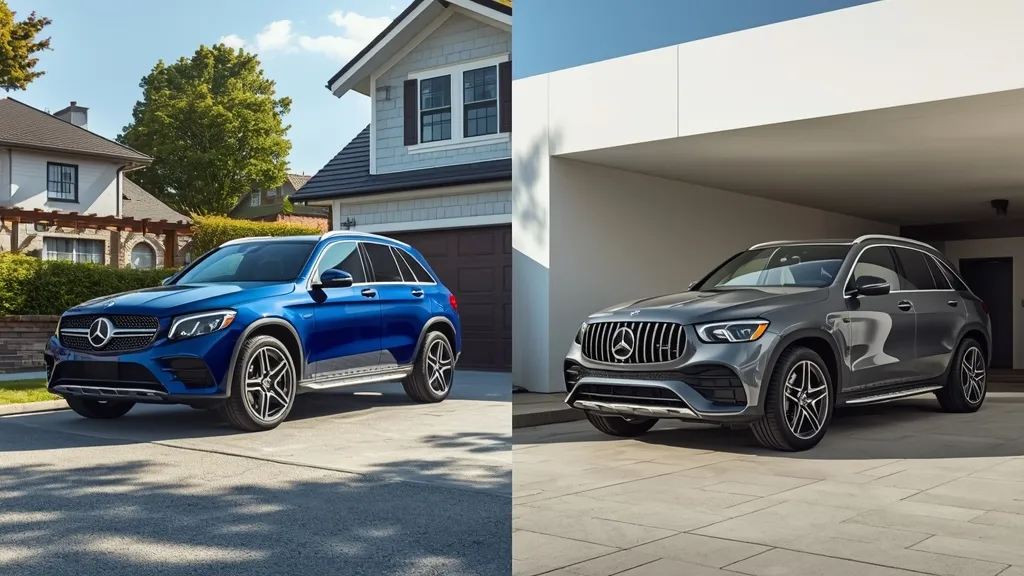
The Sweet Spot: The AMG GLC 43 Twin-Turbo V6
Have you ever wanted more excitement without committing to a full-blown supercar? That’s where the AMG GLC 43 came in. This model was the perfect “sweet spot” for many drivers. The star of the show was the GLC 43 twin-turbo V6, a 3.0-liter biturbo engine that sang a beautiful tune. Initially producing 362 horsepower and later boosted to 385 hp, it offered a thrilling performance jump from the GLC 300. This wasn’t just about speed; it was about character.
The V6 had a satisfying growl, strong mid-range pull for effortless overtaking, and came standard with 4MATIC all-wheel drive, making it a true all-weather performance machine. It was the perfect blend of a practical daily driver and a fun-loving weekend warrior.
The Apex Predator: The AMG GLC 63 Hand-Built V8
Then there was the king. The AMG GLC 63 was less of an SUV and more of a muscle car in a practical suit. At its heart was the legendary 4.0L biturbo V8 (engine code M177), an engine hand-assembled in Affalterbach under AMG revered “One Man, One Engine” philosophy. The GLC 63 hand-built V8 delivered a staggering 469 horsepower in the standard model and a mind-bending 503 horsepower in the S variant.
As noted by reviewers at MotorTrend, this powertrain transformed the GLC into “one of the quickest SUVs we’ve ever tested” (MotorTrend, 2020). The driving feel was completely dominated by its thunderous, iconic V8 soundtrack. The raw, emotional, and almost violent power delivery made it an instant favorite among performance purists and a legend in the world of Mercedes GLC engine options.
The New Wave (X254, 2023-Present): Electrification and Efficiency
Enter the current generation. Mercedes-Benz made a bold, and for some, controversial, decision: to build the entire GLC lineup around a single 2.0L four-cylinder engine block, augmented by varying levels of hybrid technology. This is a showcase of modern engineering, prioritizing efficiency and technological prowess.
The Refined Standard: GLC 300 with 48v Mild-Hybrid System
The new GLC 300 might look similar on paper, but it’s a completely different animal under the hood. It uses the new M254 2.0L turbo-four engine, but the game-changer is the integrated 48v mild-hybrid system, which Mercedes calls EQ Boost. According to Mercedes-Benz USA, this system’s integrated starter-generator can add up to 23 horsepower and 148 lb-ft of torque electrically (Mercedes-Benz USA Official Site).

What does this mean for you, the driver? The Mercedes GLC 300 engine specs still list 255 horsepower, but the driving experience is worlds apart. The mild-hybrid system creates a supremely smooth ride, virtually eliminating turbo lag from a stop and making the engine’s start-stop function completely imperceptible. It’s a huge leap in refinement. While some buyers have questions about long-term M254 engine reliability due to the added complexity, this technology is rapidly becoming the new standard for luxury vehicles.
A New Breed of Performance: The Four-Cylinder AMGs
This is where the conversation gets heated. Mercedes-AMG retired its beloved V6 and V8 engines in the GLC, replacing them both with a high-strung version of their 2.0L four-cylinder. It’s a move that has divided the enthusiast community.
The AMG GLC 43: F1 Tech with an Electric Exhaust-Gas Turbocharger
The new AMG GLC 43 is a technological marvel. It uses the Mercedes M139 engine, a 2.0L turbo-four that features an electric exhaust-gas turbocharger. This is technology derived directly from the Mercedes-AMG Formula 1 team. A tiny electric motor spins the turbocharger up before the exhaust gases can, completely eliminating lag and providing instant throttle response. The result? A staggering 416 horsepower, far more than the old V6. It’s incredibly responsive and feels like a precision instrument. The trade-off, however, is character. It lacks the signature sound and soulful feel of the V6 it replaced, a point of contention for many long-time fans of the brand.
The Controversial King: The AMG GLC 63 S E Performance Plug-in Hybrid
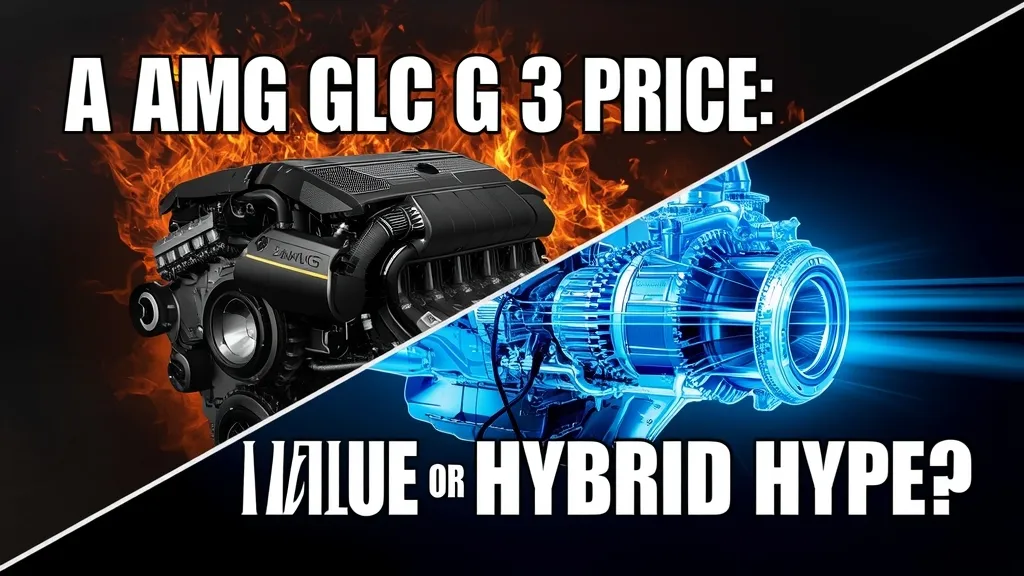
If the GLC 43 was a step, the new GLC 63 is a giant leap into a new performance dimension. This is arguably the most complex of all Mercedes GLC engine options ever offered. It pairs the same potent M139 engine with a powerful rear-axle electric motor and a battery pack, creating the GLC E Performance plug-in hybrid system.

The numbers are simply astonishing: a combined 671 horsepower and 752 lb-ft of torque. It’s brutally, savagely fast in a straight line. However, this performance comes at a cost. As publications like Car and Driver have pointed out, the hybrid system adds significant weight, and the iconic V8 roar has been replaced by a synthetic sound played through the speakers (Car and Driver, 2023). This has created a major rift: is mind-boggling speed worth sacrificing the sound and soul that made the original so special?
Head-to-Head: A Detailed Engine Spec Comparison
Seeing the numbers side-by-side really puts the evolution of Mercedes GLC engine options into perspective.
GLC Horsepower and Torque: A Generational Breakdown
| Model | Generation | Engine | Horsepower | Torque (lb-ft) |
|---|---|---|---|---|
| GLC 300 | X253 (2020-22) | 2.0L Turbo I4 | 255 hp | 273 lb-ft |
| GLC 300 | X254 (2023+) | 2.0L Turbo I4 + Mild Hybrid | 255 hp | 295 lb-ft |
| AMG GLC 43 | X253 (2020-22) | 3.0L Twin-Turbo V6 | 385 hp | 384 lb-ft |
| AMG GLC 43 | X254 (2023+) | 2.0L Turbo I4 + Elec. Turbo | 416 hp | 369 lb-ft |
| AMG GLC 63 S | X253 (2020-22) | 4.0L Twin-Turbo V8 | 503 hp | 516 lb-ft |
| AMG GLC 63 S | X254 (2023+) | 2.0L I4 + PHEV | 671 hp | 752 lb-ft |
Fuel Economy and Efficiency
As you’d expect, the new generation brings significant efficiency gains. The GLC 300 mild-hybrid system improves MPG slightly, but the biggest change is with the AMG 63. The new plug-in hybrid can travel on electric power alone for short distances—a feat impossible for the thirsty V8. This makes it a surprisingly efficient commuter, a concept that was alien to the previous model. It builds on the idea of the earlier GLC 350e, a less powerful PHEV from the first generation, and takes it to a new performance level.
Common Concerns and Potential GLC Engine Problems
No vehicle is perfect, and it’s important to be an informed buyer. Addressing potential GLC engine problems is key to building trust.
First Generation (X253) Considerations
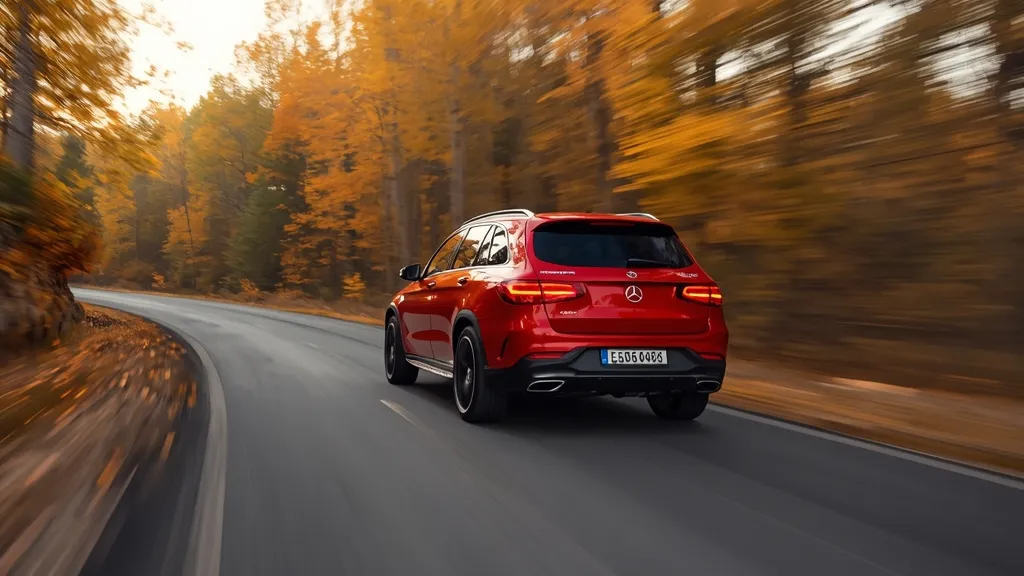
The engines in the first-gen GLC are generally considered robust. However, some early GLC 300 models with the M274 engine had known issues with piston cracking, though this was largely addressed in later model years. For the high-performance AMG V6 and V8 models, they are reliable when maintained, but be prepared for higher costs for things like tires, brakes, and fuel. Diligent maintenance is not optional on these machines.
Second Generation (X254) Early Observations
The primary concern for the new generation is complexity. With mild-hybrid systems, electric turbochargers, and full-blown plug-in hybrid batteries and motors, there are simply more things that could potentially go wrong down the line. As with any new technology, early adopters may face software bugs or glitches that are later resolved with updates. A comprehensive warranty is your best friend here.
Which Mercedes GLC Engine Option is Right for You?
So, after all that, how do you choose? Your ideal engine depends entirely on your priorities. Let’s break it down with some real-life examples.
For the Daily Commuter and Family Hauler
- Your Persona: You value comfort, luxury, and a quiet, serene driving experience. Your driving is mostly in the city and on the highway, and while you appreciate effortless power, you’re not looking to win any drag races.
- Recommendation: The GLC 300 (from any generation).
- Reasoning: It offers the best blend of comfort, luxury, and efficiency. The new mild-hybrid model is exceptionally smooth and is the pinnacle of refinement for daily driving.
For the Spirited Driver Seeking a Balance
- Your Persona: You want your daily driver to have a spark. You enjoy a spirited drive on a winding road and appreciate an engine with character and a great sound, but you still need practicality.
- Recommendation: A used AMG GLC 43 (X253) or the new AMG GLC 43 (X254).
- Reasoning: This is the classic “heart vs. head” decision. Do you want the soulful V6 sound and feel of the older model, or the cutting-edge technology and superior responsiveness of the new four-cylinder? Test drive both if you can; the feel is remarkably different.
For the Ultimate Performance Seeker
- Your Persona: Performance is your number one priority. You want the fastest, most powerful, and most exciting experience possible in an SUV package.
- Recommendation: A used AMG GLC 63 (X253) or the new AMG GLC 63 S E Performance (X254).
- Reasoning: This choice defines your philosophy. If you crave the authentic, emotional, and auditory thrill of a thundering V8, the previous generation GLC engine is your only choice and is fast becoming a modern classic. If you want the absolute latest in performance technology and the fastest possible acceleration, the new plug-in hybrid is the undisputed (though controversial) champion.
The Future of GLC Powertrains
The move to four-cylinder hybrids isn’t the final destination; it’s a bridge to the future. The 2025 Mercedes GLC engine lineup will likely see further refinement of this technology. Looking beyond that, the industry is moving towards full electrification. We fully expect the next chapter in this story to be a fully electric EQC SUV based on the GLC platform, which will eventually render these fascinating combustion Mercedes GLC engine options a part of history.
Conclusion: A Powertrain for Every Purpose
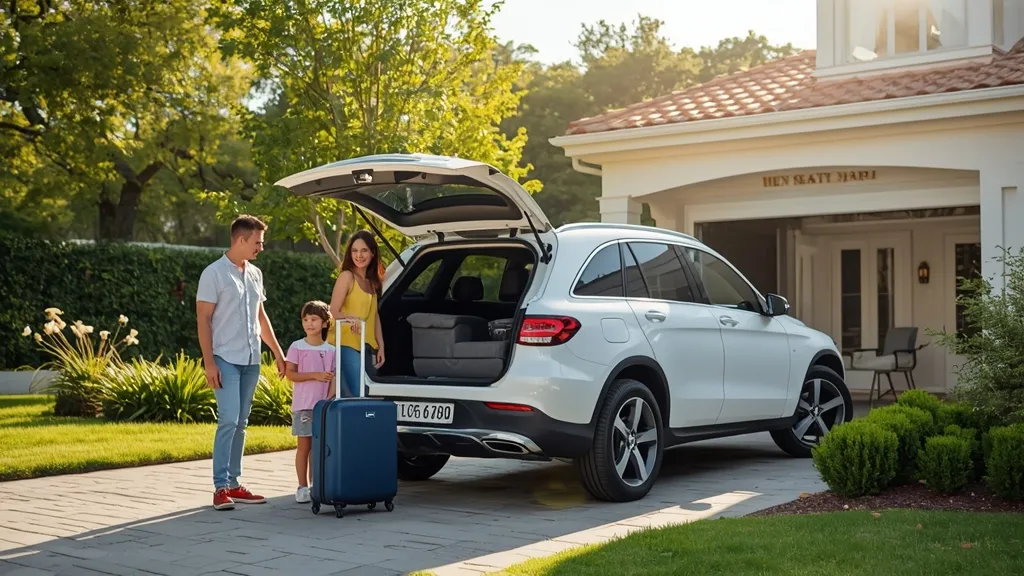
The journey through the Mercedes GLC engine options showcases a brand, and an industry, in a period of profound transition. The first generation offered a beloved and characterful lineup, with the GLC 43 twin-turbo V6 and GLC 63 hand-built V8 cementing their places as legends. The new generation courageously sacrifices some of that old-school soul for breathtaking technological advancement, efficiency, and raw power. Whether you prioritize the emotional connection of a V8, the balanced fun of a V6, or the sophisticated, electrified punch of the latest models, the GLC has offered—and continues to offer—a compelling powertrain for every type of luxury SUV driver. The choice is yours.
Mercedes GLC engine options FAQs
Question: What is the most reliable Mercedes GLC engine?
Answer: The 2.0L turbocharged four-cylinder engine in the GLC 300 is generally considered the most reliable due to its widespread use and simpler design compared to the high-performance AMG variants. The previous generation 3.0L twin-turbo V6 in the GLC 43 is also well-regarded for its robustness when properly maintained.
Question: Why did Mercedes replace the V8 in the GLC 63?
Answer: Mercedes replaced the V8 engine in the GLC 63 primarily to meet increasingly strict global emissions regulations and improve overall fleet fuel economy. The new 2.0L four-cylinder plug-in hybrid system produces significantly more horsepower and lower emissions, showcasing the brand’s shift towards high-performance electrification.
Question: What are the main engine options for the Mercedes GLC?
Answer: The current generation (X254) Mercedes GLC offers a 2.0L four-cylinder engine with a 48v mild-hybrid system in the GLC 300. The high-performance AMG models use advanced versions of this engine: a 416-hp variant in the GLC 43 and a 671-hp plug-in hybrid in the GLC 63.
Question: Is the GLC 300 powerful enough?
Answer: Yes, for the vast majority of drivers, the GLC 300 255-horsepower engine is more than powerful enough. It provides brisk acceleration for city driving and confident passing power on the highway. The mild-hybrid system also helps deliver smooth, instant torque from a standstill, making it feel responsive.
Author Bio
Alex Carter, Automotive Journalist & Certified Technician
Alex Carter has spent over 15 years in the automotive industry, starting as a certified Mercedes-Benz technician before transitioning to automotive journalism. With hands-on experience working on the very engines discussed in this article, Alex combines deep technical expertise with a passion for storytelling to make complex topics accessible and engaging for enthusiasts and everyday drivers alike. His work has been featured in several leading auto publications.
Disclaimer
This article is based on publicly available information, manufacturer specifications, and expert reviews from reputable automotive publications as of late 2024. All information is for educational purposes. Specifications, features, and model availability may vary by region and model year. Always consult an official Mercedes-Benz dealer for the most current and accurate information before making a purchasing decision. The author and publisher are not liable for any errors or omissions.
You can refer to more:
- Mercedes-Benz USA Official GLC Page : This links directly to the manufacturer’s official page for the current GLC, providing the most accurate and up-to-date specifications and trim details for new car buyers.
- Car and Driver Review: 2025 AMG GLC63 S E Performance : An in-depth expert review from a highly authoritative automotive publication. It provides professional driving impressions and critical analysis of the controversial new plug-in hybrid AMG model.
- MBWorld Forums: Enthusiast Discussion on Engine Changes : This link directs to a real-world discussion among Mercedes owners and enthusiasts, offering unfiltered opinions and personal experiences regarding the shift from V8/V6 to four-cylinder engines.