
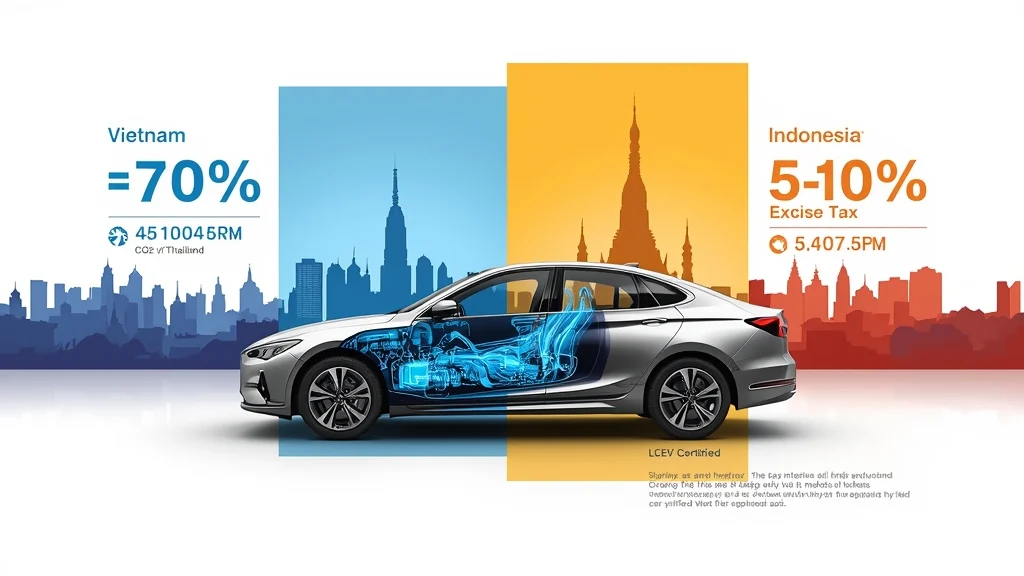
Explore how Vietnam, Thailand and Indonesia tax hybrid cars, compare rates, eligibility rules, and discover which market offers the best incentives. Learn more now!
Introduction
Hybrid vehicles are gaining traction across Southeast Asia as governments scramble to reduce emissions while boosting local automotive manufacturing. Vietnam, Thailand and Indonesia – the three largest new‑car markets in the region – each offer tax breaks for hybrid models, but the scope, rates and eligibility criteria differ significantly.
How the three countries treat hybrid cars
All three nations apply a special levy on top of the regular excise or luxury tax that is imposed on conventional gasoline or diesel cars. The hybrid discount is expressed as a percentage of the standard tax, which varies according to engine size, CO₂ emissions and the degree of local content.
Vietnam
Vietnam will start applying a reduced Special Consumption Tax (SCT) to hybrid electric vehicles (HEVs) from 2026. The discount is calculated as 70 % of the SCT that would apply to a comparable internal‑combustion engine (ICE) vehicle. For reference, most gasoline cars under 9 seats attract an SCT of 35‑150 %; the hybrid counterpart would therefore be taxed at roughly 24.5‑105 %.
Eligibility hinges on a fuel‑efficiency benchmark: the hybrid’s energy consumption must be no more than 70 % of the conventional model’s fuel use (the “R‑value”). The Ministry of Construction publishes the reference fuel‑consumption figures each year, with the first set due before 31 January 2026.
Thailand
Thailand uses an Excise Tax system. Hybrid models enjoy a reduced rate of 5‑10 % of the standard excise tax, which translates to an effective discount of about 30‑50 % compared with gasoline cars (which face a 14‑34 % excise based on CO₂ emissions). Luxury or high‑performance cars with engines over 3 L are taxed at 50 %.
Specific thresholds apply:
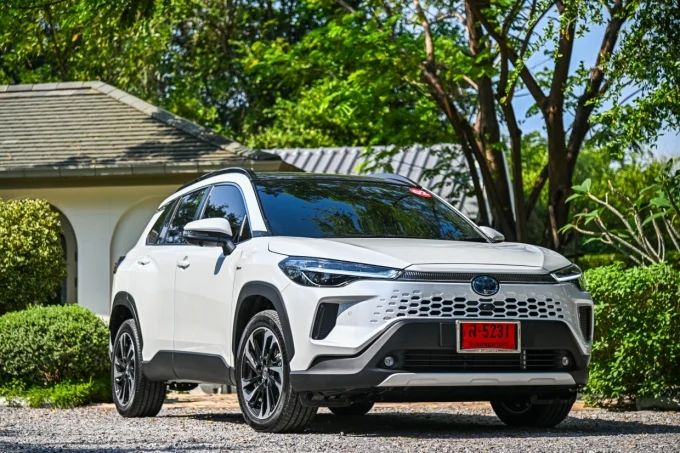
- MHEV (mild‑hybrid) – 10 % tax if CO₂ ≤ 100 g/km (≈ 4.3 L/100 km), 12 % if 101‑120 g/km.
- HEV – 6 % tax if CO₂ ≤ 100 g/km, 9 % if 101‑120 g/km.
- PHEV – 5 % tax for electric‑only range ≥ 80 km, otherwise 10 %.
Additional requirements include 17‑45 % localisation of parts and a minimum US$84 million investment in hybrid production from 2024‑2027.
Indonesia
Indonesia classifies hybrids under the Luxury Sales Tax (PPnBM). Conventional gasoline cars under 3 L are taxed at 10‑40 %; hybrids receive a reduced rate of less than 10 % of that amount. For larger engines (> 3 L), PPnBM ranges from 40‑125 % for gasoline models.
To qualify, a vehicle must be assembled locally, be certified under the Low‑Carbon Emission Vehicle (LCEV) program, and meet stringent fuel‑consumption limits (≤ 6.45 L/100 km for gasoline hybrids, ≤ 5.71 L/100 km for diesel hybrids). A minimum of 40 % local parts content is also required.
Side‑by‑side tax comparison (2026 onward)
| Country | Hybrid tax rate | Base ICE tax rate | Key eligibility conditions |
|---|---|---|---|
| Vietnam | ≈ 70 % of standard SCT (24.5‑105 % depending on engine size) | 35‑150 % SCT for gasoline cars | Fuel‑consumption ≤ 70 % of ICE benchmark; R‑value calculation; local‑content not mandatory |
| Thailand | 5‑10 % of excise tax (effective 30‑50 % discount) | 14‑34 % excise (based on CO₂); 50 % for >3 L luxury models | CO₂ ≤ 120 g/km thresholds; electric‑only range for PHEV; 17‑45 % local parts; US$84 M investment |
| Indonesia | <10 % of PPnBM (significant reduction) | 10‑40 % PPnBM for 3 L | Local assembly; LCEV certification; fuel‑efficiency caps; ≥ 40 % local parts |
What the differences mean for manufacturers and buyers
Thailand and Indonesia presently offer deeper tax breaks than Vietnam, but they attach stricter requirements such as mandatory local production, higher localisation percentages, and explicit CO₂ or electric‑range thresholds. Vietnam’s approach is more flexible – the discount is based purely on relative fuel efficiency – yet the effective tax remains higher for many models.
For global automakers, the Thai and Indonesian regimes incentivise setting up local assembly lines and investing in technology to meet emissions standards. In Vietnam, the focus is on encouraging the adoption of fuel‑efficient hybrids without forcing immediate localisation, which could be attractive for brands that rely on imports.
Conclusion
When it comes to hybrid car tax incentives, Thailand and Indonesia lead the region with generous discounts, albeit coupled with demanding localisation and emissions criteria. Vietnam’s upcoming policy is less aggressive but simpler, targeting only the fuel‑efficiency gap. Buyers and manufacturers should weigh the total cost of ownership, investment commitments, and regulatory hurdles in each market before deciding where to launch or purchase a hybrid vehicle.
Stay updated on policy changes, as all three governments have signalled that tax rates will be fine‑tuned in response to market developments and climate goals.