
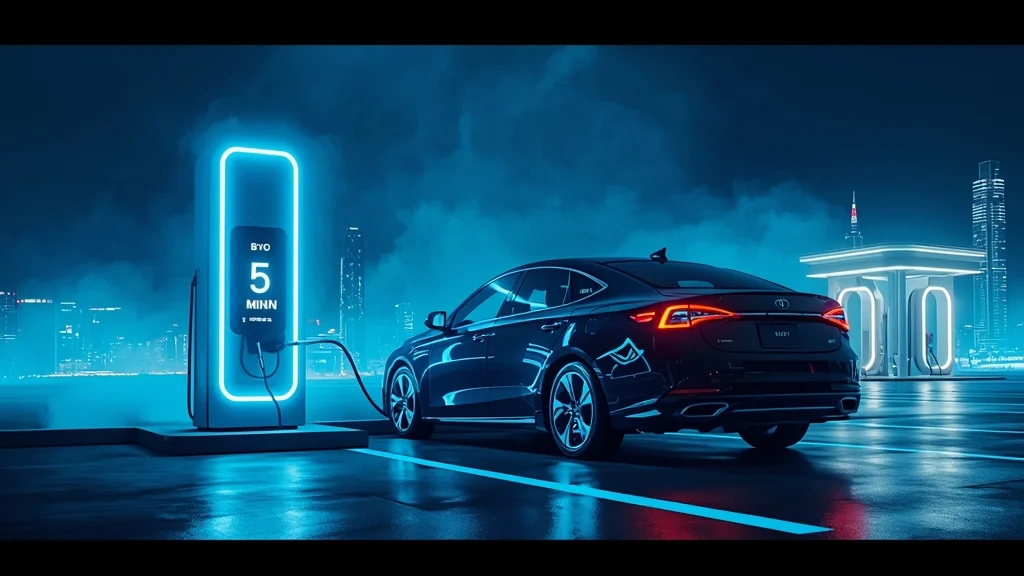
BYD unveils a 5‑minute Megawatt Flash Charge that could outpace Nio’s battery‑swap stations, reshaping EV charging in China. Discover the impact now.
Chinese EV giant BYD announced a breakthrough in rapid charging that could upend the current dominance of Nio’s battery‑swap network. Using its second‑generation Blade battery paired with the new Megawatt Flash Charge 2.0 system, BYD claims it can add 60 kWh of energy in just five minutes—fast enough to rival the three‑minute battery‑swap experience.
Infrastructure Ambitions
Following the launch of the Blade 2.0 battery on 5 March, BYD outlined a massive rollout plan: 20,000 megawatt‑class fast‑charging stations by the end of 2026. The company’s branding chief, Li Yunfei, says the goal is to make high‑speed charging the primary solution for EV owners, rather than relying on the costly swap‑station model.
How Fast Is ‘Fast’?
- Charge 10 %–70 % in 5 minutes
- Charge 20 %–97 % in 12 minutes even at –30 °C
- Battery retains performance after 500 high‑power cycles
The new thermal‑management system ensures consistent charging in the cold winters of northern China, a known weakness for swap stations that suffer reduced battery efficiency in sub‑zero temperatures.
Comparing BYD’s Fast‑Charge Model with Nio’s Swap Network
Nio pioneered the battery‑swap concept and has built an alliance with CATL and Aulton, operating stations that house up to 23 battery packs (≈1.8 MWh) per site. By contrast, BYD’s stations act as high‑throughput chargers with smaller buffer packs of 200‑300 kWh, focusing on rapid turnover rather than bulk storage.

At a 100 kW grid draw, a typical BYD fast‑charge hub can serve about 40 vehicles per day (assuming a 60 kWh average charge). Nio’s swap stations, on the other hand, can handle up to 50 swaps per day during peak periods such as the 2026 Lunar New Year.
Financial Dynamics
Nio has invested more than ¥18 billion (≈$2.5 billion) in its proprietary swap infrastructure. Analysts estimate a swap station needs ~60 daily transactions to break even, yet the current network averages only 35 swaps per day. BYD’s approach sidesteps the massive real‑estate and grid‑upgrade costs by adopting a “station‑in‑station” model—leveraging existing sites managed by partners like TELD and Star Charge.
Rollout Timeline and Future Models
After debuting the premium Yangwang U7 and Denza Z9GT in Q1, BYD will fit the Blade 2.0 pack into the Song and Qin series in Q2, followed by the Dolphin and Seagull models later in the year. With CATL expanding its Choco‑SEB network to 2,500 stations, BYD aims to cover 90 % of Chinese urban areas within a 5 km radius of a 1,500 kW charging point.
What This Means for EV Owners
The fast‑charge push democratizes ultra‑rapid charging, making it accessible to a broader market beyond the niche of high‑end buyers who currently gravitate toward swap stations. As BYD scales its network, drivers can expect shorter wait times, lower costs, and more charging locations across major cities.
Conclusion
BYD’s 5‑minute charging breakthrough positions the company to challenge Nio’s premium swap ecosystem head‑on. By focusing on scalable infrastructure, lower capital expenditure, and resilient performance in harsh climates, BYD is set to reshape the EV charging landscape in China and potentially set a new global benchmark.