
Chinese buyers report unsafe acceleration and steering errors in BYD’s God’s Eye driver‑assist; discover the issues and industry impact. Read more now.
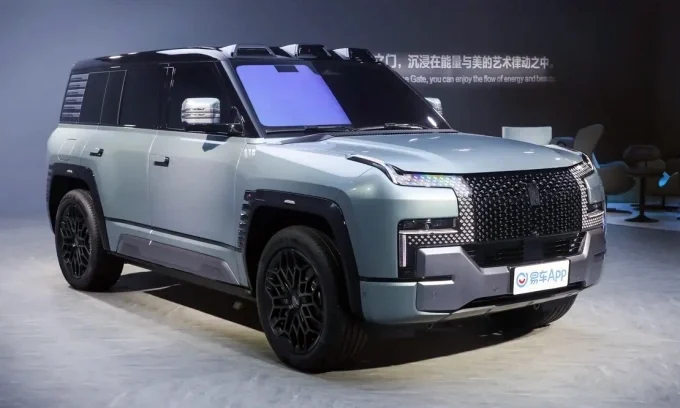
Chinese entrepreneur Zhou spent ¥1.1 million (about $160,000) at the end of 2024 to purchase a flagship BYD Yangwang U8 SUV, a 3.5‑ton luxury model pitched as the ultimate “near‑autonomous” vehicle. The selling point was the new “God’s Eye” driver‑assist system, launched in 2025, which promised real‑time hazard detection and semi‑autonomous control.
Unexpected acceleration and erratic lane changes
During a sunny afternoon in southwestern China, the Yangwang U8 unexpectedly surged to 93 km/h—well above the 60 km/h speed limit of the road—before veering toward the median. In a separate incident, the same system abruptly swerved the vehicle into the adjacent lane, narrowly missing an oncoming car.
Zhou says he has been in talks with BYD for a year, trying to resolve recurring problems such as loss of GPS signal and unintended acceleration. He is not alone; several other owners have voiced similar complaints about God’s Eye.
BYD’s response and the broader industry context
BYD’s Yangwang team confirmed that they are actively investigating Zhou’s case and emphasized a commitment to user feedback and product improvement. Yet the challenges echo those faced by other automakers. In the United States, Tesla’s Full Self‑Driving (FSD) feature is under investigation after multiple fatal crashes, while Ford’s BlueCruise technology is being scrutinized following two serious accidents.
Why the stakes are higher for BYD
Unlike Tesla’s FSD, which is sold as an optional, paid upgrade, BYD’s God’s Eye is standard on a large volume of vehicles. This makes any defect far more visible and potentially widespread—contradicting BYD Chairman Wang Chuanfu’s claim that driver‑assist will soon be as essential as seatbelts or airbags.
Hardware vs. software gap
According to SBD Automotive, the system suffers from issues such as failure to yield, missed toll‑gate exits, and poor highway merging. Analyst Varun Murthy notes that while BYD has rolled out ADAS hardware at scale without extra cost—a feat Western brands have not yet matched—the software is lagging behind the hardware’s potential.
BYD currently offers three tiers of the system: Tier C (camera‑only) for low‑cost models, Tier B (more advanced sensors) for mid‑range cars, and Tier A (three lidar units) for premium models like the Yangwang U8. Full‑feature God’s Eye is still only available domestically, whereas rivals such as General Motors and Ford have deployed comparable technology in multiple markets.
Global competition and data collection
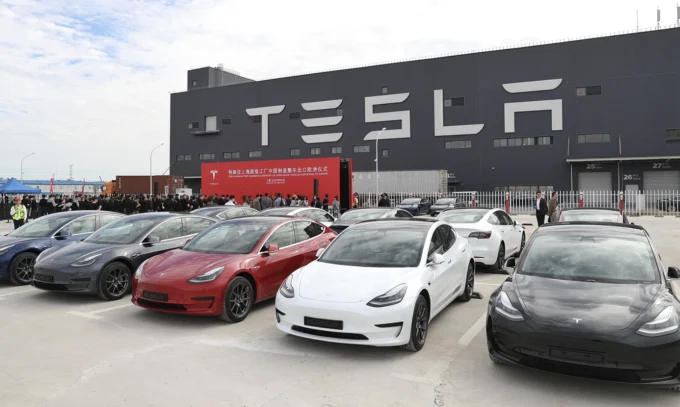
Tesla is seeking approval to launch its driver‑assist suite in China, but will have to rebrand it to comply with strict advertising rules. By the end of 2025, over 2.5 million BYD vehicles in China are expected to be equipped with God’s Eye—more than twice the total global FSD user base. However, experts warn that sheer numbers do not guarantee system maturity.
Piper Sandler reports that BYD’s data collection is less than half of Tesla’s, limiting the ability to train algorithms on rare edge cases such as unpredictable pedestrian behavior.
Looking ahead
BYD plans to release a software update for its driver‑assist suite while continuing to invest heavily in battery and charging infrastructure. The company recently unveiled a new “Blade” battery generation and ultra‑fast charging technology—features that appeal to buyers transitioning from gasoline to electric vehicles.
Industry analyst Chris Liu points out that for most BYD customers, charging convenience and range remain top priorities, outweighing concerns about autonomous features.
As the market grows, the pressure on BYD to close the hardware‑software gap and deliver a truly safe, reliable driver‑assist experience will only intensify.