
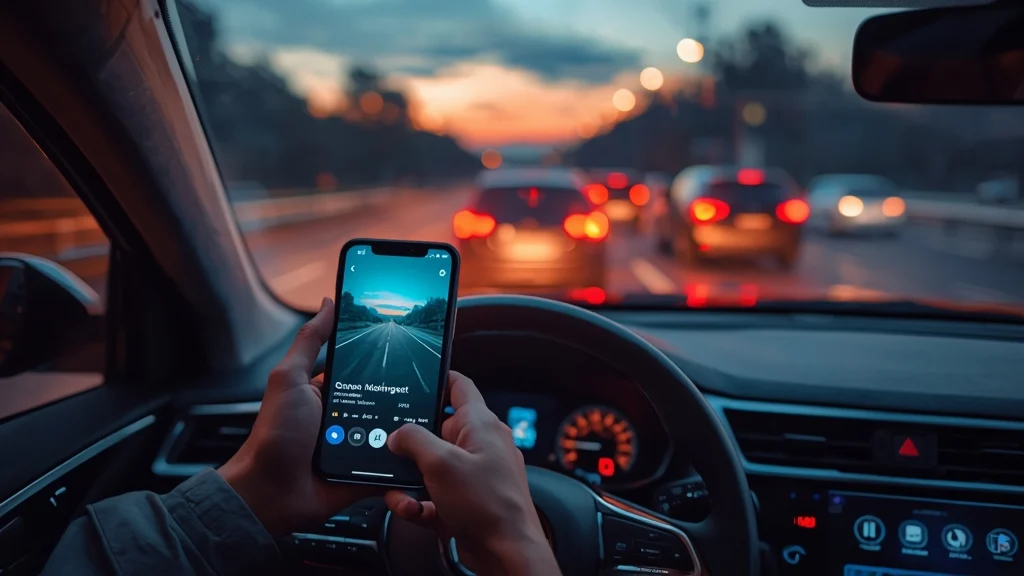
Scrolling TikTok while driving is fueling a surge in US road accidents. Discover why this trend is deadlier than ever. Read the full report.
For years, road safety advocates have warned against the dangers of texting while driving. However, a more dangerous trend is emerging on American highways. It is no longer just about a quick text or a phone call; drivers—particularly the younger generation—are now scrolling through TikTok feeds, watching long-form videos, and even hosting livestreams while behind the wheel.
The Evolution of Distracted Driving
According to reports from Carscoops, our growing dependence on smartphones is fundamentally altering road safety. Distracted driving has evolved. While the focus used to be on handheld communication, the habit has shifted toward immersive media consumption.
Professor Charlie Klauer of Virginia Tech notes that the nature of distraction is changing. “People are spending significantly more time on their phones while driving,” Klauer explains. “The trend has shifted from simple messaging to active browsing and watching. Social media platforms like Instagram, Snapchat, and TikTok have become primary sources of distraction.”
The Human Cost: Statistics and Risks
The consequences of this shift are catastrophic. Data provided by the National Highway Traffic Safety Administration (NHTSA) reveals that distracted driving has been the primary cause of 3,275 traffic fatalities in the U.S., with over 300,000 injuries reported.
While the data doesn’t always specify the exact app being used, experts like Joel Feldman, a prominent speaker on distracted driving, have seen a surge in “confessions” from young drivers. Feldman reports that drivers in states ranging from New Jersey to Colorado openly admit to glancing at TikTok videos while steering. “Five years ago, I didn’t hear this,” Feldman says. “Now, it’s a recurring theme in every presentation I give.”
High-Risk Demographics
The NHTSA highlights that drivers aged 15 to 20 are disproportionately represented in fatal accidents caused by distraction. Worryingly, this high risk persists even as drivers move into their twenties, suggesting that social media habits are becoming deeply ingrained in the driving experience.
Real-World Tragedies and Reckless Behavior
The pursuit of “clout” and viral content has led to some harrowing incidents on the road:
- High-Speed Livestreams: Late last year, streamers MeltIsLIVE and Jau Shaun broadcasted themselves speeding through the streets of Atlanta in a BMW M3 and a Dodge Charger.
- Fatal Negligence: In another instance, a 43-year-old woman was accused of killing a pedestrian while livestreaming on TikTok.
- Police Confrontations: In California, a driver crashed directly into a parked police car while watching YouTube, narrowly missing a nearby officer.
The Legal Gap and the Rise of Infotainment Risks
Legislation is struggling to keep pace with technology. While 49 U.S. states and Washington D.C. have banned texting while driving, and 33 states ban all handheld device use, these laws have a significant blind spot: in-car infotainment systems.
Many drivers are now using third-party software to “unlock” their vehicle’s built-in screens, allowing them to stream videos directly on the dashboard while the car is in motion. This bypasses handheld device bans but creates an even larger distraction.
Professor Charlie Klauer warns that these touchscreens may actually be more dangerous than smartphones. Research suggests that interacting with complex in-car interfaces can severely impair a driver’s reaction time during emergencies. In some cases, the cognitive load and visual distraction are cited as being more dangerous than driving under the influence of alcohol or cannabis.
Final Thought
As technology integrates further into our vehicles, the line between entertainment and safety continues to blur. The move from texting to scrolling isn’t just a change in habit—it’s a significant escalation in road risk that demands stricter enforcement and a cultural shift in how we perceive digital distractions behind the wheel.