
Li Auto claims Dongfeng Nissan orchestrated a smear campaign after the NX8 launch. Explore the clash in China’s competitive EV market here!
The rivalry between homegrown Chinese EV giants and established international joint ventures has reached a boiling point. A public dispute between Li Auto and Dongfeng Nissan has escalated, with Li Auto alleging that it has become the target of a coordinated effort to damage its brand reputation.
Allegations of a “Coordinated Smear Campaign”
According to a report by Sina, the legal department of Li Auto revealed on April 11 that their products have been targeted by “organized smear campaigns.” This surge in negativity reportedly coincided with the launch of a new model from Dongfeng Nissan.
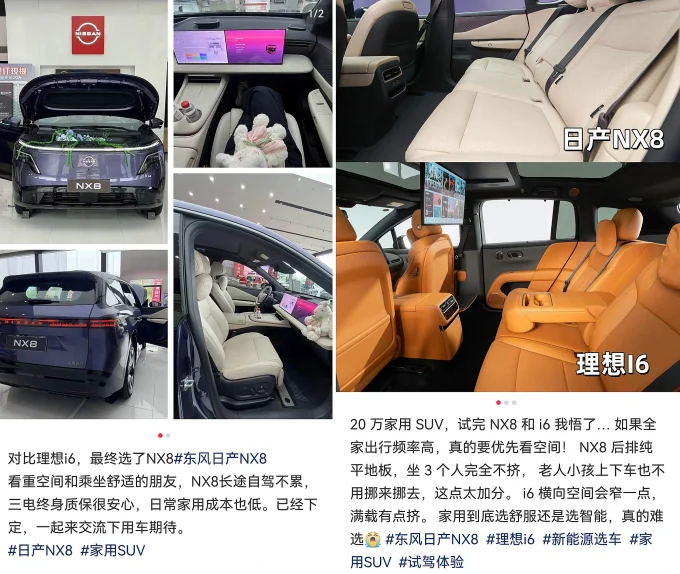
Li Auto claims to have gathered significant evidence, noting that a massive volume of nearly identical negative posts appeared across online platforms in a very short window. The company highlighted that these posts originated from concentrated IP addresses, suggesting a professional operation rather than organic consumer dissatisfaction. Li Auto has signaled that it is prepared to take formal legal action based on the evidence collected.
The Spark: The Nissan NX8 Launch
The friction appears to have started with the debut of the Nissan NX8. During promotional activities, the NX8 was frequently compared to Li Auto’s lineup, specifically the i6 model. While comparisons are common in the automotive industry, Li Auto contends that the online narrative shifted from fair competition to targeted defamation, often portraying the NX8 as vastly superior through biased or misleading lenses.
Corporate Responses
The leadership at both companies has taken contrasting stances:
- Li Auto: CEO Li Xiang openly criticized the tactics, describing them as “malicious comparisons” from a Japanese competitor. Although some initial statements were later removed, the company continues to voice concerns over coordinated attacks.
- Dongfeng Nissan: Wang Qian, head of the EV division, responded by stating that the company adheres to industry regulations and supports “fair competition,” though he avoided addressing the specific smear campaign allegations directly.
Market Dynamics: A Fight for the Middle Class
This conflict is more than just a corporate spat; it is a fight for survival in the highly competitive SUV segment priced between 200,000 and 300,000 RMB (approximately $27,800 to $41,700 USD).
Performance Trends: Li Auto vs. Nissan
The financial and sales data reveal a shifting tide in the Chinese market:
- Li Auto’s Rollercoaster: In 2025, Li Auto reported sales of 406,300 vehicles, an 18.81% decline compared to the previous year, plagued by internal transition challenges and fierce competition in the Extended Range Electric Vehicle (EREV) sector. However, 2026 has seen a massive rebound. In Q1 2026, the company delivered 95,100 vehicles, with March alone seeing a 173% year-on-year increase. The electric SUV i6 has emerged as the primary growth driver, accounting for over 24,000 units in March.
- Nissan’s Struggle to Pivot: While Nissan maintained a larger overall volume in 2025 with 601,000 vehicles, the brand remains heavily reliant on the Sylphy sedan. Its New Energy Vehicle (NEV) portfolio has remained limited. This vulnerability became evident in early 2026, where Nissan’s sales dropped by over 30% in the first two months, despite reports of general growth in its China operations.
Strategic Pricing and the Future
To combat the rise of domestic brands, Nissan has adopted an aggressive pricing strategy. The new NX8 enters the market with a starting price of 159,900 RMB (around $22,200), significantly undercutting the established i6 and L6 models from Li Auto, which maintain steady monthly sales of around 20,000 units each.
This dispute reflects the broader tension in China’s automotive landscape. As the market pivots decisively toward electrification, the clash between legacy joint ventures and agile local manufacturers is becoming increasingly aggressive, moving beyond the product spec sheet and into the realm of digital warfare.