
BMW is trialling the AEON human‑like robot at its Leipzig iFACTORY to boost electric‑vehicle production, blending AI with world tasks. Learn more today.
BMW has launched a pilot program featuring the human‑like AEON robot at its iFACTORY plant in Leipzig, Germany. The initiative is part of a broader push to embed artificial intelligence (AI) into the electric‑vehicle (EV) manufacturing process.
What Is the AEON Robot?
Developed by Swiss‑based Hexagon Robotics, AEON stands about 1.65 metres tall and weighs roughly 60 kg. Unlike traditional humanoid robots that walk on legs, AEON moves on rubber‑tired wheels, allowing it to zip across factory floors quickly and safely.
Equipped with 22 built‑in sensors—including high‑resolution cameras and microphones—the robot constantly scans its surroundings, detects obstacles, and adapts its path in real time.
AI‑Powered Tasks on the EV Line
At Leipzig, AEON is assigned repetitive, physically demanding jobs that are crucial to EV production. Its current duties include:
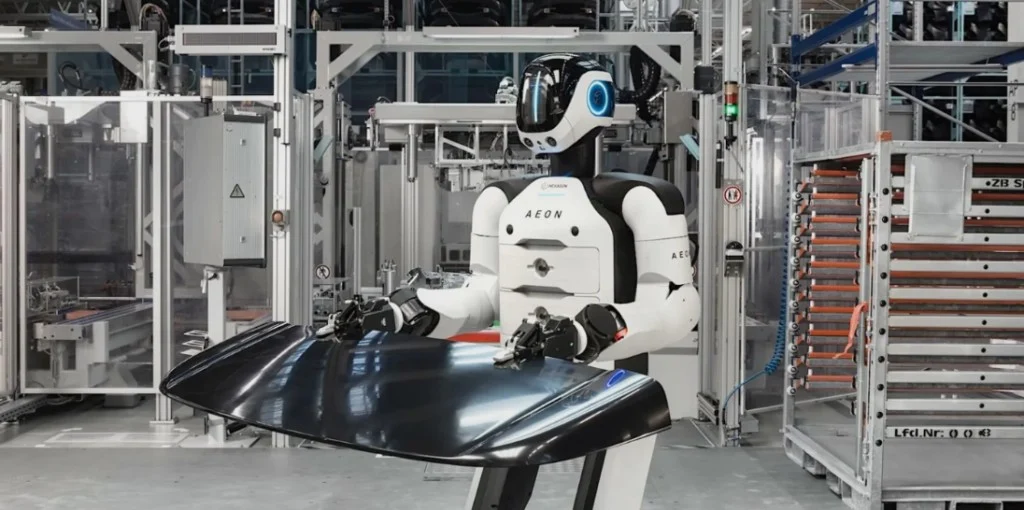
- Precision assembly of high‑voltage battery modules.
- Fastening bolts and screws with exact torque specifications.
- Handling and positioning of battery components for downstream processes.
These tasks free human technicians to focus on more complex, value‑added activities while improving overall line efficiency.
Physical AI: Merging Digital Intelligence with Real‑World Motion
BMW describes the approach as “Physical AI”—a blend of digital cognition and mechanical actuation. The robot runs on NVIDIA’s Jetson Orin computing platform, which processes sensor data, runs AI models, and drives the robot’s motion control in a tightly integrated loop.
From the United States to Germany: Proven Track Record
The Leipzig rollout follows a ten‑month pilot at BMW’s Spartanburg plant in South Carolina. During that phase, AEON handled more than 90,000 battery parts and contributed to the assembly of roughly 30,000 vehicles.
BMW says the early results have encouraged the company to expand the technology across its European facilities, signaling a strategic shift toward smarter, more flexible manufacturing.
Looking Ahead
As the EV market accelerates, BMW’s investment in AI‑driven robotics aims to shorten production cycles, lower costs, and maintain high quality standards. If the Leipzig trial proves successful, expect to see more humanoid collaborators on BMW’s assembly lines worldwide.