
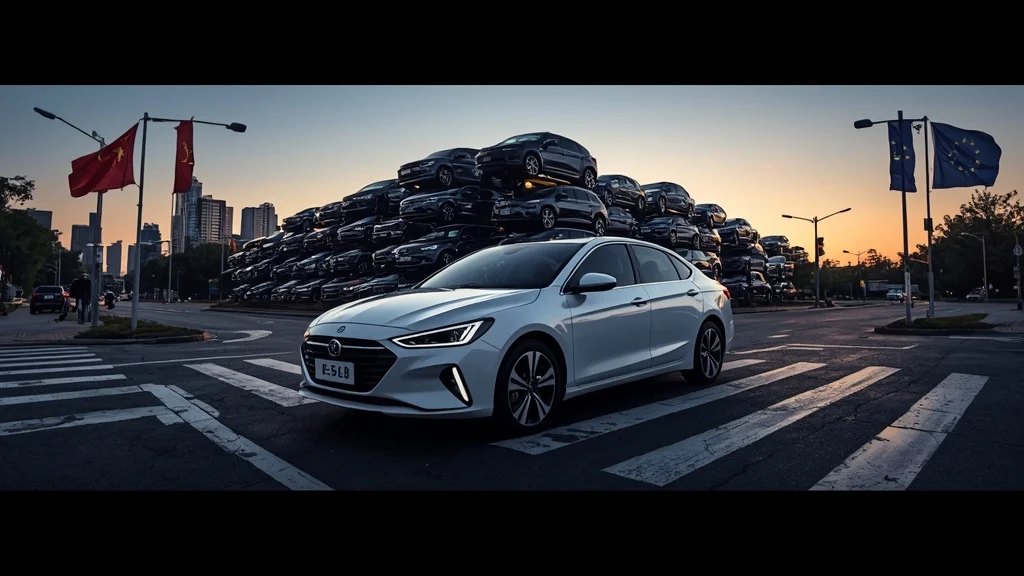
Explore why cheap Chinese car pricing is hitting its limit, what it means for Vietnam and global markets, and how brands can build trust. Read more now!
For the past few years, the phrase “cheap Chinese cars” has been both a market descriptor and a strategic playbook. Many manufacturers entered the market with high‑spec, tech‑laden models, deep subsidies, and rock‑bottom launch prices to win rapid market share.
Signals from China: The End of Unlimited Discounts
Early 2026 data show that the era of endless price cuts is fading. According to Reuters, BYD sold 210,051 units in January 2026—a 30.1% year‑on‑year decline and the fifth consecutive month of drops. Plug‑in hybrid electric vehicle (PHEV) sales, which usually account for more than half of BYD’s volume, fell 28.5%.
The slowdown stems from two converging forces:
- Domestic competition intensifies: More Chinese brands are fighting for the same customers, squeezing margins.
- Government subsidies wane: The tax exemption for new energy vehicles that was fully in place for 2024‑2025 will be halved in 2026‑2027, removing a major price lever.
With policy support drying up and consumer demand softening, price reductions no longer translate into guaranteed sales.
Dealer Pain: Inventory Pressure & Shrinking Profits
The China Automobile Dealer Association warned that manufacturers are pushing excess inventory onto dealers, tightening cash flow and prompting some showroom closures. Reuters cited market‑wide stock of about three million cars, while only 29.9% of dealers reported being profitable at the time of the survey.
In this environment, discounts become a “risk‑transfer” tool—shifting the burden from automakers to dealers, and ultimately to buyers, who face longer wait times, uncertain after‑sales service, and unpredictable total‑ownership costs.
Regulatory Pushback: A Move Toward Fair Competition
On 14 January 2026, three Chinese regulatory bodies met with 17 new‑energy vehicle makers, urging them to “stop price‑war practices that disrupt market order.” The China Association of Automobile Manufacturers forecast only 1% overall vehicle sales growth for 2026, with electric and PHEV growth slowing to 15.2% from 28.2% the previous year. Export growth is modest at 4.3% after a strong 2025.
These figures illustrate that pouring money into price cuts now risks eroding profit margins, degrading after‑sales quality, and inflating stockpiles.
Export Barriers: Europe Raises the Floor
Historically, Chinese automakers used exports as a “vent valve” for excess domestic production. The European Commission has recently introduced guidelines on “price undertakings,” compelling Chinese EV exporters to respect minimum pricing thresholds to avoid punitive tariffs.
By setting a floor price, the EU narrows the advantage of under‑cutting local competitors, forcing Chinese brands to compete on value, quality, and service rather than sheer cost.
Vietnam’s Turning Point: From Cheap to Trustworthy
In Vietnam, the question is no longer whether Chinese cars are cheap, but how long that cheapness can be sustained and whether it still convinces buyers.
Local media notes that promotional packages—such as pre‑registration fee assistance—are already tightening the price gap for 2026. However, Vietnamese consumers place a premium on durability, reliable after‑sales support, and resale value.
Recent surveys reveal lingering skepticism about the long‑term quality of Chinese models, leading to slower used‑car turnover for certain lines and dragging down residual values.
What Brands Must Do Next
To survive the post‑price‑war landscape, Chinese automakers need to shift focus from aggressive discounting to building credibility:
- Invest in service networks: Reliable, widespread after‑sales centers will bolster consumer confidence.
- Enhance component quality: Transparent QA processes can counter durability concerns.
- Offer clear warranty and resale programs: Guarantees and buy‑back schemes address the resale‑value anxiety prevalent in markets like Vietnam.
- Adapt pricing strategies: Align prices with genuine cost structures rather than temporary subsidies.
The era of “cheap Chinese cars” is hitting its natural limit. The next battle will be fought on the grounds of operational excellence, after‑sales service, and brand trust—not just on the sticker price.