
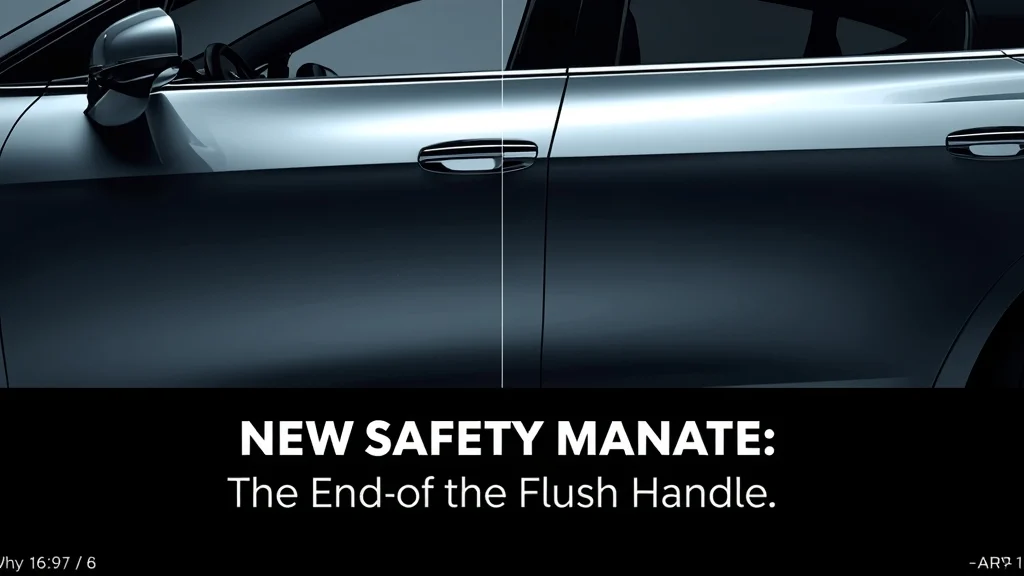
China to ban flush door handles on new cars from 2027 over safety concerns. Learn how this impacts EV design and vehicle safety standards. Read more!
China, the world’s largest automotive market, is preparing to implement regulations that will effectively ban flush-mounted, electronic door handles on new vehicles starting January 1, 2027. This significant change will require all passenger vehicles under 3.5 tons to feature mechanical door handles that function even in the event of power loss.
Safety Concerns Drive the Change
The new regulations are being driven by growing safety concerns surrounding accidents, power failures, and system malfunctions. In these scenarios, occupants and rescue personnel can face significant difficulties opening doors. Recent tragic incidents, such as a crash involving a Xiaomi SU7 Ultra in Chengdu, highlighted these risks. In that case, occupants and rescuers were unable to open the doors after a power failure, contributing to fatalities.
Authorities argue that electronic door handles rely on electrical power to operate, rendering them useless when the vehicle’s battery is depleted following a severe collision. This eliminates the possibility of manual door operation when it’s most needed, increasing the risk of occupants being trapped and facing life-threatening situations.
New Standards from the MIIT
As a result, the Ministry of Industry and Information Technology (MIIT) of China has drafted a new standard requiring all exterior and interior door handles to incorporate a mechanical opening mechanism that functions independently of the electrical system. If approved, this regulation will force manufacturers to redesign vehicle doors to include a mechanical backup, rather than relying solely on electronic mechanisms.
Global Impact on Automotive Design
This new regulation isn’t limited to vehicles manufactured and sold within China. It has the potential to significantly impact global automotive design. Given China’s position as one of the world’s largest vehicle export markets, major automakers may be compelled to modify door handle designs across their entire model lineups to streamline production and reduce tooling costs. This could lead manufacturers of both electric and traditional vehicles worldwide to reconsider their approach to door design, prioritizing safety and manual operation over purely aerodynamic styling.
Improved Emergency Response
Furthermore, the increased use of mechanical door handles is expected to improve the effectiveness of emergency rescue operations and reduce the risk of occupants being trapped in vehicles during various hazardous situations. This focus on practical safety measures is at the heart of the new regulations.
What this means for EV manufacturers
- Design Changes: EV manufacturers, like Tesla, who currently utilize flush door handles will need to redesign their vehicles to incorporate a mechanical release.
- Increased Costs: Redesigning and implementing mechanical door handles will likely increase production costs.
- Global Standardization: The change may push for a global standardization of door handle mechanisms, prioritizing safety.
The move by China underscores a growing emphasis on vehicle safety and a willingness to prioritize practical functionality over aesthetic design trends. It’s a clear signal to the automotive industry that safety features, particularly those related to emergency egress, are paramount.