
China’s EV battery recycling market tops $78 billion, with recycled materials worth $90 billion. Learn the key drivers and what’s next – read now.
The surge in electric‑vehicle (EV) adoption has created a parallel wave of used batteries that need handling. In China, the world’s largest EV market, recycling those batteries has turned into a multi‑billion‑dollar industry.
Massive Scale and Value
According to the Qianzhan Industry Research Institute, the Chinese EV battery recycling market is already worth 558 billion yuan (about $78 billion). When you add the value of recovered battery materials—metals, electrolytes, and plastics—the figure jumps to 647 billion yuan (roughly $90 billion). This places China at the forefront of the global circular‑economy push for clean mobility.
Two Main Recycling Pathways
Chinese recyclers operate on two complementary tracks:
- Second‑life use: Batteries that still retain capacity are refurbished for stationary storage, grid support, or other ancillary applications.
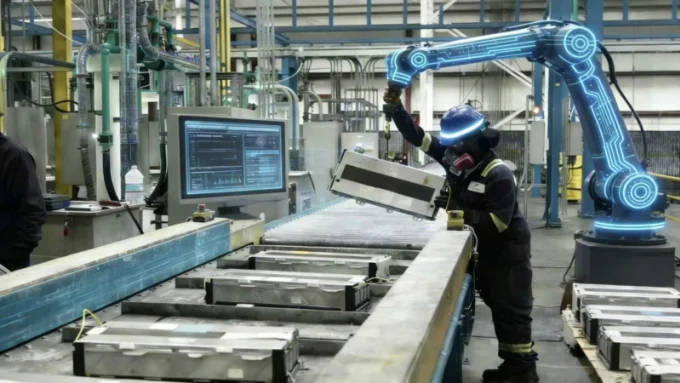
- Material recovery: End‑of‑life cells are dismantled, and valuable metals such as cobalt, nickel, lithium, and copper are extracted for reuse in new cells.
These pathways reflect the full battery life cycle—from collection and safe transport to processing and material re‑introduction.
Key Players Across the Value Chain
The recycling ecosystem includes upstream battery manufacturers, mid‑stream recyclers, and downstream material processors. Major upstream names like CATL, BYD, Shanxi Coking and Yunnan Tin supply raw cell components. Mid‑stream recyclers such as Huayou Cobalt, Ganfeng Lithium, New Energy Times and Haopeng Technology handle the core processing. Downstream firms—Dangsheng Technology and Heyuan Fuma, for example—focus on refining recovered metals into battery‑grade powders.
Capacity and Licensing Landscape
By 2024, China had listed 156 firms qualified for comprehensive lithium‑ion battery recycling, together reporting a nominal processing capacity of 423.3 million tonnes per year. In the lead‑acid segment, 71 licensed businesses together hold a capacity of 1.47 billion tonnes annually.
Revenue Streams and Market Share
Recycling lithium batteries generated roughly 220 billion yuan ($31 billion) in 2024 from the sale of reclaimed materials. Lead‑acid recycling added another 427 billion yuan ($59 billion). Overall, recycled battery material sales are approaching $90 billion, not counting the intrinsic value of the collected waste cells.
Among recyclers, Bangpu Recycling and CATL each account for about 6.4% of the recognized lithium‑battery recycling capacity. GEM follows closely at 5.9%, while Ganfeng Lithium and Xien Recycling each hold about 4.7%.
Regional Concentration
The bulk of recycling activity is clustered in provinces with established battery manufacturing hubs—Jiangxi, Guangdong, Zhejiang, and Anhui. These regions benefit from integrated supply chains and supportive local policies.
Policy Push and Future Outlook
In February 2025, China’s State Council approved a national EV battery recycling action plan, emphasizing standardized collection, tighter monitoring, improved traceability, and a crackdown on informal recycling operations. The policy aims to scale formal processing and reduce environmental risks.
Qianzhan projects that by 2030 the Chinese battery recycling market could exceed 1 trillion yuan ($139 billion), with recycled material revenue surpassing 2 trillion yuan ($278 billion). If these forecasts hold, recycling will remain a strategic pillar of China’s EV supply chain through the end of the decade.
What This Means for the Global Market
China’s aggressive recycling push not only secures domestic raw material supplies but also influences global commodity prices, investment flows, and technology standards. International OEMs and investors are watching closely as the country’s circular‑economy model reshapes the economics of EV battery production worldwide.
For stakeholders across the EV ecosystem, the takeaway is clear: battery recycling is no longer a peripheral concern—it is a core driver of sustainability, cost‑competitiveness, and long‑term growth.