
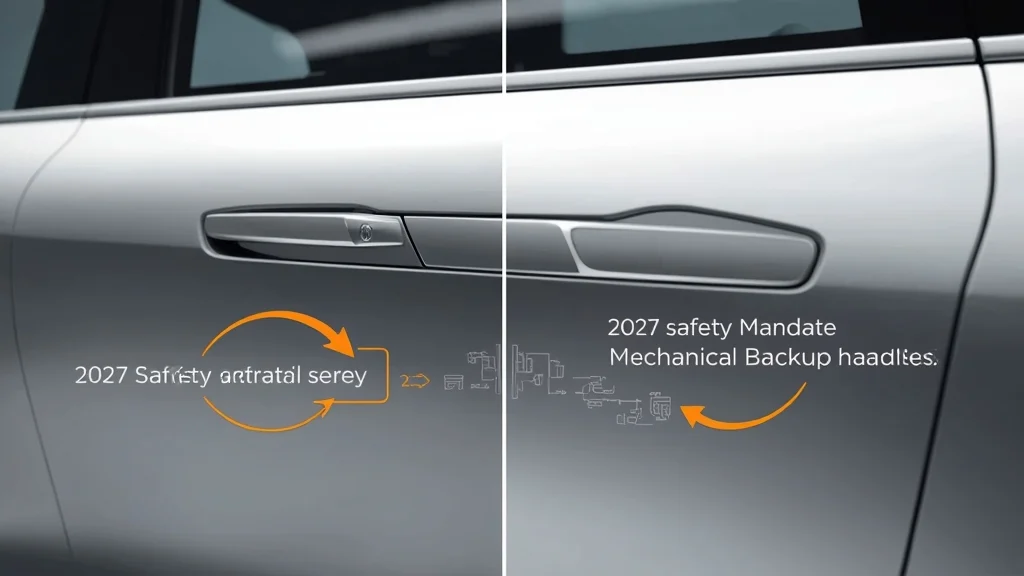
China will ban retractable electric car door handles starting 2027 to improve safety. Discover how this rule may reshape global EV design – read more now.
Beijing is set to introduce a sweeping safety rule that will ban the sleek, flush‑mounted door handles popular on many electric cars. Effective 1 January 2027, all passenger vehicles under 3.5 tonnes sold in China must be equipped with a mechanical door‑opening mechanism that works even when the vehicle’s electrical system fails.
Why the crackdown?
The move is driven by concerns that hidden, electrically‑operated handles can become a life‑threatening obstacle after a crash or a power‑loss event. Rescue crews have reported difficulty accessing cabins when the battery or wiring is damaged, and a high‑profile accident involving a Xiaomi SU7 Ultra in Chengdu highlighted the danger: occupants and emergency responders were unable to open the doors after the car lost power, leading to fatal outcomes.
What the new rule mandates
The Ministry of Industry and Information Technology (MIIT) drafted standards requiring every exterior and interior door handle to include a manual, mechanically‑actuated release. If approved, manufacturers will need to redesign doors to incorporate a physical lever or knob that can be operated without any electrical assistance.
Implications for the global auto industry
China is the world’s largest automobile market and a key export hub for many manufacturers. To avoid creating separate production lines for Chinese‑bound models, many global brands are expected to adopt the new mechanical‑handle design across all markets. This could mean that future EVs—from luxury sedans to affordable hatchbacks—will revert to more conventional door hardware, shifting the focus back to safety and practicality over aerodynamic styling.
Potential benefits
- Improved emergency rescue: First responders will have a reliable way to gain entry, reducing the risk of occupants being trapped.
- Enhanced occupant safety: Mechanical handles remain functional after severe impacts, eliminating a single point of failure.
- Standardised production: Automakers can streamline tooling and avoid costly market‑specific molds.
What manufacturers are saying
Some EV makers have already begun testing hybrid solutions—electric‑actuated handles that automatically pop out when the car is powered, but also feature a hidden manual latch. Others see the regulation as an opportunity to differentiate with innovative safety‑focused designs.
Looking ahead
While the ban specifically targets retractable, electrically‑only handles, the broader message is clear: safety will take precedence over aesthetic trends in the next wave of vehicle design. As the deadline approaches, industry watchers will be monitoring how quickly manufacturers can retrofit existing platforms and what new door‑handle concepts will emerge.
Stay tuned for updates on how this regulation reshapes the electric vehicle landscape worldwide.