
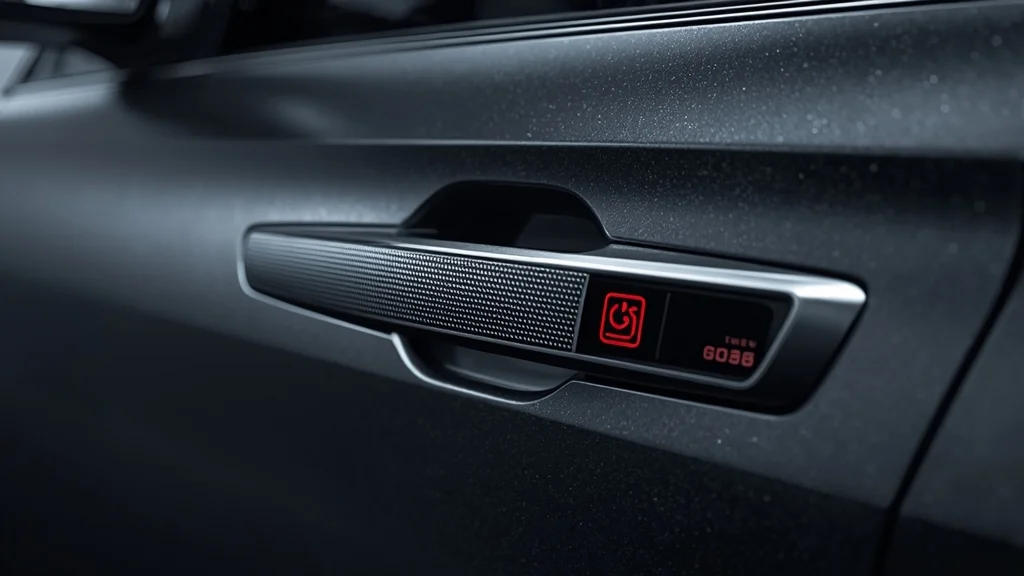
China’s GB48001‑2026 standard, effective 2027, mandates manual‑release door handles on commercial vehicles for emergency egress. Find out more!
China has officially approved a new national automotive safety standard (GB48001‑2026) that will take effect on 1 January 2027. The rule forces every passenger car and light‑duty commercial vehicle to be equipped with a manually operable door handle that can open the door even when the vehicle’s electronic systems fail or after a collision.
Scope of the Standard
The regulation applies to:
- Passenger cars (including electric vehicles)
- Light‑duty commercial vans and trucks
- Any future vehicle class that meets the “light‑weight” definition (recommended for other models)
Key Requirements for Exterior Door Handles
Each external door – except the rear hatch – must feature a handle that can be operated mechanically. The handle must be positioned within a designated zone on the door panel or frame, providing enough clearance for a hand to grip and pull in any vehicle state.
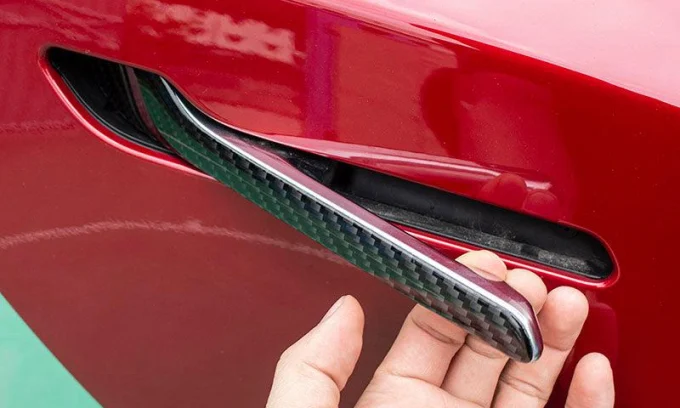
- Minimum opening force: the linked mechanical link must survive ≥ 500 N without breaking.
- After electrical failure tests, the handle must still release the door reliably.
- Graphic symbols indicating “manual release” must be fixed, unobstructed, and at least 100 × 70 mm with high contrast.
- Instructions in Chinese characters or clear pictograms must be placed nearby, with a minimum character height of 6 mm.
Requirements for Interior Door Handles
Inside the cabin, each door must also have at least one manually operable handle. These internal handles must:
- Be reachable without obstructed sight lines from a seated position.
- Be located within 300 mm of the door edge and vertically aligned with the driver’s eye level.
- Operate independently – pulling the interior handle must open the door even if the exterior electric mechanism is damaged.
- Withstand a minimum force of 300 N for rotary handles and 500 N for push‑button style handles without structural damage.
Performance Testing
Manufacturers must conduct technical tests that confirm:
- Both interior and exterior handles can open the door after simulated crash or power‑loss scenarios.
- The mechanical linkage tolerates the required force thresholds (≥ 300 N for rotary, ≥ 500 N for button).
- No deformation or separation occurs during repeated cycles.
What Prompted the Change?
Several fatal accidents in China, including a high‑profile collision involving the Xiaomi SU7 electric sedan, highlighted the dangers of doors that cannot be opened manually after an electronic failure. In response, regulators initiated a standards‑setting process in May 2025 that brought together more than 40 domestic automakers, parts suppliers, and testing agencies. Over 100 industry experts participated in multiple rounds of discussion to draft the technical safety framework now encoded in GB48001‑2026.
Implications for the Global Auto Industry
While the rule is Chinese‑specific, many manufacturers view it as a benchmark for future safety requirements worldwide. Vehicles destined for the Chinese market will need redesigns of door‑handle systems, and the same engineering solutions are likely to influence models sold elsewhere, especially as consumers demand reliable emergency egress.
Stay tuned as automakers begin integrating mechanical release mechanisms into the next generation of cars and vans.