
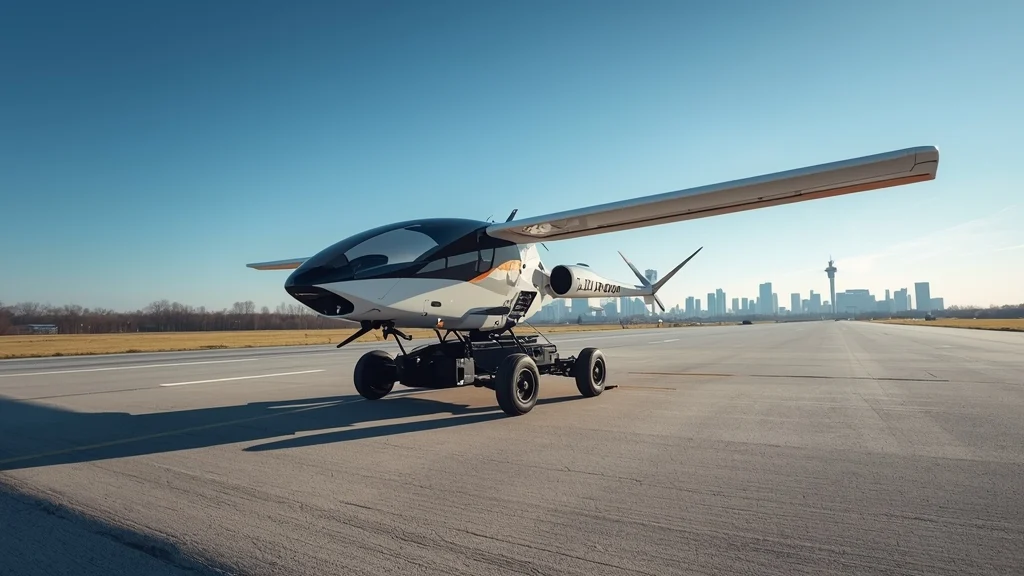
China’s aerospace giant successfully flew a 2‑seat, 150 km/h modular eVTOL that can also drive 300 km on roads. Discover the future of urban air mobility today!
On February 6, the China Academy of Space Technology (CASC) completed the maiden flight of its new modular eVTOL at Yongchuan Da’an Airport near Chongqing. The aircraft, capable of vertical take‑off and landing, carried two passengers at speeds up to 150 km/h and an altitude below 3,000 m.
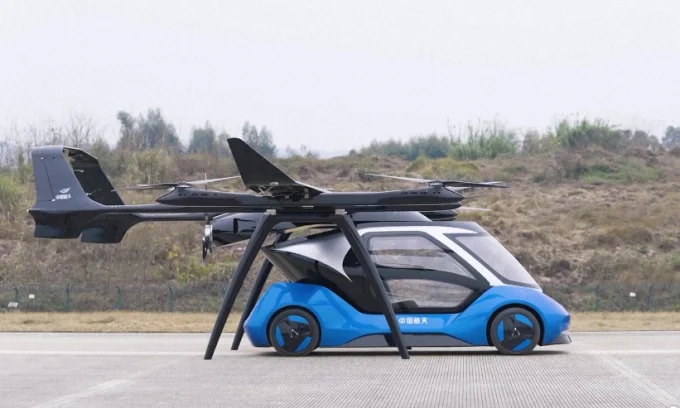
Modular Design That Switches Between Air and Road
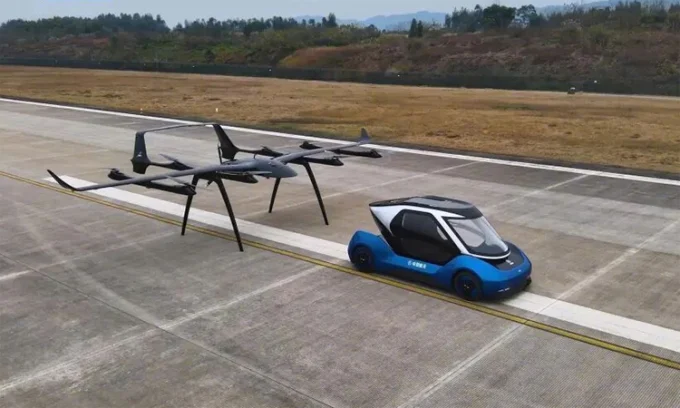
The vehicle consists of three detachable sections: a wing module, a central cockpit, and a ground‑drive chassis. In flight mode the wing and cockpit form a compact aircraft; on the ground the chassis operates as an all‑electric vehicle with a reported range of over 300 km.
Automatic alignment and release mechanisms allow the two modules to connect or separate on command, giving operators flexibility to customise cabin layouts, chassis types, or wing configurations for different missions.
Key Performance Figures
- Maximum cruise speed: 150 km/h (93 mph)
- Operational ceiling: < 3,000 m (≈10,000 ft)
- Ground‑drive range: > 300 km (≈186 mi) on electric power
- Capacity: 2 passengers plus pilot controls
Potential Use Cases
The hybrid vehicle is built to meet aviation safety standards while borrowing automotive technologies. CASC envisions roles in urban transport, last‑mile logistics, and rapid emergency response where both airborne and road‑based mobility are required.
How It Stacks Up Against Xpeng’s X2
Both CASC’s concept and Xpeng’s X2 share the idea of a detachable eVTOL that can also drive on roads. Xpeng’s X2, which completed manned test flights in 2023, integrates the aircraft inside a larger electric‑car chassis. CASC’s approach separates the flight and drive modules physically, offering a potentially more versatile payload and maintenance strategy.
Next Steps and Certification
The successful test validated vertical take‑off, forward flight stability, and the transition between air and ground modes. However, further flight trials and regulatory approvals are required before commercial deployment.
As cities worldwide explore urban air mobility solutions, this Chinese breakthrough adds a new dimension to the race for safe, efficient, and multi‑modal electric transport.