
EU tariffs aimed at Chinese EVs haven’t halted growth – Chinese car sales in Europe top 700,000 units. Find out why the barrier fails. Read more now!
European customs duties introduced in late 2024 to protect the domestic auto industry have targeted electric vehicles (EVs) and extended-range electric vehicles (EREVs) made by Chinese manufacturers. The goal was two‑fold: make it harder for Chinese brands to sell in the EU and push them to set up local factories.
Sales keep climbing despite extra duties
Rather than curbing demand, the tariffs have simply reshaped it. The combined import duty – a base 10 % plus an additional up‑to‑35 % levy on EVs – was applied from November 2024. Yet Chinese‑origin cars are projected to exceed 700,000 units across the EU, the United Kingdom and the EFTA nations this year, up from 408,000 in 2023.
Manufacturers shift to hybrids and ICE models
The extra charges apply only to pure‑electric and EREV models. Hybrid and internal‑combustion‑engine (ICE) vehicles continue to face the standard 10 % duty. Chinese brands have therefore pivoted toward those segments, offering more affordable hybrids and conventional models that avoid the higher tariff bracket.
Cost advantage outweighs localisation pressure
Producing a vehicle in China can be up to 30 % cheaper than manufacturing the same model in Europe. Setting up a European plant solely to dodge a tariff is not financially sensible for most firms. Instead, many are exploiting the market gap by keeping production in China and exporting under the lower duty rate.
Current localisation efforts
Only about two‑thirds (≈66.7 %) of Chinese‑built cars imported into Europe still benefit from the 10 % standard rate. Meanwhile, EVs, which accounted for 44 % of Chinese‑brand sales in the first ten months of 2024, have fallen to roughly 34 % in 2025 after the tariff took effect.
Local assembly remains limited. Fewer than 20,000 Chinese‑brand vehicles are expected to be assembled in Europe this year. BYD is the most notable exception, planning a new plant in Hungary capable of producing up to 150,000 cars annually. Until that plant becomes operational, BYD’s European output stays modest.
Future ambitions
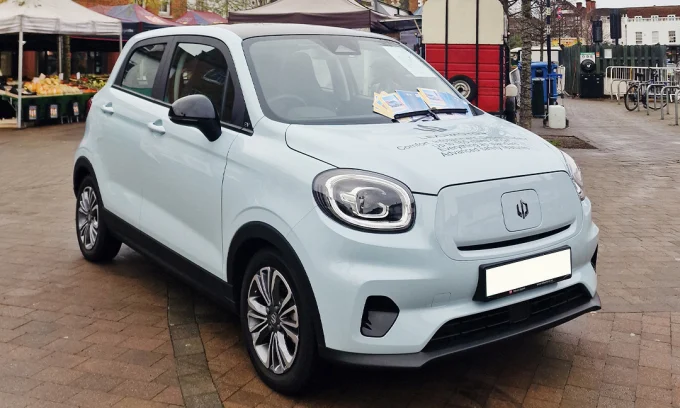
Other Chinese OEMs have announced localisation plans, but concrete numbers are still scarce. Leapmotor is preparing to launch its B10 model from a facility in Spain. Great Wall Motors (GWM) has set an ambitious target of 300,000 locally produced vehicles by 2029. Dongfeng and Hongqi say they are evaluating European sites, while Chery, Xpeng and GAC have already assembled limited batches in the region.
What the data suggest
The EU’s tariff strategy aimed to protect home‑grown manufacturers and force Chinese brands into Europe‑based production. So far, the policy has not stemmed the overall influx of Chinese cars; it has merely nudged manufacturers toward product lines that sidestep the higher tax, while the majority of production remains overseas.
As the European market continues to open to affordable Chinese models, the effectiveness of the current tariff regime will likely be reassessed in the coming years.