
Chinese EV makers are shifting abroad as domestic sales slow, with exports now outpacing local deliveries. Explore the trends and opportunities now.
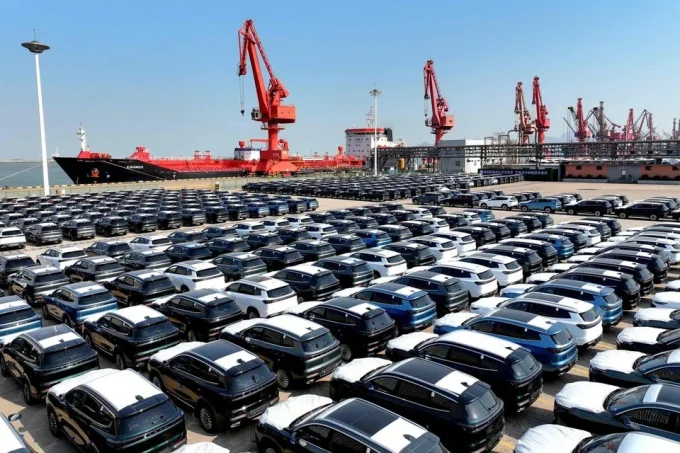
China’s electric‑vehicle (EV) industry is looking beyond its massive home market as growth begins to plateau. In February, BYD shipped roughly 100,600 vehicles abroad, accounting for about 53% of its total sales that month – the first time its exports outstripped domestic deliveries. Great Wall Motor saw a similar shift, delivering more than 42,600 of its 72,600 February vehicles overseas.
Why the domestic market is cooling
Intense price competition, narrowing profit margins and more cautious consumer spending have eroded the once‑robust demand that powered China’s EV boom. Government subsidies have receded, competition has intensified, and buyers are now vetting large purchases more carefully. As a result, the rapid sales acceleration the sector enjoyed in previous years is slowing.
Export becomes a core growth pillar
Export is no longer a side project. Industry data projects Chinese manufacturers will ship over 2.6 million EVs abroad in 2025. This surge is made possible by tighter cost control, a maturing battery‑supply chain and the ability to scale production quickly.
Target markets and emerging footholds
Manufacturers are eyeing regions where trade barriers are lower and demand for affordable, low‑emission vehicles is rising:
- Southeast Asia – Thailand, Indonesia, Malaysia, Vietnam and Cambodia are seeing Chinese EVs evolve from niche players to serious contenders within a few years.
- Latin America – price‑sensitive markets are opening up to Chinese‑made EVs that promise lower purchase and running costs.
- Middle East – growing interest in low‑emission fleets creates new opportunities for cost‑competitive models.
Local production to dodge tariffs and regulations
Trade tensions with Europe and North America have raised tariffs and tightened certification rules, squeezing margins on fully built‑up exports. In response, Chinese firms are building assembly lines abroad, securing distribution networks and establishing after‑sales services to lock in long‑term market presence.
New factories across Southeast Asia
According to the Straits Times, a wave of new Chinese EV plants will roll out in 2026:
- BYD – a full‑scale plant in Indonesia slated for Q1 2026 and an assembly facility in Malaysia later that year, complementing existing sites in Thailand and a smaller unit in Cambodia.
- Chery – plans to open a factory in Vietnam in the second half of 2026 and a dedicated EV/hybrid plant in Malaysia the same year.
These investments align with regional governments’ push to attract automotive capital, offering incentives that further lower production costs.
Risks and the road ahead
While the overseas push offers a lifeline, it carries risks. Higher duties in Europe and North America can erode profit margins, and differing safety and emissions standards demand additional engineering effort. Companies are mitigating these challenges by localising components, forging joint ventures and focusing on markets where price advantage is most decisive.
Overall, Chinese EV exporters are reshaping their growth strategy, turning global demand into the new engine for expansion as the home market matures.