
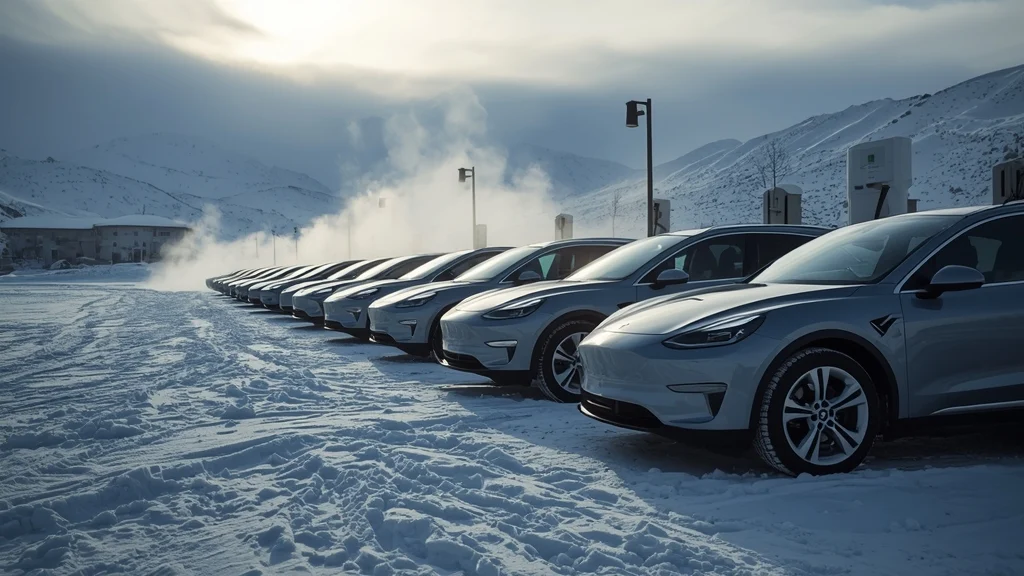
Explore how 67 electric cars, from budget hatchbacks to luxury SUVs, performed in -27°C trials. See the rankings and discover which EV excels in the cold. Read more now!
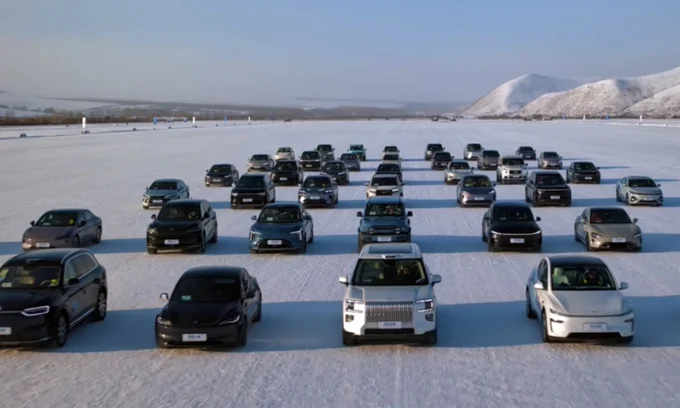
In a groundbreaking winter experiment conducted in Inner Mongolia, China, a fleet of 67 electric vehicles (EVs) was pushed to its limits in temperatures ranging from -10°C to -27°C. Organized by Autohome, the country’s leading online automotive platform, the trial examined seven real‑world scenarios, including range, energy consumption, fast‑charging speed, climate‑control impact, automatic emergency braking, acceleration, and off‑road capability.
Scale of the Test
The event marked Autohome’s largest winter‑time evaluation to date, featuring pure‑electric models and a handful of plug‑in hybrids (PHEVs) across every vehicle class—compact hatchbacks, midsize sedans, and full‑size SUVs. Prices spanned from 60,000 CNY (about $8,500) up to more than 2 million CNY (≈ $285,000), offering insight into how budget‑friendly as well as premium EVs cope with extreme cold.
Cold‑Weather Range Rankings
When it came to maintaining driving range in sub‑zero conditions, the four‑wheel‑drive Xpeng P7 led the pack with a 53.9% range retention compared to its standard WLTP figure. It was followed closely by BYD’s Yangwang U7 (51.8%) and Zeekr 001 (49.6%). Tesla’s Model Y, also a four‑wheel‑drive, ranked 31st with 35.2%, while Li Auto’s i8 fell to the bottom at 34.8%.
Energy Consumption per 100 km
The most efficient hatchbacks shone in this metric. BYD’s front‑wheel‑drive Seagull recorded the lowest consumption at 23.5 kWh/100 km, with Geely’s rear‑wheel‑drive Xingyuan close behind. BYD’s rear‑wheel‑drive Seal 06 took third place. Among SUVs, Xiaomi’s YU7 posted 33.7 kWh/100 km, just ahead of the Tesla Model Y at 34.9 kWh/100 km.
Fast‑Charging in Extreme Cold
Charging speed dropped dramatically for many models in icy weather, yet a few surprised the testers. The Avatr 06 achieved a full charge from 30% to 80% in just 15 minutes. Nevo 06 and Fulwin A9L, both extended‑range EVs (EREVs), followed. Xiaomi’s YU7 required 31 minutes, while the Tesla Model Y needed 35 minutes, placing them near the bottom of the list.
Key Takeaways
- Four‑wheel‑drive EVs tended to retain more range in cold climates.
- Small, front‑wheel‑drive hatchbacks are the most energy‑efficient at low temperatures.
- Fast‑charging technology can still deliver impressive results, but performance varies widely by model.
- Premium brands do not automatically guarantee superior cold‑weather performance; many affordable models outperformed luxury competitors.
Looking Ahead
Autohome’s winter‑test results underscore the growing maturity of electric‑vehicle technology, even under the harshest conditions. As automakers continue to refine battery chemistry, thermal management, and charging protocols, consumers can expect more reliable EV experiences regardless of climate.
For the latest updates on EV performance, battery innovations, and future testing events, stay tuned to our coverage.