
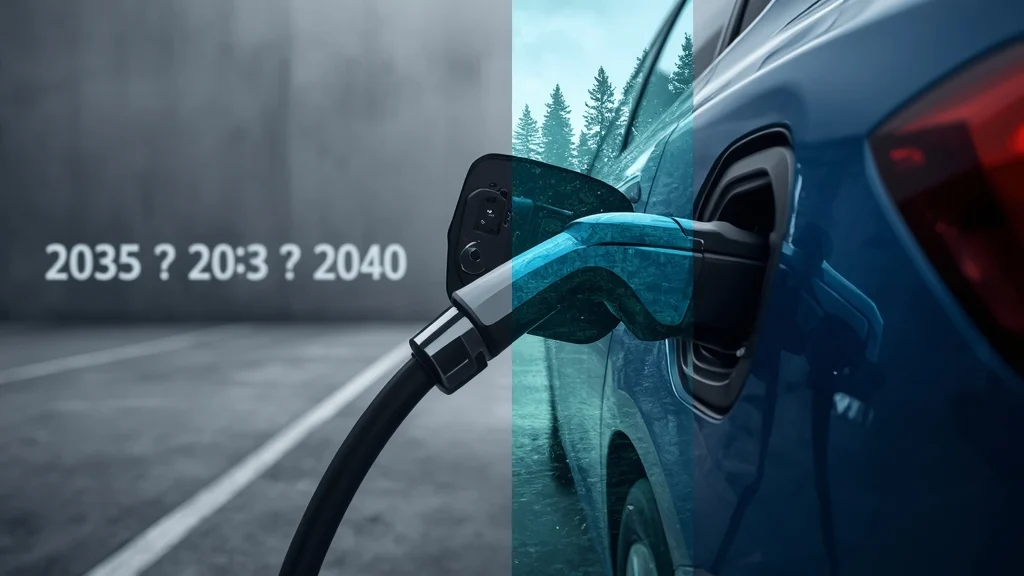
Explore why the EU may push its 2035 gasoline car ban to 2040, the industry pressure behind it, and the impact on Europe’s EV transition. Read more now.
The European Commission has signaled a possible retreat from its 2035 deadline that would ban the sale of new gasoline‑powered cars across the bloc. Under the new proposal, the EU could extend the target to 2040, leaving room for a limited number of internal‑combustion‑engine (ICE) models to stay on the market.
Background: A 2035 Zero‑Emission Goal
Current EU legislation requires that, from 2035 onward, all new passenger cars and light trucks emit zero CO₂ on the road. The rule is a cornerstone of the EU’s ambition to become climate‑neutral by 2050.
Proposed Shift to 2040
Commission climate‑policy chief Wopke Hoekstra told the European Parliament that the bloc is “in the middle of a massive transition” and faces fierce competition from China and the United States. He suggested softening the rule to a 90% CO₂ reduction target instead of a full 100% cut.
This would mean that most new vehicles would still need to be electric, but a small “residual” share of ICE cars could continue to be sold, provided manufacturers offset the remaining emissions through low‑carbon steel, synthetic fuels, or non‑food‑based biofuels such as agricultural waste or used cooking oil.
What the New Rules Would Look Like
- A three‑year “transition window” from 2030 to 2032, during which manufacturers must cut CO₂ by 55% compared with 2021 levels.
- For light commercial vehicles, the 2030 emissions reduction target would be lowered from 50% to 40%.
- Manufacturers would be required to demonstrate how they plan to meet the revised targets using the aforementioned offset measures.
Industry Push and Political Pressure
Germany, Italy and key auto‑industry lobbies have been vocal in urging the Commission to relax the ban. Schaeffler, a major German parts supplier, warned that a hard deadline threatens jobs at its factories. Volker Robel, a worker council representative, said a recent internal poll showed 50% of staff were worried about their future.
The European auto sector employs roughly 14 million people and contributes about 7 % of the EU’s GDP. With annual vehicle exports valued at €170 billion, the industry argues that a sudden shift to exclusively electric cars could jeopardise competitiveness.
Critics Say It’s a Major Setback
Environmental NGOs and transport think‑tanks describe the proposal as the “biggest rollback” of EU green policy in five years. Lucien Mathieu of the Transport & Environment group warned that weakening the ban would send a “confusing signal” to both consumers and manufacturers, encouraging continued investment in ICE and hybrid technologies while the world moves toward full electrification.
Challenges Facing the EV Rollout
Several factors make a rapid EV transition difficult across the 27 member states:
- High upfront costs: Battery packs remain expensive, and many consumers cannot afford premium electric models.
- Charging infrastructure gaps: Rural and some urban areas still lack sufficient public fast‑charging stations.
- Policy uncertainty: Recent cuts to Germany’s EV purchase subsidies have dampened demand.
- Competition from low‑cost Chinese EVs: European manufacturers face pricing pressure from cheaper imports.
Data from the first nine months of 2025 show that just over 16 % of newly registered vehicles were battery‑electric, underscoring the slow market uptake.
European Auto Jobs at Stake
Beyond emissions, the debate is also about jobs. The auto industry fears that an abrupt ban could trigger factory closures, especially for firms still heavily invested in diesel and petrol technologies. The Schaeffler example illustrates the anxiety on the shop floor, where workers fear losing their livelihoods if ICE production ends.
Expert Views on the Way Forward
Simon Young of DW notes that “European consumers are price‑sensitive, and the removal of subsidies has made electric cars less attractive.” He also points out that Germany’s rollout of charging stations has been slower than needed, creating uncertainty for potential buyers.
Matthias Zink, head of drivetrain and chassis systems at Schaeffler AG, stresses the need for a “fair technical competition”: Europe should keep all technologies on the table while staying committed to carbon‑reduction goals.
Parallel Moves in Southeast Asia
While Europe debates its timeline, Vietnam has announced a green‑transport roadmap that aims to end the production, assembly and import of fossil‑fuel‑powered cars and motorcycles by 2040, with a full shift to electric or other green fuels by 2050. The plan mirrors the EU’s long‑term ambition but sets a clearer deadline for the domestic market.
Vietnam’s roadmap also includes a 2025‑2030 target for at least 50 % of new public transport vehicles (taxis, buses) to run on electricity or green fuels, highlighting the global push toward cleaner mobility.
What Comes Next?
The revision still needs approval from EU member‑state governments and the European Parliament. If adopted, it will reshape the continent’s auto‑manufacturing strategies, affect millions of jobs, and influence the pace of electric‑vehicle adoption worldwide.
Stakeholders across the spectrum – from policymakers and auto giants to environmental advocates and everyday drivers – will be watching closely as the EU decides whether to stick to its 2035 vision or settle for a 2040 compromise.