
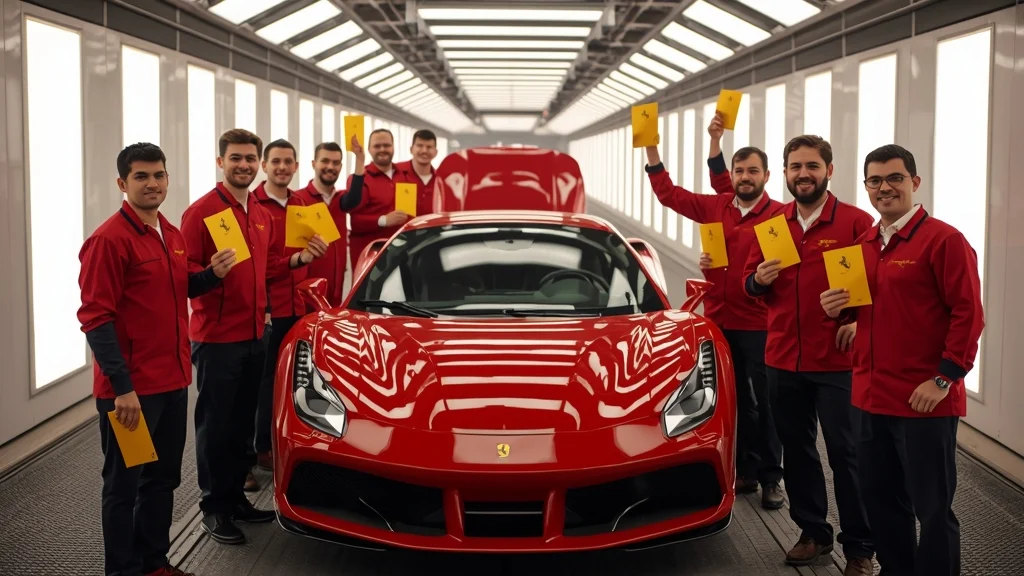
Ferrari rewards its Italian workforce with a €14,900 bonus per employee after a record profit year. Discover the payout, financial results, and upcoming EV launch.
Ferrari has announced a €14,900 (about $17,600) bonus for each employee at its Italian facilities, a direct share of the company’s impressive financial performance despite a slight dip in car deliveries.
Financial Highlights for FY 2023
In the most recent fiscal year, the Italian supercar maker posted a 7% rise in net revenue, reaching €7.1 billion ($8.4 bn). Net profit climbed to €1.6 billion ($1.9 bn), up from €1.52 billion the year before.
Car deliveries slipped by 112 units, ending the year at 13,640 vehicles, but higher margins and a strategic focus on high‑value models offset the volume decline.
Bonus Structure and History
The €14,900 payout surpasses the €14,400 bonus paid out for 2024 and is not a random figure. It is calculated based on several performance metrics: total deliveries, adjusted EBITA, product quality scores, and employee absenteeism rates.
Ferrari’s profit‑sharing approach has steadily increased over the past few years:
- 2020 – €7,500 per employee
- 2021 – €12,000 per employee
- 2022 – €13,500 per employee
- 2023 – €14,900 per employee
Looking ahead, the company aims to grow sales by 5% and improve profit margins by 7% this year. Hitting those targets could trigger an even larger bonus in the next cycle.
Who Gets the Bonus?
The current payout applies to roughly 5,000 staff members based in Italy. Employees in other regions are not included in this round of profit‑sharing.

First Fully Electric Ferrari on the Horizon
2023 also marks a pivotal moment for the brand’s electrification strategy. Ferrari is set to unveil its first pure‑electric model, the Ferrari Luce, on 25 May. Designed by Jony Ive – the former chief designer behind the original iPhone – the Luce features an interior that departs dramatically from the classic Ferrari aesthetic.
If the market embraces the Luce, Ferrari plans to expand its electric‑focused lineup. By 2030, the automaker targets a portfolio composition of 40% internal‑combustion engines, 40% hybrids, and 20% fully electric vehicles.