
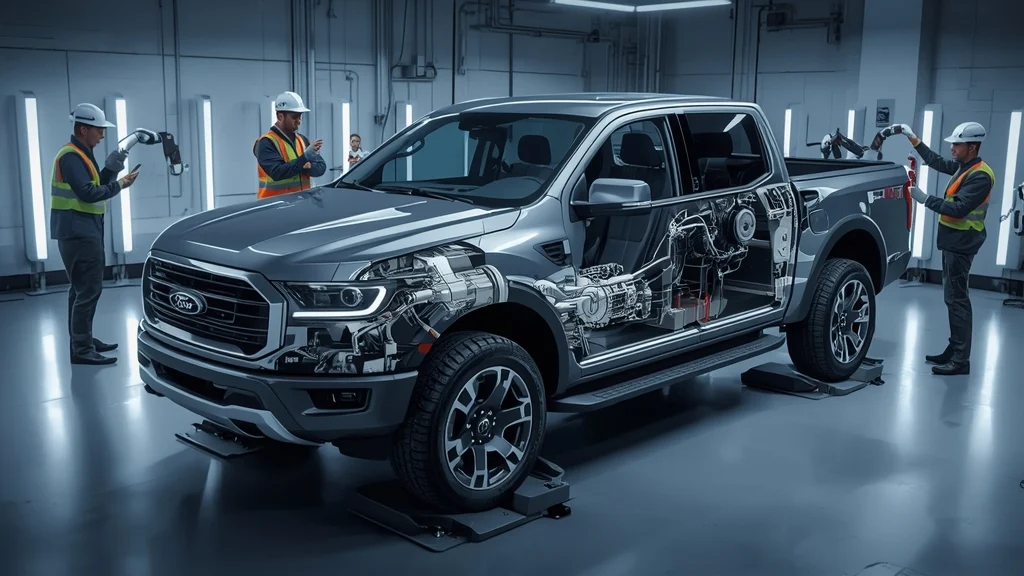
Ford is developing the world’s cheapest electric motor for a sub‑$30,000 pickup due in 2027. Find out how the automaker plans to beat China’s EV pricing – learn more now.
Ford’s Bold Play for the Cheapest EV Motor
In a move designed to out‑pace Chinese rivals, Ford is engineering what it calls the world’s lowest‑cost electric motor. The motor will power a new compact electric pickup slated for a 2027 launch, with a target price of roughly $30,000 (about 800 million VND).
Separate Teams, Shared Goal
Instead of relying on incremental improvements to existing power‑train technology, Ford created a dedicated research hub in Long Beach, California. About 500 senior engineers work in a stand‑alone office, isolated from the company’s main engine plant in Michigan. Their mandate: design an electric motor that costs less than any off‑the‑shelf unit Ford could buy.
Two Drivetrain Options, Flexible Battery Packs
The upcoming pickup will be offered in a single body style with a four‑door cabin, but buyers can choose between two power‑train configurations:
- Rear‑wheel drive (RWD): a permanent‑magnet motor on the rear axle.
- All‑wheel drive (AWD): the RWD motor plus an additional induction motor on the front axle, mirroring the layout used on Tesla’s Model 3 AWD variants.
Multiple battery‑pack sizes will be available, letting customers balance the lowest purchase price against longer driving range.
Re‑thinking the Whole Vehicle Architecture
To hit the $30k price point, Ford is not just trimming motor costs—it’s re‑engineering the entire vehicle:
- The Universal EV platform now uses roughly 25 % fewer fasteners and bolts than typical EVs.
- Wiring harnesses are slimmer and lighter, reducing material and assembly time.
- Large‑cast structural members replace many separate components, increasing rigidity while cutting part count.
- The battery pack is integrated into the floor and roof, creating a flat, sturdy chassis that also serves as the vehicle’s floor pan.
These changes shave about 15 % off the time it takes for a unit to roll off the line at Ford’s Louisville, Kentucky plant, and they cut the number of workstations in the assembly line by roughly 40 %.
Competing Directly with Chinese EV Makers
Chinese manufacturers have long benefitted from massive production scales and low‑cost labour, giving them a price advantage in the global EV market. Ford’s low‑cost strategy is a direct response, aiming to make electric pickups affordable for mainstream buyers who have so far found EV prices prohibitive.
Challenges Ahead
While the “cheapest electric motor” ambition is a headline‑grabbing claim, it raises questions about performance, durability and real‑world driving experience. Ford acknowledges that proving the motor’s reliability and efficiency will be essential before the $30,000 pickup can achieve mass‑market success.
Looking Forward
The Universal EV platform and its ultra‑affordable motor are cornerstone projects in Ford’s long‑term plan to democratize electric mobility. If the upcoming pickup meets its cost and quality targets, it could pave the way for a new generation of low‑price EVs that finally bring electric driving within reach of the average consumer.