
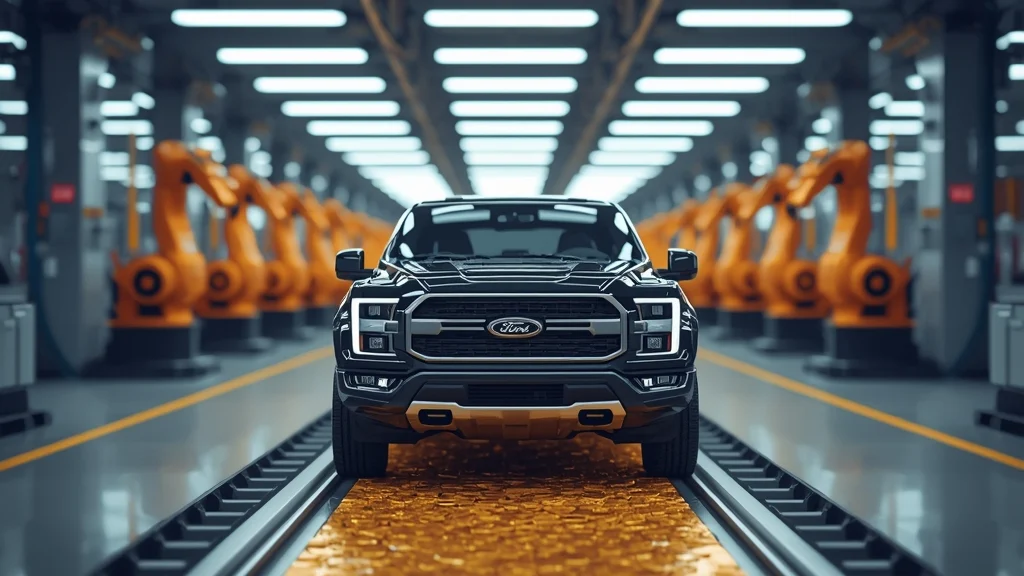
Ford is developing the world’s cheapest electric motor to power a sub‑$30,000 pickup slated for 2027, aiming to outpace Chinese rivals on price. Discover the strategy behind this affordable EV breakthrough.
Ford announced a bold plan to develop the cheapest electric motor on the planet, a move designed to power a new sub‑$30,000 pickup slated for launch in 2027. By shaving cost at the heart of the powertrain, the automaker hopes to undercut Chinese rivals that dominate the low‑price EV segment.
Why Ford is Betting on Low‑Cost EVs
Mass‑market consumers have been hesitant to adopt electric vehicles due to high upfront prices. Ford’s new strategy targets this gap, promising an affordable electric truck that can appeal to the average buyer while still delivering the range and capability expected from a pickup.
The Secret Sauce: A Dedicated Engineering Team
Instead of relying on existing power‑train divisions, Ford assembled a lean, 500‑person team in Long Beach, California, separate from its traditional Michigan operations. The group’s mandate: design an electric motor that costs less than any motor Ford can currently purchase from suppliers.
Ford believes that a small, agile team free from bureaucratic red tape is essential for achieving the aggressive cost targets while the broader EV motor technology continues to mature.
Designing a Budget‑Friendly Electric Pickup
The upcoming model will be offered in a single body style with a four‑door cabin, but buyers can choose between two drivetrain layouts. A rear‑wheel‑drive version will use a permanent‑magnet motor, while an all‑wheel‑drive variant adds an induction motor on the front axle, mirroring the approach used on the Tesla Model 3.
Multiple battery‑pack options will let customers balance price against driving range, keeping the base price close to $30,000.
Reinventing the Vehicle Architecture
To hit the $30,000 target, Ford is overhauling more than just the motor. The Universal EV platform cuts bolt count by roughly 25 % and streamlines wiring, while larger cast‑ings reduce part count. The battery pack is integrated into the vehicle floor, serving as both energy source and structural element.
These changes shave roughly 15 % off assembly time at the Louisville, Kentucky plant and reduce the number of touch‑points on the line by 40 %.
Implications for the Global EV Market
If successful, the low‑cost pickup could become the gateway for a new generation of affordable EVs, challenging Chinese manufacturers that have already built efficient supply chains for cheap electric cars.
Challenges Ahead
Developing the “world’s cheapest” electric motor raises questions about performance, durability and real‑world user experience. The proof will come when the $30,000 pickup rolls off the production line and reaches customers.
Ford views the Universal EV project as a long‑term effort to make electric mobility economical for the masses, even as it acknowledges the steep hurdles that lie ahead.