
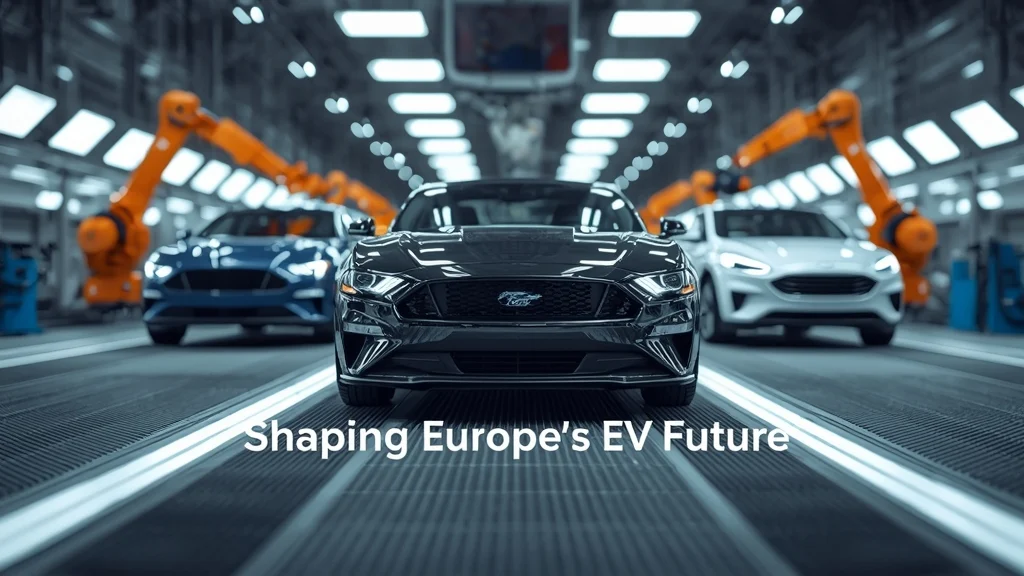
Discover how the Ford Geely partnership could reshape EV production in Europe – read more now!
Reuters has reported a surprising development in the auto world: two of the biggest players from opposite sides of the Pacific—U.S.‑based Ford and China’s Geely—are in talks to form a manufacturing and technology alliance.
What’s on the Table?
The core idea is that Geely would use Ford’s existing factories in Europe to assemble vehicles, giving the Chinese automaker a direct supply line to the continent while allowing Ford to put idle capacity to work.
Why Europe Matters
Europe’s strict import duties on Chinese‑made electric cars make a local assembly footprint especially valuable. By producing inside the EU, Geely can sidestep hefty tariffs and compete on price with home‑grown brands.
Ford’s Valencia plant in Spain has surfaced as the most likely candidate for the joint‑venture production hub.

Tech Collaboration Beyond the Assembly Line
Both companies are also eyeing a broader cooperation on autonomous‑driving systems and connected‑car software. Access to China’s cutting‑edge EV ecosystem could serve as a “lifeline” for Ford, which has admitted it is lagging behind rivals in the electric arena.
- Shared R&D on self‑driving hardware and AI‑based vehicle platforms.
- Joint development of over‑the‑air (OTA) update infrastructure.
- Co‑creation of battery‑management and charging‑network solutions.
Historical Ties That Set the Stage
The relationship isn’t brand‑new. In 2010, Geely purchased Volvo from Ford, establishing a precedent for cross‑border collaboration. Since then, Geely has risen to become China’s second‑largest automaker, targeting more than three million vehicles in 2025.
Combining Ford’s 120‑year manufacturing pedigree with Geely’s rapid software‑driven innovation could produce a new global contender capable of taking on Tesla, Xiaomi and other emerging EV challengers.
Regulatory Hurdles and Political Scrutiny
Any trans‑national deal will be closely examined by U.S. authorities. Ongoing tightening of data‑security and automotive‑software regulations under the current administration could pose obstacles.
Nevertheless, Ford CEO Jim Farley believes that, with proper safeguards, such alliances are essential for traditional automakers to survive the onslaught of low‑cost electric vehicles from the East.
Stay tuned as negotiations develop—this partnership could redefine the future of electric mobility in Europe and beyond.