
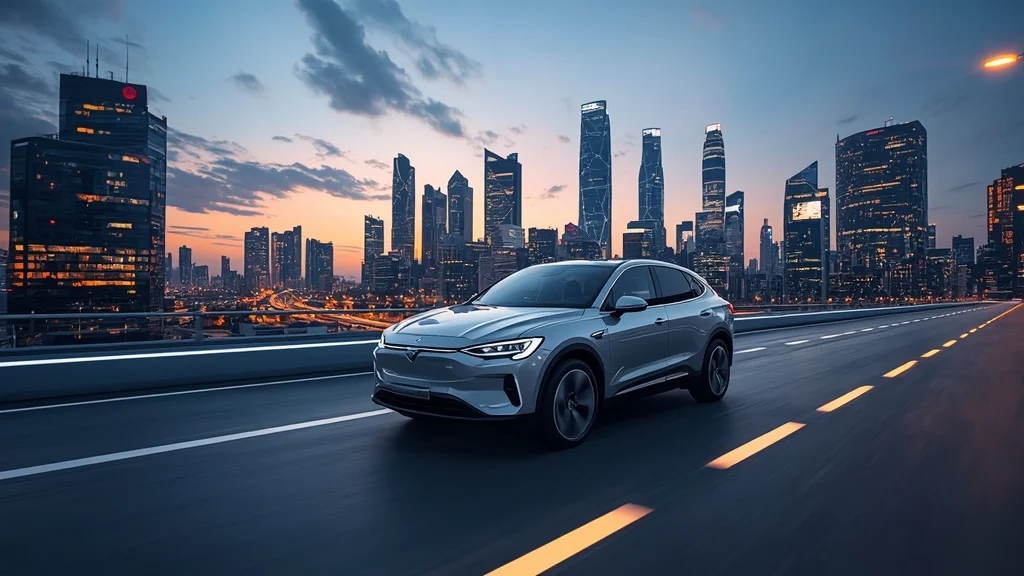
Global electric vehicle market 2025 sets a new sales record despite policy changes. Discover the trends and what’s driving growth – read more now!
Global Momentum Continues
According to the latest Rho Motion report, 20.7 million electric vehicles were delivered worldwide in 2025 – an increase of 3.6 million over 2024 and roughly 20 % higher than the previous year. The surge sets a fresh all‑time high for the global electric vehicle market.
Regional Highlights
China Leads the Pack
China remains the largest EV market, logging 12.9 million sales, up 17 % YoY.
Europe Rebounds Strongly
Europe posted about 4.3 million EVs, a 33 % jump after a brief dip caused by changes to subsidy schemes in several countries, notably Germany.
Rest of the World
Other regions together accounted for 1.7 million vehicles, a remarkable 48 % increase.
North America Slips Slightly
In contrast, North America saw a 4 % decline, delivering roughly 1.8 million EVs. Analysts attribute the dip to the phase‑out or tightening of federal and state incentives, though European experience suggests demand may recover as the market adapts.
Vietnam’s Fast‑Growing EV Scene
Vietnam has emerged as a notable growth story, driven largely by VinFast. In December 2025 the automaker handed over a record 27,649 electric cars, the highest monthly delivery ever in the country. Annual sales reached 175,099 units, nearly double the previous record held by foreign brands, cementing VinFast’s leadership for the 15th consecutive month.
VinFast’s strategy centers on an all‑electric lineup, backed by extensive infrastructure: around 400 service centers and over 150,000 charging points spanning all 34 provinces. The “Mạnh Liệt Vì Tương Lai Xanh” campaign, featuring a zero‑down‑payment scheme, price incentives for affordable models, and free charging at V‑Green stations through 2027, has further spurred domestic demand.
Manufacturers’ Strategic Divergence
Western automakers are recalibrating, slowing EV investment and extending the life cycles of internal‑combustion models amid policy volatility and short‑term cost pressures.
Asian players, especially Chinese manufacturers, continue to double down on EV production, prioritising low‑cost models and cutting‑edge technologies. This aggressive push helped China become the world’s largest auto exporter in recent years.
Why Consumers Are Switching
Beyond incentives, electric cars offer clear economic advantages. The International Energy Agency notes that EVs have significantly lower operating costs thanks to stable electricity prices and reduced maintenance from simpler mechanics.
Zero tailpipe emissions improve urban air quality and lower public‑health risks, an increasingly important factor for large cities. Combined with quiet, smooth driving experiences and an expanding charging network, these benefits form a solid foundation for sustained EV growth, independent of short‑term policy support.
Looking Ahead
With the 2025 sales record in place, the global electric vehicle market appears poised for continued expansion. While policy environments will shape short‑term dynamics, the underlying consumer demand for cleaner, cheaper, and more convenient mobility is set to keep the momentum rolling.