
Learn when cars can legally park on sidewalks or road shoulders under the 2024 traffic law, the 25 cm rule, signage requirements, and safety tips. Read more now!
Parking a car right next to the curb is a common sight in many cities, but many drivers aren’t sure whether it’s actually allowed. Vietnam’s 2024 Road Traffic Safety Law clarifies exactly when, where, and how a vehicle may stop or park on a road shoulder or on the sidewalk (known locally as the “hè phố”). Below is a practical breakdown of the rules, the required signage, and the mechanical risks of short‑term “low‑high” parking.
Where Parking Is Permitted
The law distinguishes between two types of public ways:
- Roads (đường bộ): This broader category includes highways, provincial roads, and any road outside the central urban grid.
- Streets (đường phố): Urban streets that run through residential or commercial districts.
For both categories, a driver may stop or park only if the space meets one of the following conditions:
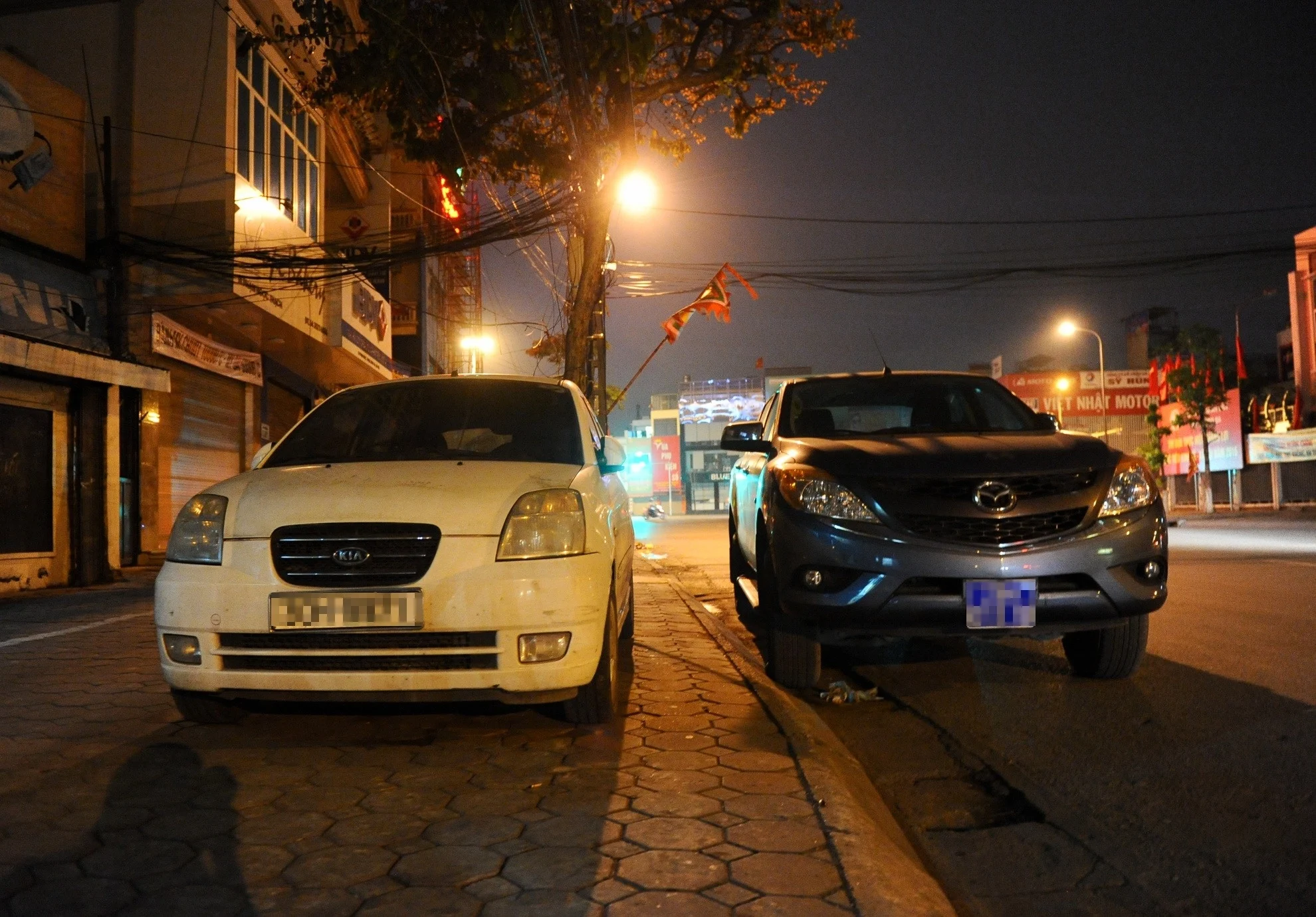
- The road has a **wide shoulder** or an adjoining strip of land that is not part of the main carriageway.
- If the shoulder is narrow or missing, the vehicle may park **as close as possible to the right‑hand edge** of the traffic flow, but still obey the 25 cm distance rule (see below).
The 25 cm Rule
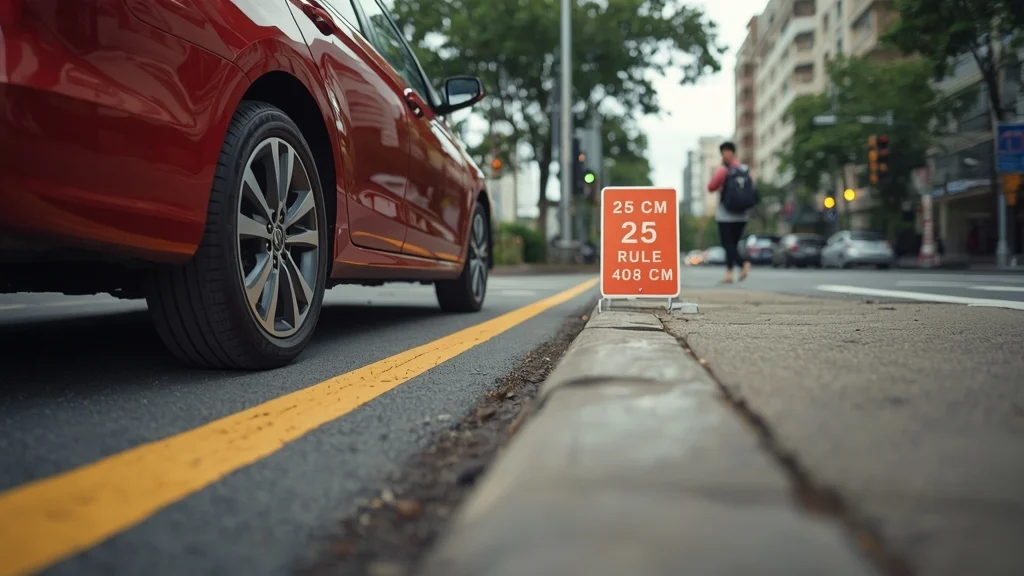
Article 18, Clause 5 of the 2024 Traffic Law states that a car may park on the edge of a road or sidewalk provided the distance between the outer wheel of the vehicle and the curb does not exceed 25 cm. This measurement is taken from the tyre on the passenger side to the edge of the shoulder or sidewalk.
In practice, the closer the vehicle sits to the curb (without crossing the line), the less it interferes with pedestrians and other road users.

Special Signage: When the Sidewalk Becomes a Parking Zone
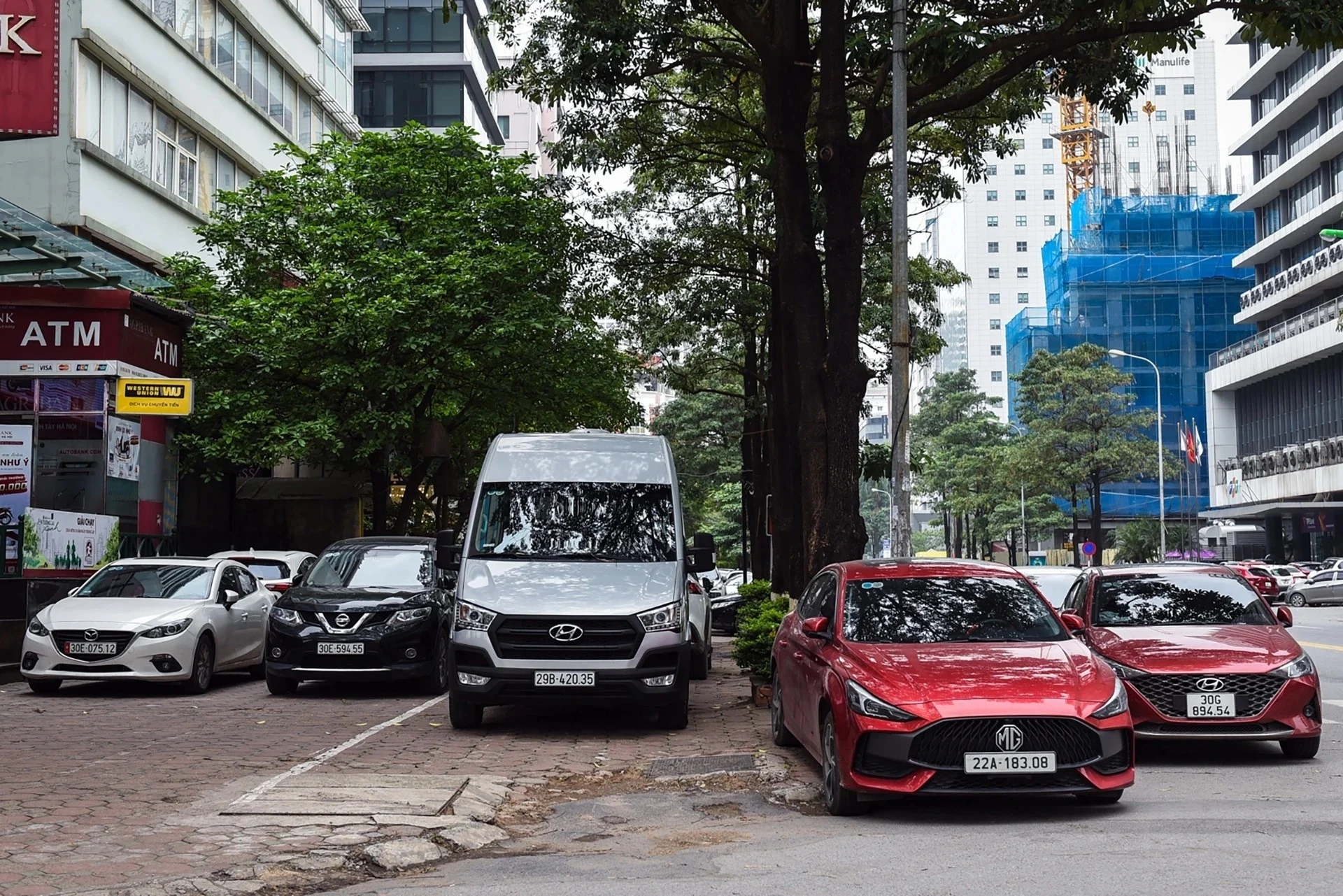
Urban areas may allow “partial” sidewalk parking only where a specific sign—**Sign 408a**—is installed. According to QCVN 41:2019, sign 408a (“Nơi đỗ xe một phần trên hè phố”) designates sections of a wide sidewalk where a vehicle may park with one set of wheels on the road and the other set on the curb.
Key points for drivers:
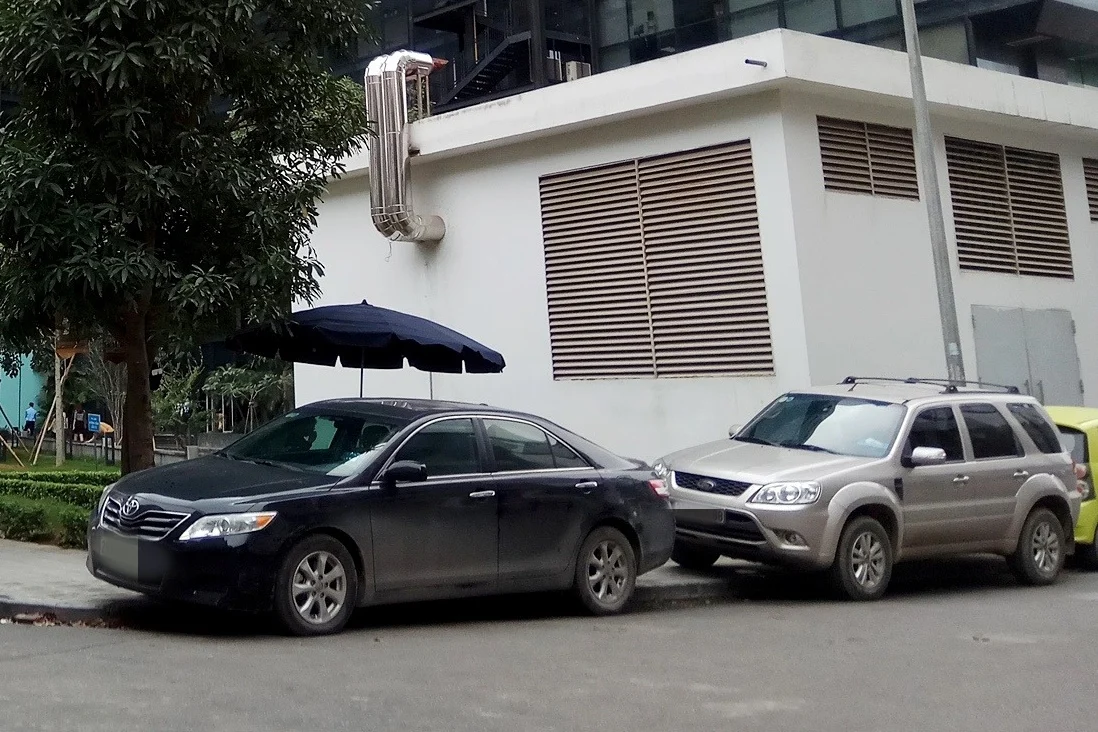
- The vehicle must be positioned so that the passenger‑side wheels rest on the sidewalk while the driver‑side wheels stay on the road.
- This “low‑high” parking is intended as a **temporary solution** where regular parking spaces are scarce.
Why “Low‑High” Parking Should Be Short‑Term
Parking a car unevenly puts unexpected stress on several components:
- Suspension system: Prolonged tilt can deform shock absorbers and rubber mounts, leading to leaks or premature wear.
- Tires: Unequal load can cause localized bulging or flat‑spotting, especially dangerous at high speeds.
- Chassis and frame: The torque generated by a sustained lean may weaken welds or cause subtle cracks over time.
In addition, the risk of scratches, curb‑impact damage to wheel arches and rims, and reduced vehicle stability increases the longer the car remains in this position.
Practical Tips for Drivers
- Always check for sign 408a before parking on a sidewalk. If the sign is missing, assume parking is prohibited.
- Maintain the 25 cm clearance; use visual cues like the curb line or painted markings.
- Limit “low‑high” parking to a few minutes—preferably while loading/unloading passengers or goods.
- When possible, park fully on the shoulder or in a designated lot to avoid wear on the suspension and tires.
- Inspect your vehicle after any uneven parking for signs of tyre deformation or suspension fluid leaks.
Bottom Line
Under the 2024 traffic regulations, parking on the sidewalk or road shoulder is legal **only** when the area is wide enough, a 25 cm gap is respected, and the appropriate signage (408a) is present. While this can relieve the pressure on limited urban parking, it should be treated as a short‑term fix to protect both pedestrians and your vehicle’s mechanical health.
Stay informed, follow the signage, and keep your parking habits safe and compliant.