
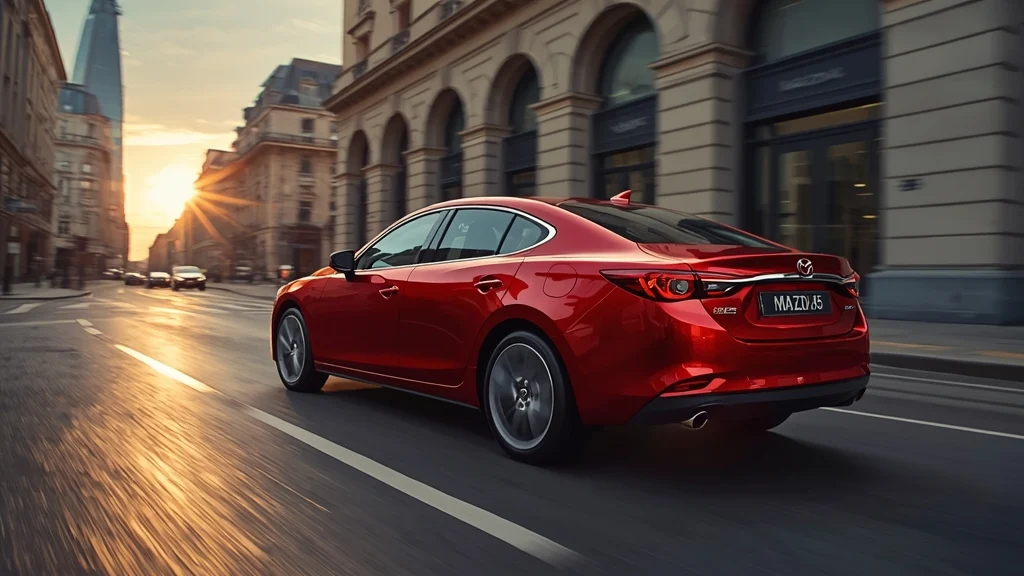
Discover how Mazda’s new 6e electric sedan is reshaping Europe’s EV market, luring buyers from VW and Nissan. Learn more now!
From Discontinuation to Dominance
After the third‑generation Mazda6 was phased out in North America, the United Kingdom and Vietnam, Mazda’s electrified successor – the 6e – is rewriting the story. Launched in Europe in September 2023, the lift‑back sedan has already attracted more than 7,000 new owners in under five months.
Why the 6e Stands Out
Built by the Changan‑Mazda joint venture in China, the 6e shares its underpinnings with the Deepal L07, offering a spacious five‑door lift‑back layout that feels more modern than a traditional four‑door sedan. Its “Zoom‑Zoom” DNA is paired with a competitive electric range, fast charging capability, and a price point that undercuts many premium rivals.
Stealing the Spotlight from Competitors
Initial Mazda forecasts expected 80 % of 6e buyers to be loyal Mazda customers upgrading from an internal‑combustion model. In reality, more than half of the early sales came from drivers switching from other brands – most notably former owners of the Volkswagen e‑Golf. Instead of moving up to VW’s ID.3, many chose the higher‑priced 6e, directly denting sales of the comparable ID.7.
Corporate fleets are following suit. Several companies are replacing gasoline‑powered Passat fleets with the 6e, even though Mazda does not offer a wagon version like its German rivals.
Volkswagen’s Growing EV Momentum
Volkswagen isn’t standing still. In 2023 the German automaker posted a 49.1 % increase in European EV sales, delivering almost 248,000 electric cars. The ID.7 alone contributed roughly 76,600 units, a record 133.9 % year‑on‑year jump. Nevertheless, Mazda’s rapid adoption of the 6e shows that the market is still wide open for new contenders.
Strategic Importance for Mazda
Mazda has set an ambitious target of 40,000 EV deliveries in Europe by the end of 2024 – a milestone that will coincide with the launch of the CX‑6e SUV. Meeting this goal is crucial for the Japanese brand to avoid hefty EU emissions penalties and the potential need to purchase additional carbon credits for 2026.
CEO Martijn ten Brink admits that Mazda remains a relatively small player and cannot yet separate its electric‑vehicle and gasoline‑engine teams the way larger manufacturers do. Consequently, fully dedicated EV platforms are still years away; even the upcoming hybrid CX‑5 won’t reach production until 2027.
What the 6e Means for the Future
The 6e is widely regarded as the spiritual successor to the long‑running Mazda6. Its success signals a decisive pivot for Mazda, positioning the brand as a serious EV contender in markets where the traditional Mazda6 has been retired.
As European consumers continue to gravitate toward cleaner mobility, the 6e’s early market traction suggests that Mazda’s gamble on a larger, China‑produced electric sedan could pay off – not just for the company, but for the broader shift toward electrified transport.
Stay tuned for the next wave of Mazda EVs, including the highly anticipated CX‑6e SUV, set to hit showrooms later this year.