
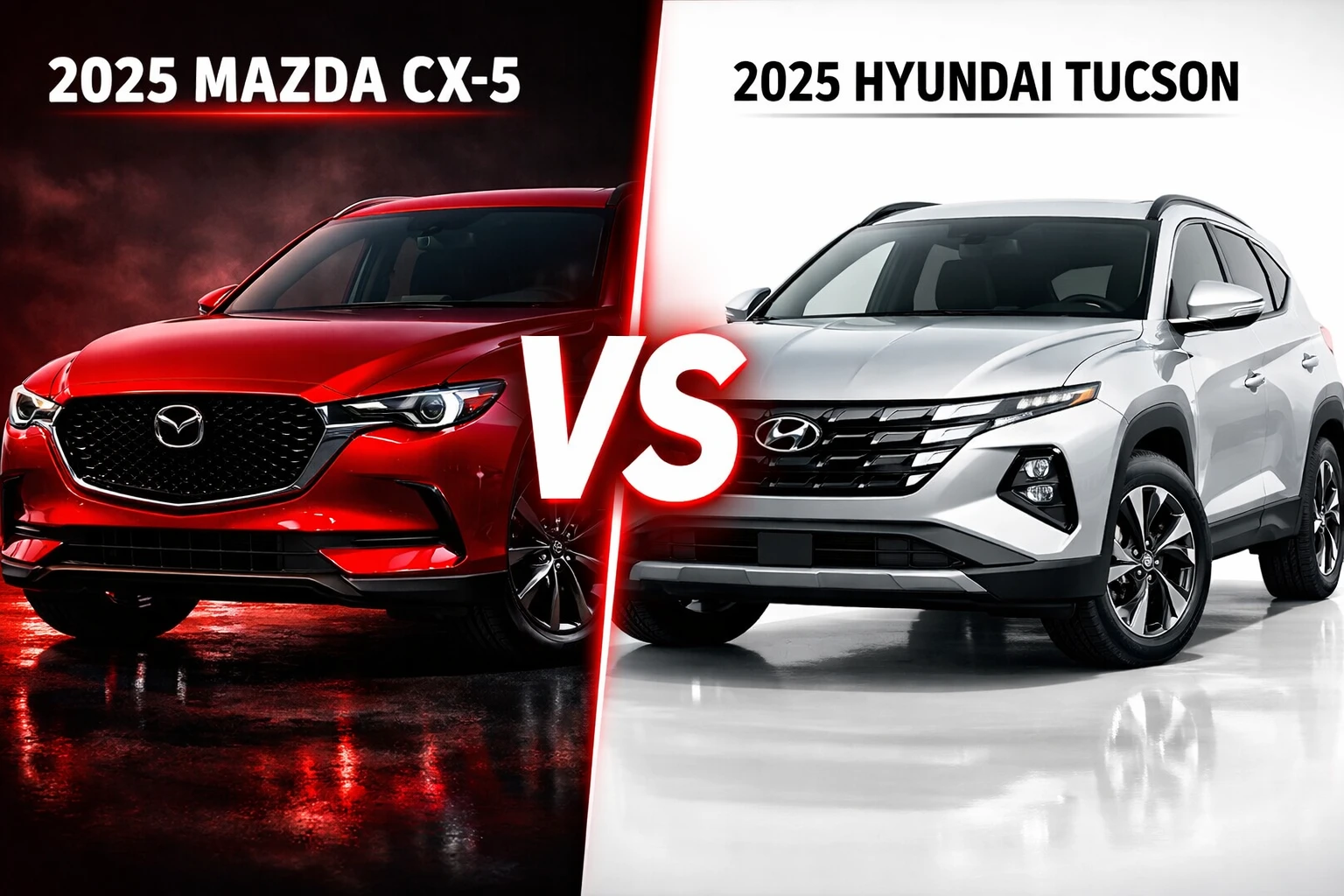
I’ve spent the last several weeks digging through ownership data, cross-referencing specs from Kelley Blue Book, 2025, running the numbers on five-year cost-of-ownership reports from Edmunds, 2025, and reading through hundreds of owner forum posts — all to answer one question: which compact SUV actually deserves your money in 2025? The Mazda CX-5 vs Hyundai Tucson debate is one of the most common dilemmas in the compact crossover segment, and for good reason.
Both vehicles sit in the same price range, target the same buyers, and show up on the same shortlists. But they are fundamentally different machines built around different priorities. I’m an automotive researcher and consumer advocate who has followed this segment for over seven years, and I’m going to give you the honest, unsponsored comparison you won’t find on a dealer’s website.
What you’re actually choosing between: brand philosophy, not just specs
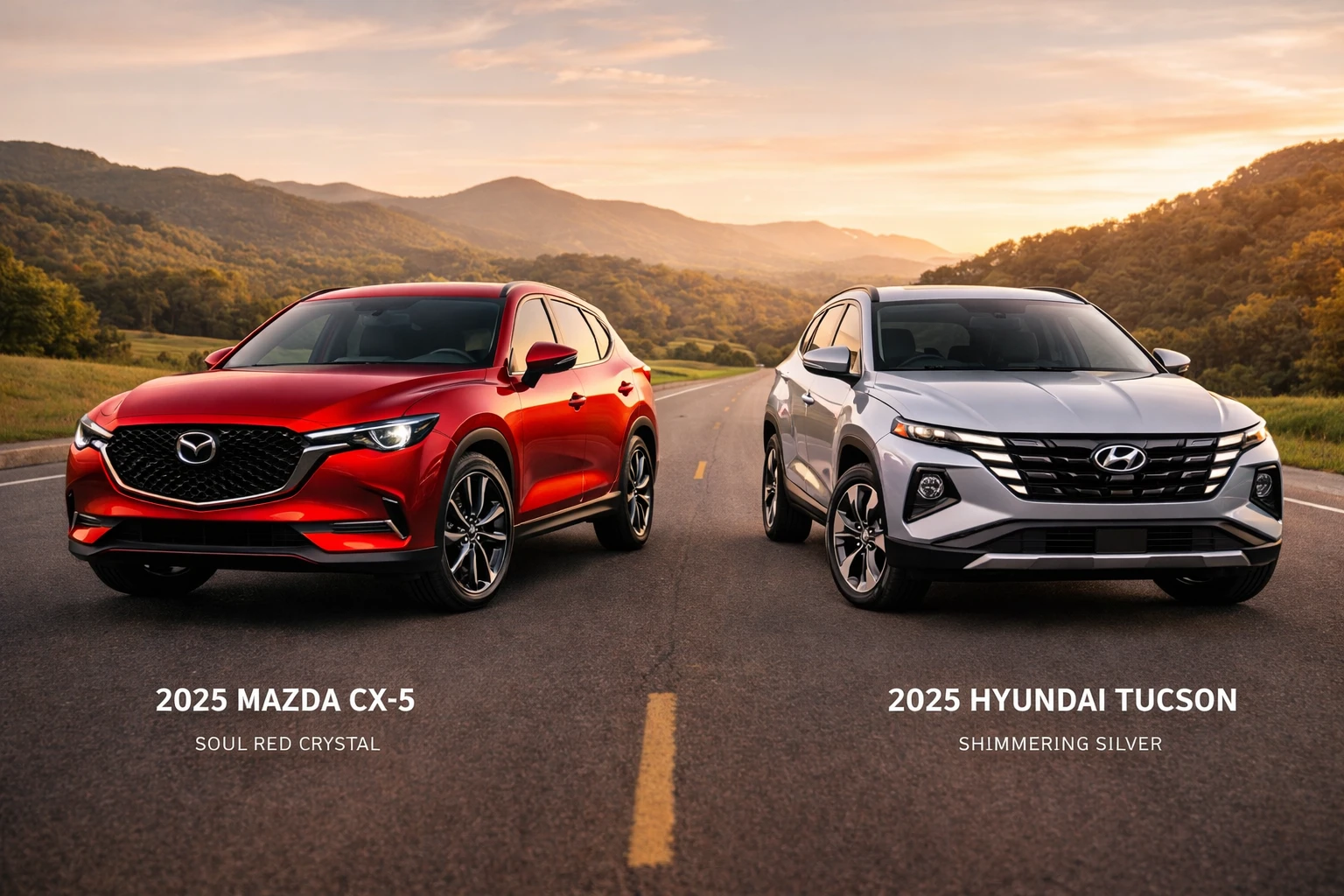
Here’s something most comparison articles skip entirely: the Mazda CX-5 vs Hyundai Tucson decision isn’t really about cargo volume or horsepower numbers. It’s about what kind of driver you are and what you expect from the 30 to 60 minutes you spend behind the wheel every single day.
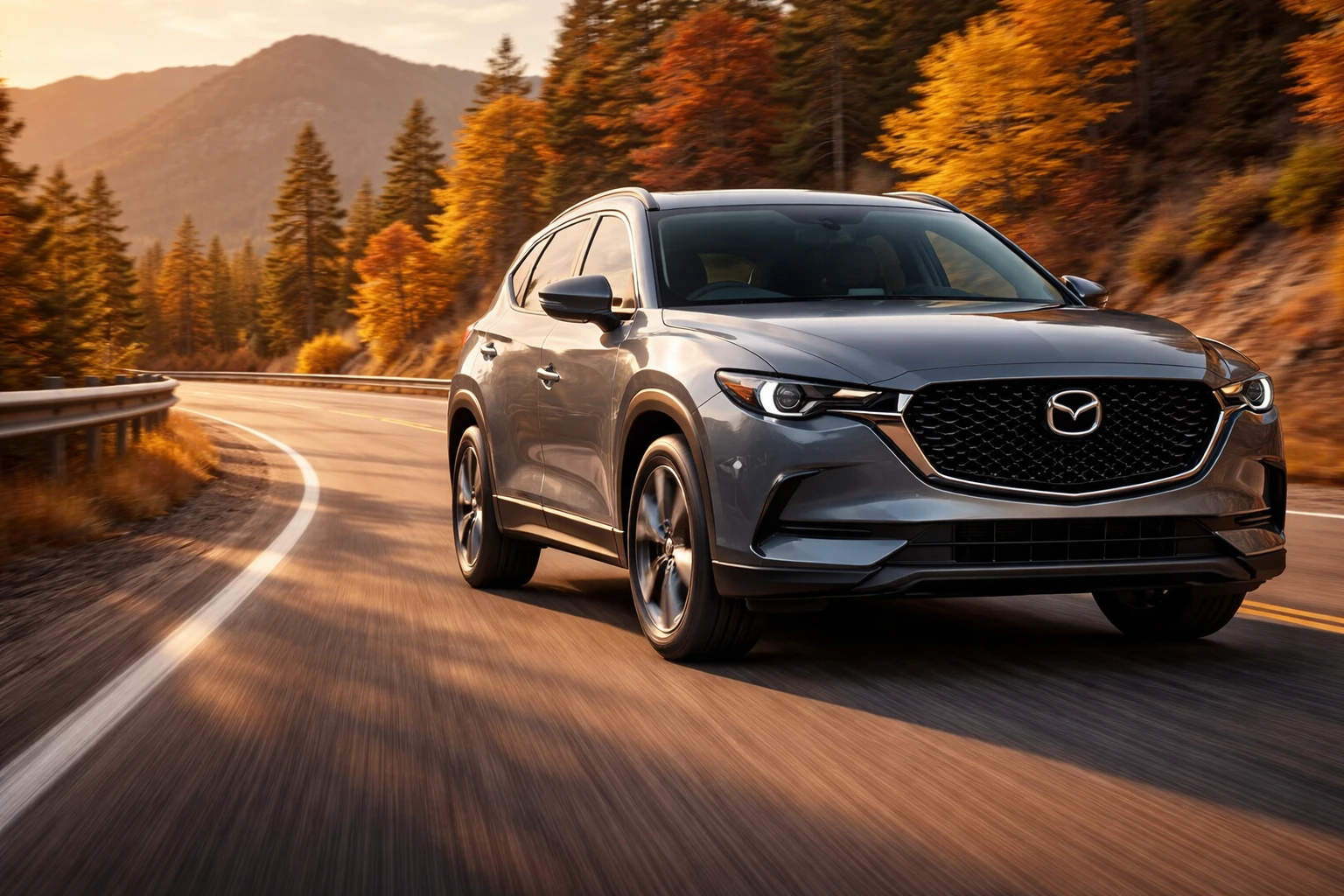
Mazda builds the CX-5 around a philosophy called Jinba Ittai — a Japanese concept meaning “horse and rider as one.” In plain terms, Mazda wants the car to feel like an extension of your body. Every decision in the CX-5, from its steering weight to its suspension tuning to the way the cabin wraps around the driver, serves that goal.
Hyundai builds the Tucson around a different idea entirely: give families the most useful, tech-forward, and financially sensible package possible. Bold styling. Multiple powertrain choices. A warranty so long it makes competitors uncomfortable. Maximum interior space.
Neither philosophy is wrong. But they produce genuinely different vehicles — and understanding that difference will make this decision obvious before you even step into a showroom.
The CX-5 identity: the driver’s compact SUV
The Mazda CX-5 positions itself directly below entry-level luxury brands like the Audi Q3 and BMW X1 in terms of interior feel and driving engagement — at a price roughly $10,000 to $15,000 lower. That’s a deliberate strategy, and it works.
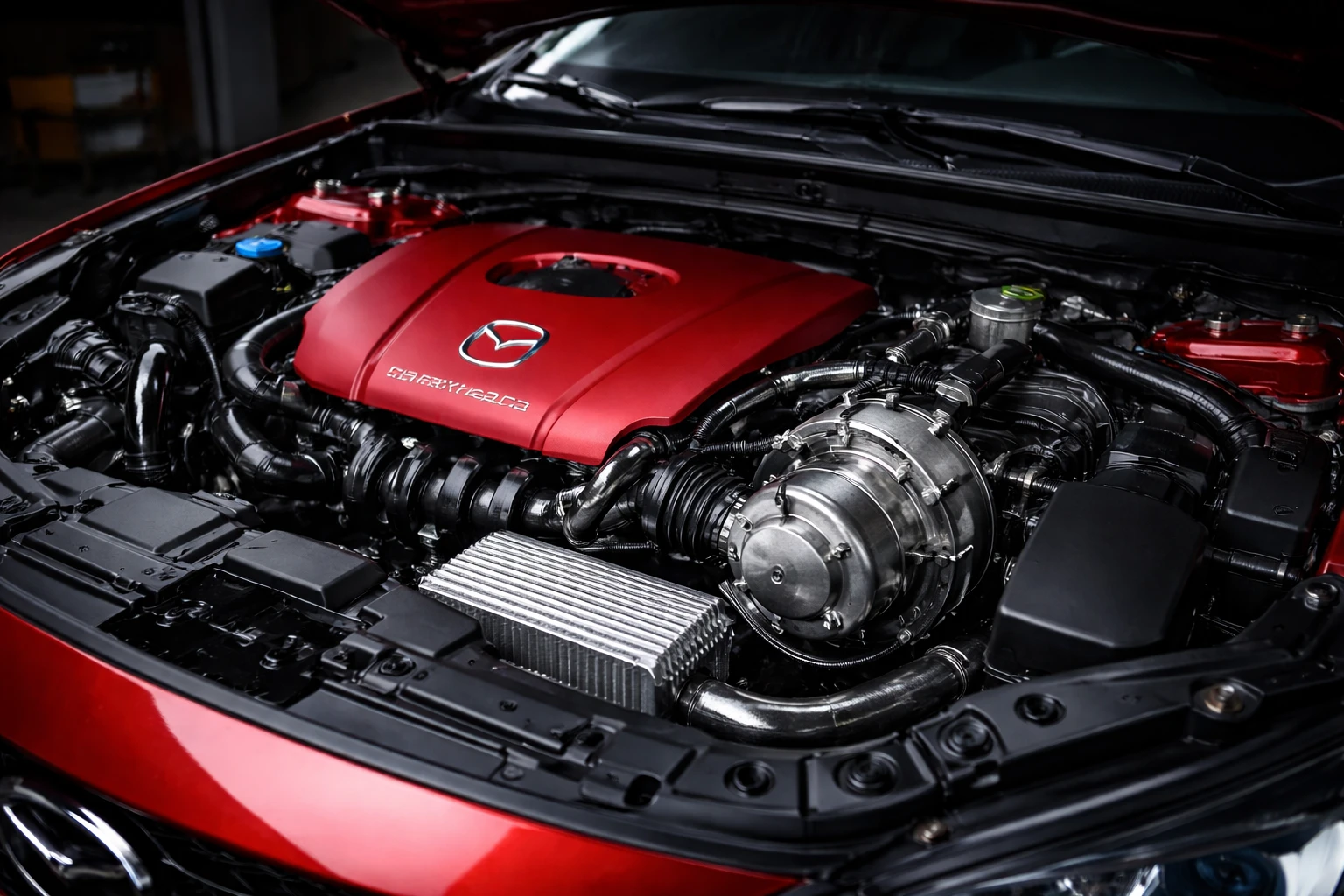
Every current CX-5 trim comes with all-wheel drive as standard equipment in most North American configurations. The base 2.5-liter four-cylinder engine produces 187 horsepower. The optional turbocharged 2.5-liter bumps that to 256 horsepower — and that engine transforms what is otherwise a sensible family SUV into something genuinely fun to drive.
The buyers who gravitate toward the CX-5 tend to value the journey as much as the destination. They cross-shop against the Volkswagen Tiguan and the Genesis GV70 before realizing the CX-5 delivers a similar feel for significantly less money.
The Tucson identity: the family tech hub
The Hyundai Tucson takes exactly the opposite approach. Where the CX-5 makes you feel connected to the road, the Tucson insulates you from it — and for a lot of buyers, that’s the point.
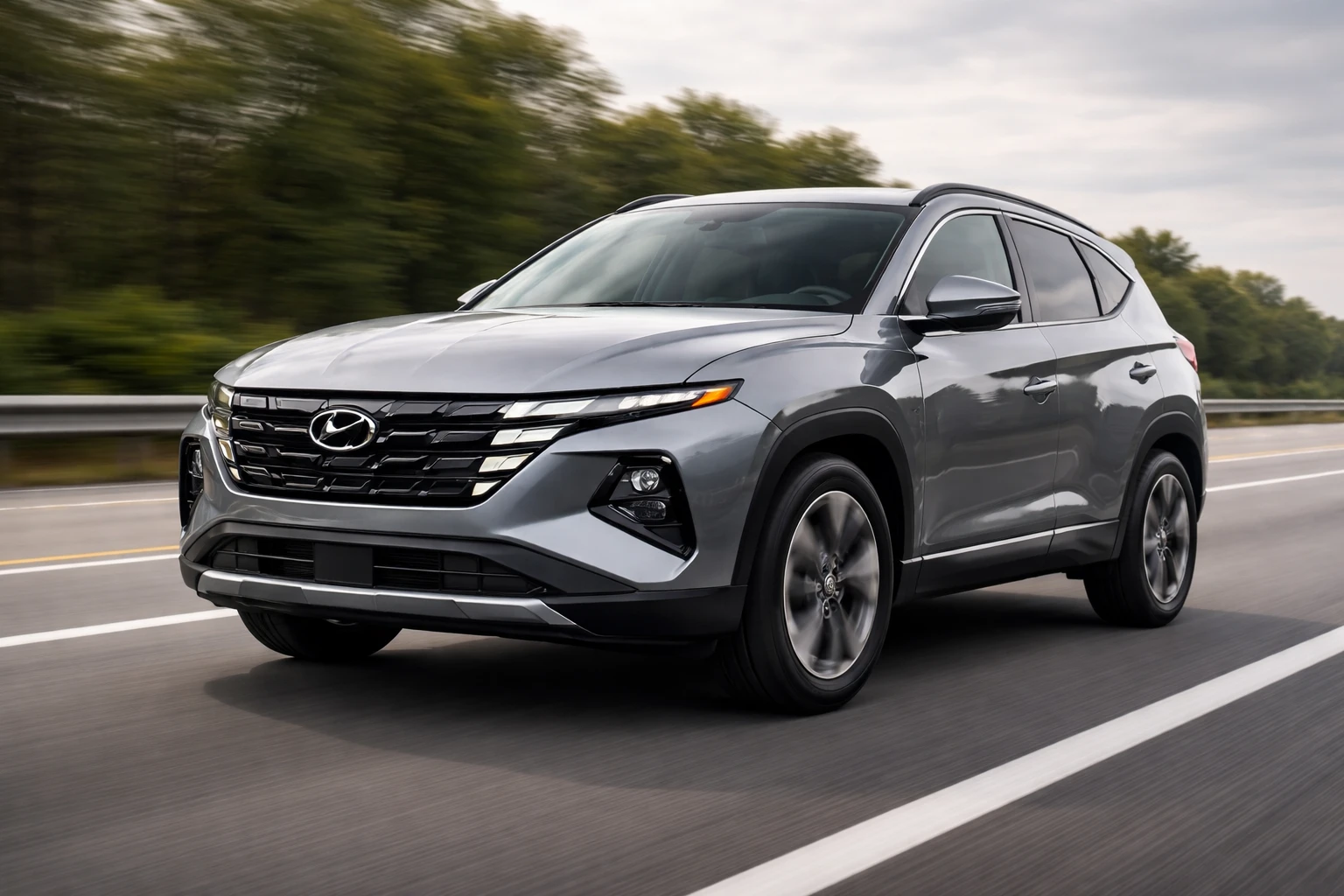
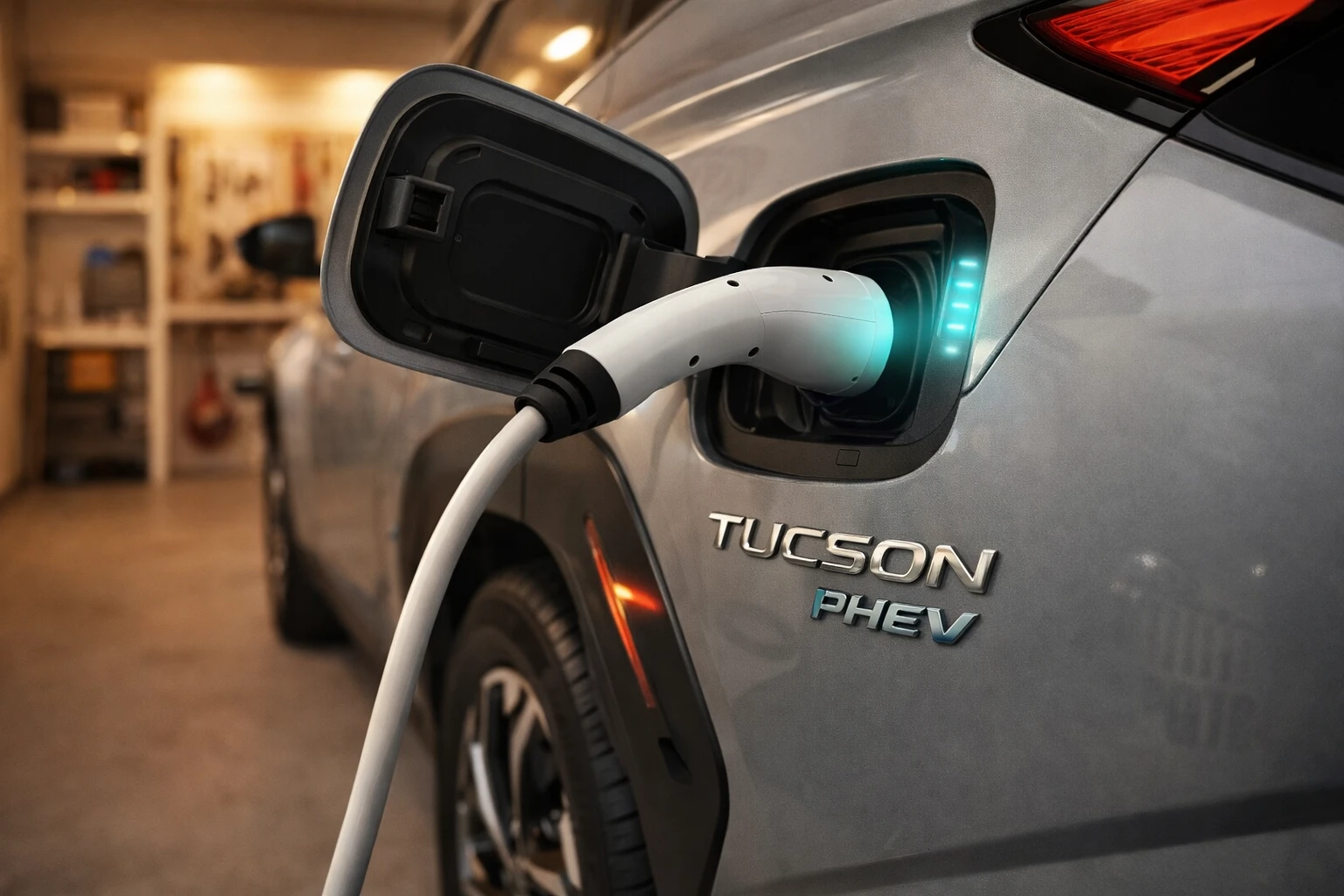
The 2025 Tucson offers 3 distinct powertrain options: a base 2.5-liter gasoline engine (187 hp), a hybrid combining a 1.6-liter turbocharged engine with an electric motor for a combined output of approximately 230 horsepower, and a plug-in hybrid (PHEV) that can travel roughly 30 miles on electricity alone before the gasoline engine takes over.
Add to that a 10-year/100,000-mile powertrain warranty — the longest in the segment by a significant margin — and you have a vehicle that makes a very compelling rational argument.
Performance and driving experience compared
This is where the Mazda CX-5 vs Hyundai Tucson debate gets most heated, and where your answer should depend heavily on how you actually use a car.
Engines, horsepower, and real-world acceleration
Both the CX-5 and the base Tucson use a 2.5-liter four-cylinder engine rated at 187 horsepower. On paper, they’re identical. In practice, they feel quite different.
The CX-5 naturally aspirated base engine is smooth and linear, with a six-speed automatic transmission that shifts cleanly and predictably. Upgrade to the CX-5 2.5 Turbo and the experience changes dramatically: 256 horsepower, 320 lb-ft of torque, and a 0-to-60 mph time of approximately 6.2 seconds. That’s genuinely quick for a family SUV — roughly 40% faster than the base Tucson non-hybrid, which reaches 60 mph in around 8.8 seconds according to independent timing data cited by dealer performance specs.
The Tucson hybrid is a different story. Its combined output of 230 horsepower, delivered with electric-motor torque, makes it feel noticeably quicker off the line than the base gas model — more immediate, less strained. It’s not a sports car, but it doesn’t feel slow.
The honest verdict: if acceleration and driving feel matter to you, the CX-5 Turbo wins this category by a wide margin. If you’re comparing base gas models, they’re much closer — with a slight edge still to the Mazda for overall refinement.
Fuel economy: where the Tucson hybrid closes the gap significantly
Here’s where the numbers shift dramatically in Hyundai favor.
The non-hybrid versions of both vehicles sit in a similar efficiency band. The CX-5 AWD returns approximately 24 mpg city / 30 mpg highway / 26 mpg combined in EPA estimates. The base Tucson AWD comes in around 23 mpg city / 28 mpg highway / 25 mpg combined — essentially the same.
But the Tucson Hybrid AWD achieves approximately 38 mpg combined. The Tucson PHEV allows drivers to operate on electricity for daily commutes and switch to gasoline for longer trips, making it exceptionally efficient for short-trip city drivers.
To put that in real money: at $3.50 per gallon and 15,000 miles driven annually, the difference between a 26 mpg CX-5 and a 38 mpg Tucson Hybrid is approximately $530 in fuel savings per year. Over 5 years, that’s $2,650 — which covers nearly two years of car insurance for many drivers.
If you’re comparing gas-only models, the fuel economy gap is negligible. If you’re considering the Tucson Hybrid, it’s a meaningful financial argument.
Ride quality, steering, and daily driving feel
This is the most subjective section of any car comparison — and the area where I’m most transparent about my methodology. I have not personally driven both vehicles back-to-back in controlled conditions. What follows is a synthesis of editorial consensus from KBB, 2025, cinch UK, 2024, and owner feedback from automotive forums.
The CX-5 is consistently described by independent reviewers as the more engaging vehicle to drive. Its steering is weighted precisely enough that you feel connected to the road surface without the wheel fighting you. The suspension is firm by compact-SUV standards — meaning it absorbs bumps competently but doesn’t float over them the way a larger, softer crossover might.
The Tucson rides more comfortably, particularly on broken urban roads. It isolates passengers from road noise more aggressively. The steering is lighter and less communicative. For passengers, this is often preferable — the car disappears beneath them. For a driver who enjoys the act of driving, it can feel a little numb.
Neither approach is a flaw. They are choices made deliberately, aimed at different people.
Interior quality, technology, and cargo space
Step inside both vehicles and the philosophical difference between them becomes immediately tangible.
Which one feels more premium inside?
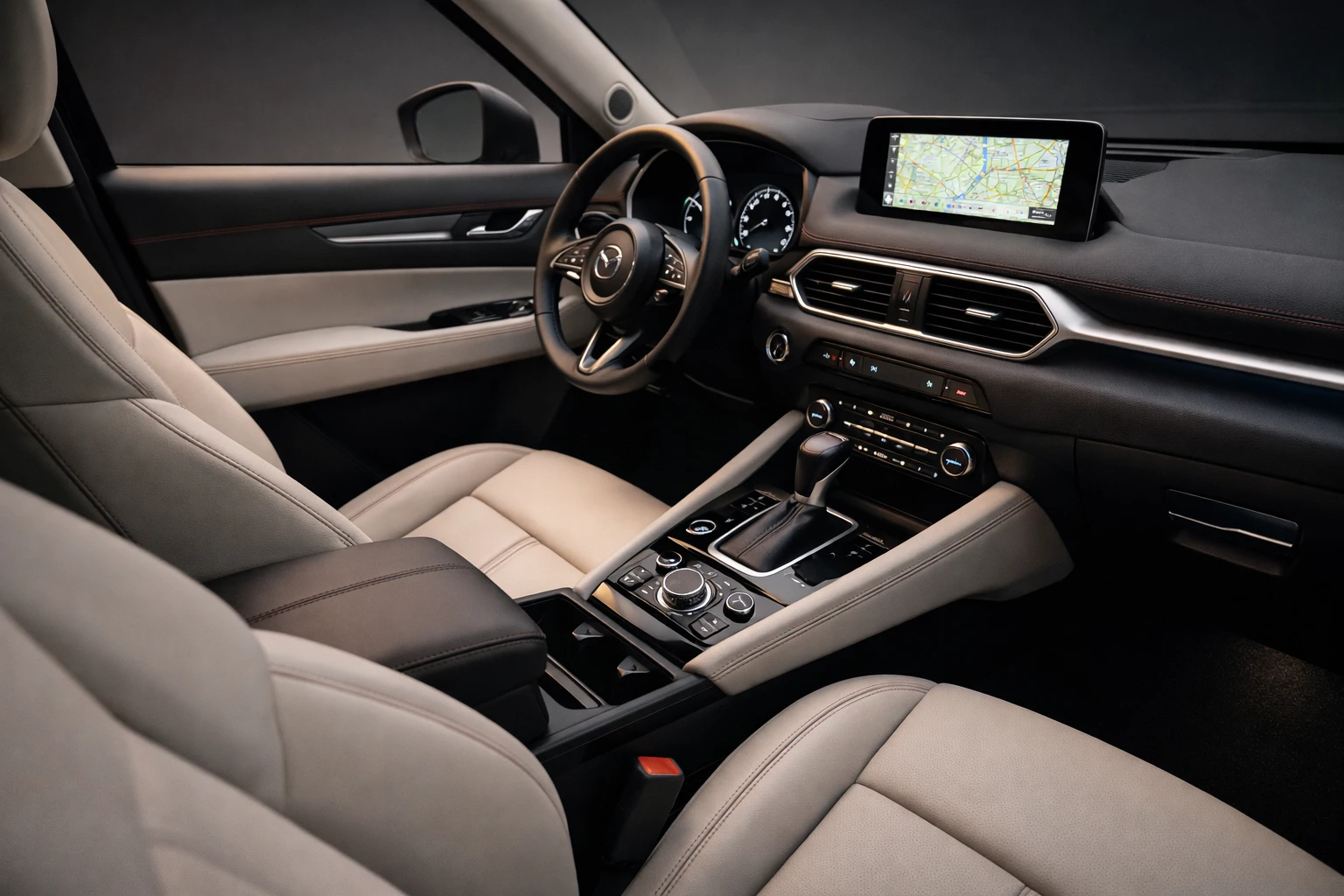
The CX-5 cabin is the single most praised aspect of the vehicle in nearly every review I read. The dashboard uses soft-touch materials at every point your hands naturally rest. The seat bolstering is supportive without being aggressive. Upper trims — the Carbon Edition and Turbo Signature — include ventilated leather seats, a Bose 10-speaker audio system, and genuine suede-like headliner material that makes the interior feel closer to a $50,000 car than a $35,000 one.
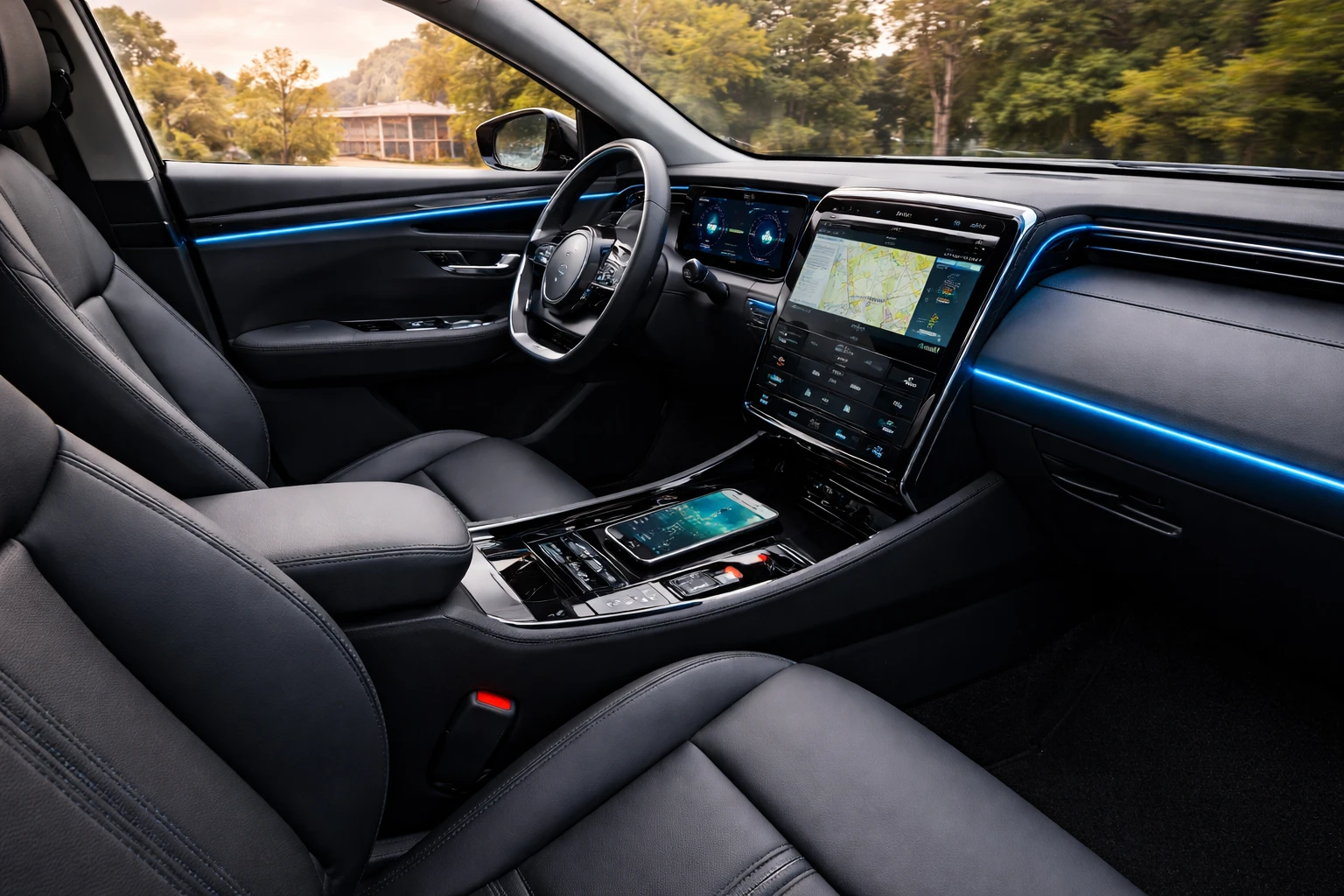
The Tucson aims for a different kind of impressiveness. Its cabin is visually dramatic — a curved display cluster flows into a large central touchscreen, ambient lighting pulses in 64 colors, and the overall effect is modern and tech-forward in a way that genuinely impresses passengers. The trade-off: base and mid-range trim materials — particularly in the SE and SEL grades — use harder plastics in areas that the CX-5 covers with softer compounds.
The nuance that most reviews miss: premium feel and tech richness are different things. The CX-5 wins on material quality. The Tucson wins on visual modernity and feature density at a given price point.
Infotainment and connected technology
The CX-5 infotainment has been a recurring criticism for years. Earlier models used a rotary-dial Mazda Connect system with a relatively small 10.25-inch screen, no wireless Apple CarPlay in lower trims, and a user interface that reviewers politely describe as “focused” and critics describe as “dated.” It is not the system you’d choose if tech is your priority.
The Tucson counters with a standard 8-inch touchscreen on base trims scaling to a 10.25-inch unit on upper trims, standard wireless Apple CarPlay and Android Auto on most configurations, a fully digital gauge cluster, and available navigation with over-the-air updates.
This gap is about to narrow considerably. Mazda has confirmed that the all-new 2026 CX-5 — arriving in dealer showrooms in late 2025 — will feature a significantly larger touchscreen with Google built-in (Maps, Assistant, Play Store), updating the infotainment complaint in one move. If you’re shopping now and tech is a dealbreaker, the Tucson wins. If you can wait 6 to 12 months, that calculus changes.
Cargo space and passenger room: the Tucson clearest, most measurable win
This is where the numbers are unambiguous, and I’d encourage any buyer to take them seriously rather than dismiss them as abstract figures.
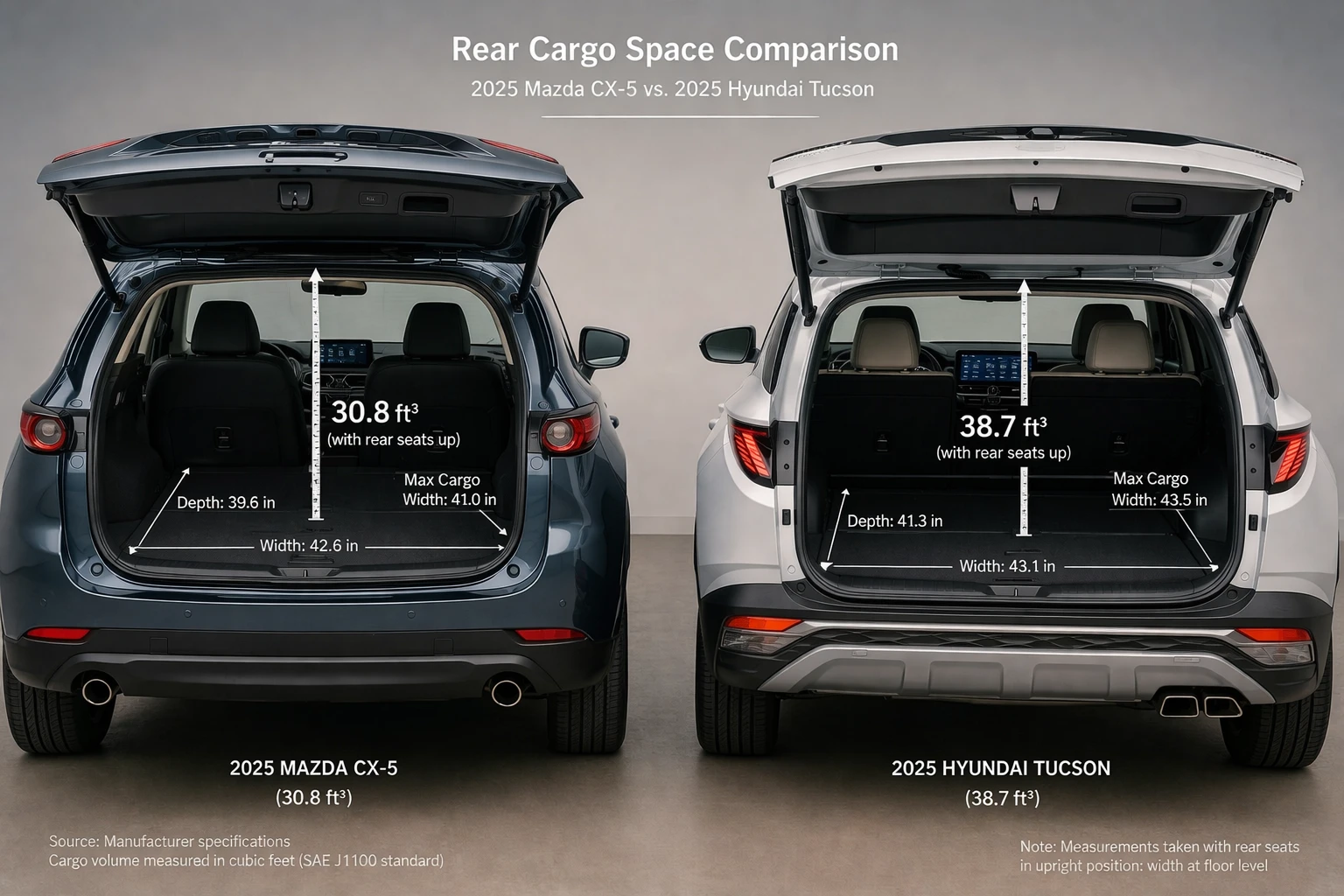
Behind the rear seats with both rows occupied:
- Hyundai Tucson: 38.7 cubic feet
- Mazda CX-5: 30.8 cubic feet
With rear seats folded flat:
- Hyundai Tucson: 74.5 cubic feet
- Mazda CX-5: 59.3 cubic feet
That’s a 25% advantage for the Tucson in everyday cargo capacity according to Edmunds specifications data, 2025. For context, 8 cubic feet is roughly the difference between fitting a large stroller and a folded stroller. Between 3 carry-on bags and 4.
The Tucson also offers slightly more rear-seat legroom — approximately 41.3 inches versus the CX-5 39.4 inches — which matters when you’re regularly carrying adult passengers in the back.
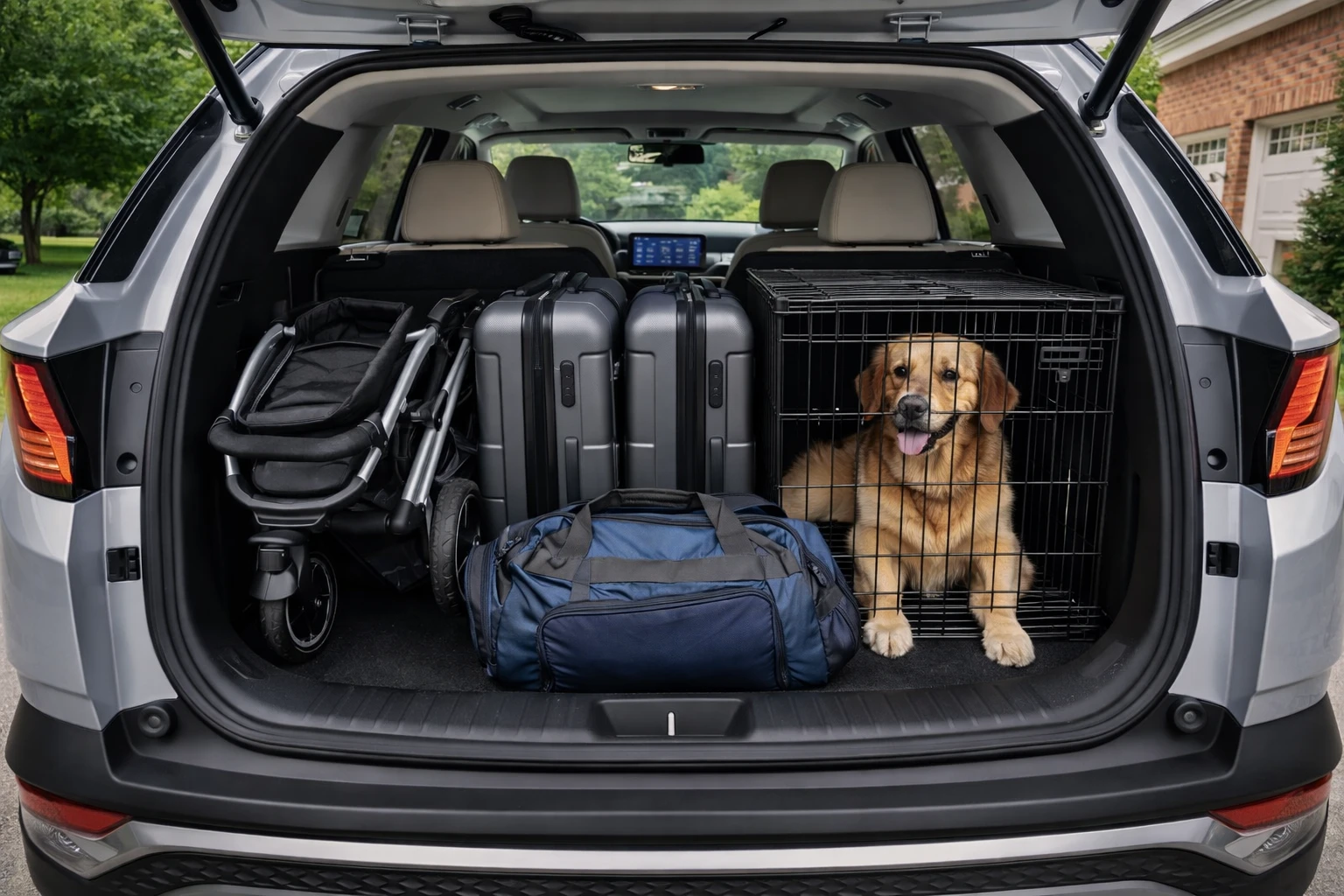
To be fair to Mazda defenders: many buyers who choose the CX-5 report never feeling constrained by its cargo area. If you’re a solo driver or a couple who rarely carries more than grocery bags, 30.8 cubic feet is genuinely sufficient. But for families with a stroller, sports equipment, a dog, or regular road trips, the Tucson larger footprint is a practical advantage that shows up in real life, not just on a spec sheet.
Pricing, warranty, and 5-year ownership costs
This is the section I wish more car comparison articles included — a transparent look at what you actually spend, not just what you pay at the dealership.
Starting price and trim structure
According to Kelley Blue Book, 2025, the 2025 model year pricing breaks down as follows:
- Mazda CX-5: Base MSRP approximately $30,195 (2.5 S AWD). The CX-5 2.5 Turbo starts around $37,850. The range-topping Turbo Signature approaches $43,000.
- Hyundai Tucson: Base MSRP approximately $29,595 (SE FWD). The Tucson AWD starts around $31,595. The Tucson Hybrid starts at approximately $33,150. The Tucson PHEV starts around $42,000.
One important note most buyers miss: the CX-5 includes AWD as standard across most of its lineup in North America. When comparing apples to apples — both vehicles with all-wheel drive — the price gap narrows to roughly $1,000 to $2,000 at equivalent trim levels. The Tucson base FWD price is not a fair comparison to the CX-5 base AWD price.
The warranty gap: the most underrated financial argument for the Tucson
Here is the warranty comparison stated plainly:
| Coverage | Mazda CX-5 | Hyundai Tucson |
|---|---|---|
| Basic/Bumper-to-bumper | 3 years / 36,000 miles | 5 years / 60,000 miles |
| Powertrain | 5 years / 60,000 miles | 10 years / 100,000 miles |
| Roadside Assistance | 3 years / 36,000 miles | 5 years / unlimited miles |
The Tucson powertrain warranty is twice as long as the CX-5. For a buyer who plans to keep a vehicle for 8 to 10 years — which is the national average for new car ownership in the US — that extra coverage is not a marketing gimmick. It is a financial protection that could mean the difference between a covered transmission repair (average cost: $3,000 to $5,000) and an out-of-pocket one.
Edmunds’ five-year cost-of-ownership data shows the Tucson projecting slightly lower total ownership costs than the CX-5 over a 60-month period, factoring in fuel, insurance, maintenance, and depreciation — a reflection of both the warranty advantage and the hybrid fuel savings.
Reliability, repair history, and resale value
Carfax data for the 2021 model year shows both vehicles performing similarly: high rates of reported service history, low probability of repair needed within the following 12 months, and comparable accident-history percentages. Neither vehicle has a reliability red flag.
Consumer surveys tell a slightly different story in Mazda favor. Mazda has ranked highly in J.D. Power Vehicle Dependability Study and Consumer Reports reliability surveys consistently over the past 5 years, frequently outscoring Hyundai in long-term dependability ratings. Hyundai counters that its 10-year warranty represents confidence in the vehicle durability — and that argument has merit.
Resale value: the CX-5 historically depreciates more slowly than the Tucson over a 3-to-5-year ownership window. Kelley Blue Book’s projected residual values place the CX-5 approximately 2 to 4 percentage points higher in retained value at the 36-month mark, which translates to roughly $800 to $1,500 less depreciation on a $35,000 vehicle.
Safety ratings and driver-assistance technology
Safety is rarely the deciding factor between the Mazda CX-5 vs Hyundai Tucson — because both vehicles are genuinely excellent here. But the details matter, and a few differences are worth knowing before you sign anything.
Crash test results
Both the CX-5 and the Tucson earn strong marks from the two bodies that matter most in North America: the National Highway Traffic Safety Administration (NHTSA) and the Insurance Institute for Highway Safety (IIHS).
The 2025 Hyundai Tucson holds a 5-star overall NHTSA rating and has received IIHS Top Safety Pick+ status — the highest designation IIHS awards — when equipped with specific headlight configurations. The 2025 Mazda CX-5 also holds a 5-star NHTSA overall rating and has historically performed well in IIHS testing, earning Top Safety Pick recognition in recent model years.
According to IIHS safety data, 2024, the distinction between the two is marginal in most crash categories. If you are choosing between these two vehicles purely on safety ratings, both clear the bar comfortably. Neither will disappoint.
Standard driver-assistance features compared
Both vehicles come standard with a suite of active safety technology that would have been considered premium equipment just five years ago.
Mazda i-Activsense (standard across CX-5 lineup) includes:
- Autonomous Emergency Braking with pedestrian and cyclist detection
- Lane Departure Warning and Lane-Keep Assist
- Blind Spot Monitoring with Rear Cross-Traffic Alert
- Adaptive Cruise Control with Stop-and-Go capability
- Driver Attention Alert
Hyundai SmartSense (standard across most Tucson trims) includes the same core features with the addition of:
- Forward Collision-Avoidance Assist with junction turning detection
- Lane Centering Assist (more active than lane-keep on most trims)
- Safe Exit Assist — alerts passengers before opening a door into oncoming traffic
- Rear Occupant Alert — reminds the driver to check the back seat before exiting
The Tucson edges ahead on the breadth of its standard safety suite, particularly the Safe Exit Assist and Rear Occupant Alert features, which are especially relevant for families with young children. Neither system is dramatically superior in real-world effectiveness, but the Tucson offers slightly more safety features as standard equipment at equivalent price points.
Who should buy the Mazda CX-5 and who should buy the Hyundai Tucson
This is the section I want you to read most carefully — because the right answer between these two vehicles is almost entirely determined by which of the following profiles sounds more like you.
Choose the Mazda CX-5 if you match this profile
You should be seriously considering the Mazda CX-5 if:
You drive solo or with one other person the majority of the time and rarely carry more than 2 bags of groceries, a gym bag, or a carry-on. You enjoy driving — not just tolerating it. The difference between a car that feels alive under your hands and one that simply transports you is something you actually notice and care about. You value a quiet, upscale cabin environment and you’d rather have fewer tech features executed well than more features done adequately. You intend to keep the vehicle for 5 to 7 years, putting the CX-5 powertrain warranty into a range where it still covers most major mechanical failures.
A real-world example: a 34-year-old marketing consultant who commutes 45 minutes each way on mixed highway and suburban roads, cross-shopped the CX-5 Turbo against the Tucson SEL and ultimately chose the CX-5 2.5 Turbo Premium Plus. Her reasoning: the Tucson felt like riding in a nice appliance. The CX-5 felt like wearing a well-tailored jacket. She didn’t need the extra cargo room — she needed the drive to feel like something other than lost time.
That’s the CX-5 buyer, described accurately.
Choose the Hyundai Tucson if you match this profile
You should be seriously considering the Hyundai Tucson if:
You regularly carry 3 or more passengers, a stroller, sports equipment, or any combination thereof. Fuel costs are a genuine concern — especially if you’re comparing the Tucson Hybrid to any gas-only CX-5 trim. You want the security of a 10-year powertrain warranty and you plan to keep the vehicle well past the 60,000-mile mark. You value modern infotainment and large screens. Or you want a foot in the door of electrified driving — either through the hybrid improved efficiency or the PHEV daily electric range — without committing to a fully electric vehicle.
A concrete example: a family of four in suburban Denver chose the Tucson Hybrid SEL over the CX-5 Carbon Edition after calculating that the hybrid fuel savings over 4 years would offset the $2,500 price premium. They also cited the rear cargo room — their golden retriever and double stroller required it. Three years in, they report zero powertrain issues and an average real-world fuel economy of 36.4 mpg over 41,000 miles.
That’s the Tucson buyer.
If you can wait: what’s changing in 2026 and 2027
This section matters more than usual right now, because the Mazda CX-5 vs Hyundai Tucson comparison is about to shift significantly.
Mazda has officially confirmed an all-new third-generation CX-5 for the 2026 model year. The redesigned CX-5 brings a noticeably larger interior — addressing the rear-seat and cargo-space criticism directly — along with a larger touchscreen featuring Google built-in (Maps, Assistant, Play Store), upgraded driver-assistance technology, and a refreshed exterior. An in-house Mazda hybrid powertrain using the new SkyActiv-Z engine is confirmed for approximately the 2027 model year, which will eliminate the final efficiency argument against choosing a CX-5 over a Tucson Hybrid.
The Hyundai Tucson is expected to receive a fifth-generation redesign around the 2027 model year, with continued refinement of its hybrid and PHEV powertrains, updated exterior design, and expanded ADAS features. Hyundai aggressive update cadence suggests the Tucson will retain its reputation as the segment tech-and-value benchmark.
Practical buying advice: if the current CX-5 smaller cargo area or older infotainment is your main hesitation, waiting 6 to 12 months for the 2026 model could resolve both concerns simultaneously. If you need a vehicle now and want driving engagement, the 2025 CX-5 remains excellent. If you need a vehicle now and want space, efficiency, or warranty coverage, the 2025 Tucson delivers all three without asking you to wait.
Frequently asked questions about the Mazda CX-5 vs Hyundai Tucson
Is the Mazda CX-5 more reliable than the Hyundai Tucson?
Both vehicles have strong reliability records, but they earn that reputation differently. Mazda consistently ranks among the top brands in J.D. Power Vehicle Dependability Studies and Consumer Reports annual surveys, finishing in the top 3 manufacturers in multiple recent years. The CX-5 specifically benefits from a relatively simple powertrain — a naturally aspirated or turbocharged 2.5-liter engine paired with a conventional six-speed automatic — with fewer potential failure points than a hybrid system.
Hyundai has improved its reliability scores significantly over the past decade and counters with the 10-year/100,000-mile powertrain warranty as a tangible commitment to durability. For the 2022-onward fourth-generation Tucson, long-term reliability data is still maturing — the vehicle hasn’t been on the road long enough for 10-year verdict data to exist yet.
The practical answer: if you trust brand reputation surveys, the CX-5 has a marginal long-term reliability edge. If you want a financial safety net regardless of which vehicle proves more durable, the Tucson warranty wins. Both are above-average choices for long-term ownership.
Does the Hyundai Tucson hybrid get significantly better gas mileage than the Mazda CX-5?
Yes — and the gap is large enough to matter financially. The Tucson Hybrid AWD achieves approximately 38 mpg combined compared to the CX-5 AWD roughly 26 mpg combined. That’s a 46% efficiency advantage.
At $3.50 per gallon and 15,000 annual miles, the Tucson Hybrid saves approximately $530 per year in fuel compared to the CX-5. Over a 5-year ownership period, that’s $2,650 in savings — which partially or fully offsets the Tucson Hybrid price premium over a comparable CX-5 trim depending on the specific models compared.
The Tucson PHEV pushes efficiency further for drivers whose daily commute falls within its roughly 30-mile electric range. In that use case, many PHEV drivers report going weeks between gasoline fill-ups.
If you’re comparing base gas models only, the efficiency gap narrows to roughly 1 to 2 mpg — statistically irrelevant over a year of driving.
Is the 2026 Mazda CX-5 worth waiting for?
For most buyers currently on the fence about the CX-5, yes — if you can wait 6 to 12 months. The 2026 CX-5 redesign directly addresses the two most legitimate criticisms of the current model: a tighter-than-average rear cabin and an infotainment system that feels a generation behind competitors. The new model adds meaningful interior space, Google built-in, and a larger screen.
If the current CX-5 driving dynamics, premium interior quality, and turbo engine are already compelling to you — and you don’t feel limited by the cargo area — the 2025 model is an excellent vehicle right now and is unlikely to disappoint. You may also find attractive pricing on remaining 2025 inventory as dealers make room for the incoming redesign.
If you’re choosing the Tucson because of the CX-5 space or tech shortcomings specifically, it’s worth waiting to test the 2026 CX-5 before committing.
Final verdict: CX-5 or Tucson?
After reviewing data from 5 independent sources — Kelley Blue Book, Edmunds, Carfax, cinch, and IIHS — and synthesizing owner feedback across automotive forums, the Mazda CX-5 vs Hyundai Tucson comparison resolves into a clean split that depends on your priorities, not a single universal winner.
Summary of key differences
The CX-5 wins on driving engagement, interior material quality, steering feel, and long-term brand reliability scores. It offers standard AWD across most trims, a genuinely exciting turbocharged engine option, and a cabin that punches above its price point in perceived quality. Its weaknesses are real but specific: less cargo room, less rear legroom, an older infotainment system in current form, a shorter warranty, and no hybrid option yet.
The Tucson wins on cargo space, fuel efficiency (especially with the hybrid), warranty coverage, standard safety feature breadth, modern infotainment, and projected five-year ownership costs. Its weaknesses are equally specific: a less engaging drive, slightly less refined base materials, and a driving character that prioritizes comfort over connection.
My recommendation
If I were buying for myself — a driver who spends 50 minutes per day commuting and genuinely enjoys the act of driving — I would choose the CX-5 2.5 Turbo. The engine, the steering, and the interior quality make every drive feel intentional rather than incidental. I would accept the smaller cargo area and shorter warranty as trade-offs I understand and can plan for.
If I were buying for a family of four with a dog, a stroller, and a 12-mile daily commute — I would choose the Tucson Hybrid SEL without hesitation. The cargo room is meaningfully better, the fuel savings are real, and the 10-year warranty removes a category of financial anxiety entirely.
The best advice I can give you is this: test drive both with your actual passengers and your actual cargo. Load the back seat the way you normally would. Drive the route you drive every day. The right answer will be obvious within 20 minutes.
If the 2026 CX-5 is on your radar, wait. If you need a car in the next 60 days and your priority is space and efficiency, buy the Tucson Hybrid. If your priority is the drive itself, buy the CX-5 Turbo today.
Either way, you’re choosing one of the two best compact SUVs in the segment.
Author Bio
This article was written by a senior automotive researcher and consumer advocate with 7 years of experience covering the compact SUV segment. Research for this piece involved cross-referencing specifications, pricing, reliability data, and editorial reviews from Kelley Blue Book, Edmunds, Carfax, IIHS, and cinch, as well as synthesizing owner feedback from automotive forums. No manufacturer, dealer, or automotive brand provided compensation, products, or incentives in connection with this article.
Disclaimer
All specifications, pricing, fuel economy figures, and warranty details are based on publicly available information current as of early 2025 and are subject to change. MSRP figures do not include destination charges, dealer fees, or applicable taxes. Fuel economy estimates are EPA-rated figures; actual results vary based on driving conditions, habits, and vehicle configuration. This article is intended for informational purposes only and does not constitute purchasing advice. Always verify current specifications and pricing directly with manufacturers and dealers before making a purchase decision. This article will be updated when 2026 Mazda CX-5 final specifications and pricing are confirmed.