

Mitsubishi’s $1.009 billion verdict for a 1992 3000GT rollover is overturned. Learn what this means for the driver’s family and auto safety. Read more now!
Background of the Accident
In November 2017, Francis Amagasu was behind the wheel of a 1992 Mitsubishi 3000GT on a Pennsylvania highway. While attempting to pass another vehicle, he lost control, sent the car careening off the road, and it struck three trees before rolling over.
Although Amagasu was wearing a seatbelt, the roof of the low‑profile sports car collapsed on impact, causing severe spinal injuries that left him completely paralyzed from the neck down.
Initial Lawsuit and Record‑Breaking Verdict
Amagasu’s family sued Mitsubishi, alleging a faulty seat‑belt system and a dangerously low roof design that offered inadequate protection in rollover scenarios. While the 3000GT met all federal safety standards at the time of its release, the plaintiffs argued that the vehicle’s structural design was inherently unsafe for such crashes.
In a shocking decision, the first‑instance jury awarded the family more than $1.009 billion in damages—approximately $156 million for medical expenses and lost wages, and an additional $800 million in punitive damages intended to punish Mitsubishi.
Appeal and the Verdict’s Collapse
Mitsubishi promptly filed an appeal, contending that the jury’s award lacked a solid legal foundation. The Pennsylvania Superior Court agreed, overturning the entire verdict and ordering a new trial from scratch.
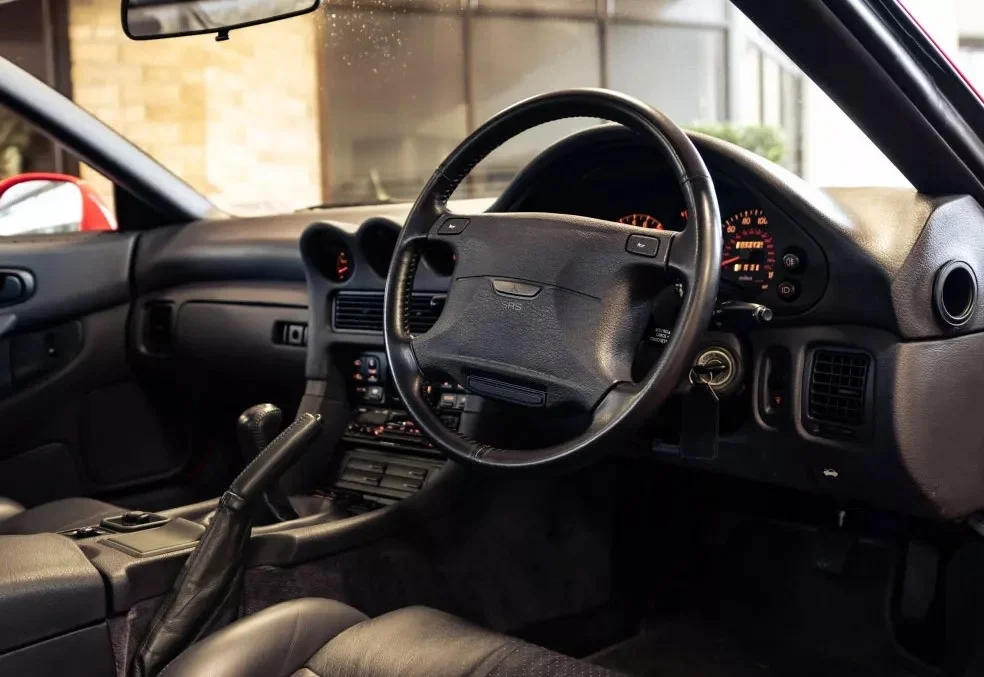
The appellate court found that the trial judge failed to provide the jurors with clear, accurate legal guidance. Specifically, the jury was never instructed to assess whether Amagasu’s injuries would have been less severe had the car featured a safer roof design, as the plaintiffs suggested. Without such direction, the court ruled the original award was fundamentally unfair.
As a result, the Amagasu family now faces a fresh, costly legal battle with no guaranteed outcome.
What This Means for Auto Safety and Future Litigation
The reversal underscores the importance of precise jury instructions in complex product‑liability cases. It also highlights the challenges plaintiffs face when trying to prove that a vehicle’s design, rather than driver error, caused severe injuries.
Legal experts say the case could set a precedent for how courts evaluate claims involving vehicle structural integrity and occupant safety, especially for low‑profile sports cars.
The Mitsubishi 3000GT: A Brief History
First unveiled in 1990, the Mitsubishi 3000GT was designed to compete with the era’s iconic sports coupes such as the Toyota Supra and Nissan 300ZX. The base model started around $25,000, while the top‑of‑the‑line VR4—featuring all‑wheel drive and a twin‑turbocharged engine—topped out at over $45,000.
Despite its performance credentials, the 3000GT struggled to maintain sales momentum and was discontinued in 2000.
Next Steps for the Amagasu Family
With the case sent back to the trial court, the family must rebuild their legal strategy, gather new expert testimony, and potentially face another lengthy courtroom battle. The outcome remains uncertain, but the legal community will be watching closely for any developments that could influence future automotive safety litigation.