

Find out why diesel vehicles are unlikely to suffer engine damage during the new free‑acceleration emission test and what owners need to know. Learn more now!
Starting March 1, a nationwide overhaul of vehicle inspections introduced a new free‑acceleration emission test for both gasoline and diesel cars. While the change aims to tighten air‑quality standards, many diesel‑engine owners have taken to social media fearing that the high‑rev test could damage their engines.
New Emission Test Introduced
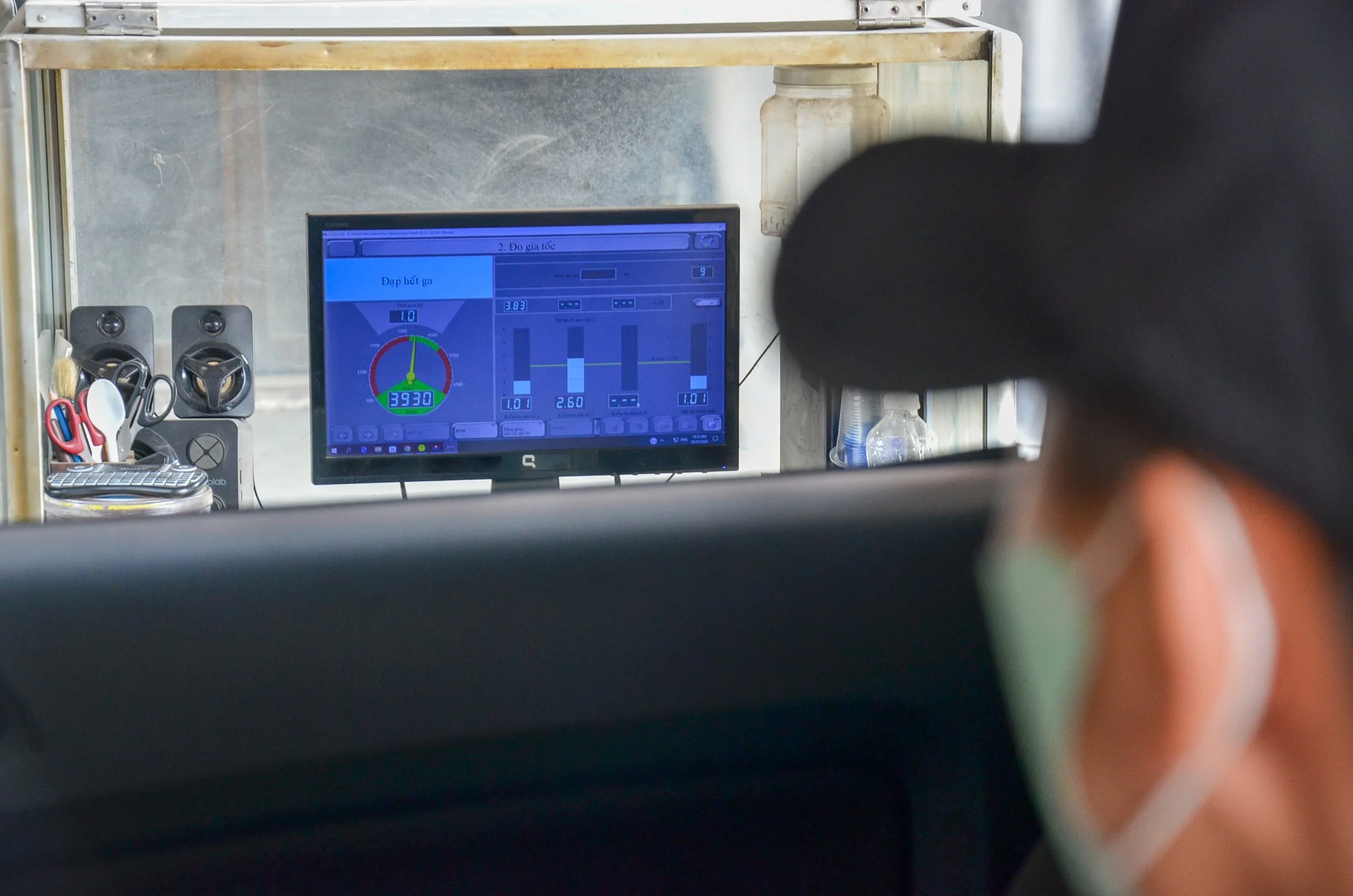
The updated inspection procedure uses a “free acceleration” method, where the vehicle is briefly revved to its maximum speed (N Max) while the exhaust gas analyser records emissions. The entire test lasts roughly two minutes, with only a handful of seconds spent on the actual revving.

Owners’ Concerns
Hoàng Bá Lợi, a Nissan Navara 2017 owner from Ho Chi Minh City, expressed his worry after seeing online posts claiming that the test can break injectors or cause severe engine wear. “I keep my car fully serviced, but the pictures I’ve seen online make me nervous,” he told Tri Thức – Znews.
What Inspectors Say
Nguyễn Nam, a senior inspector at the 50‑04V vehicle‑inspection centre, reassured owners that incidents of engine damage are extremely rare. “In the four days since we rolled out the new protocol, we haven’t recorded a single diesel vehicle suffering a failure after the test,” he said.
How the Test Works
- Step 1 – Load simulation: The engine runs at idle while exhaust gases are cleared for about five seconds.
- Step 2 – Warm‑up: The engine revs gently for 2‑5 seconds to bring it up to operating temperature.
- Step 3 – Free acceleration: The accelerator is fully opened for 1‑2 seconds, reaching N Max. The analyser records the emission spike instantly, then the driver releases the throttle.
The entire rev phase lasts less than a second, far shorter than the period that could cause mechanical stress.
Built‑In Engine Safeguards
Most modern diesel engines feature an internal throttle‑control unit in the fuel pump, which automatically limits fuel delivery if revs climb too high. Additionally, electronic control units (ECUs) can intervene to protect the engine, reducing power or cutting fuel when unsafe parameters are detected. “If a vehicle does suffer damage, it’s usually because pre‑existing issues were overlooked, not because of the test itself,” Inspector Nam added.
Bottom Line
While concerns are understandable, technical evidence shows that the risk of engine damage during the free‑acceleration emission test is minimal. Proper maintenance, a correctly calibrated analyser, and the engine’s own protective systems work together to keep diesel cars safe throughout the inspection.
Owners can breathe easier: the new test is a quick, controlled procedure designed to measure emissions accurately, not to push engines beyond their safe operating limits.