
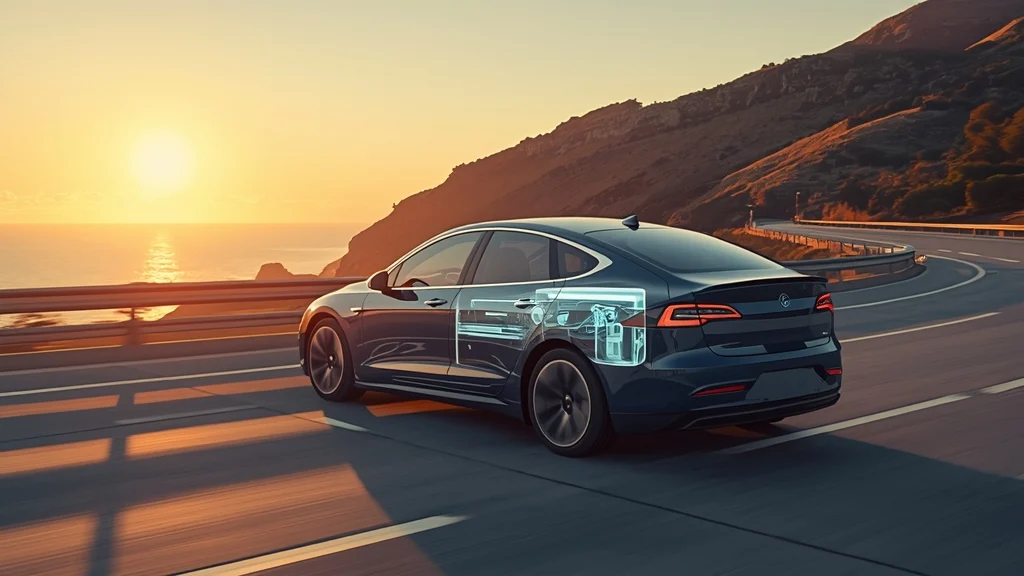
Discover how a breakthrough EV battery with 1,270 Wh/L energy density cuts weight, costs and delivers over 1,000 km per charge – learn more now!
Scientists from South Korea’s POSTECH, KAIST and Gyeongsang National University have unveiled a next‑generation electric‑vehicle (EV) battery that could reshape the entire automotive landscape. The new cell delivers an impressive energy density of about 1,270 Wh/L—almost double that of conventional lithium‑ion packs—while removing the traditional anode material.
Why This Battery Matters
By eliminating the heavy anode layer, the battery becomes lighter and more compact. The result is an EV that can travel over 1,000 km on a single charge without sacrificing payload or cabin space. Manufacturers also stand to save significantly on production costs because the design uses fewer expensive raw materials and follows a simpler manufacturing process.
Performance and Cost Benefits
- Weight reduction: Up to 20% lighter than comparable lithium‑ion packs.
- Range extension: 1,000 km+ per charge for midsize sedans and light trucks.
- Lower price: Streamlined materials and processes could cut battery cost by up to 30%.
The biggest hurdle that remains is ensuring long‑term durability. Researchers are actively refining the electrolyte to guarantee stable performance over thousands of charge cycles before the technology can hit mass production.
Fast‑Swap Stations for Heavy‑Duty Trucks
Alongside the battery breakthrough, Chinese firm Qiji Energy—a subsidiary of CATL—has opened the first high‑capacity battery‑swap hub on the 1,250‑km Shanghai‑Chengdu highway. The station supports more than 95% of the major electric truck models in operation today.
Instead of waiting hours for a charger, drivers can replace a depleted 171 kWh module in roughly five minutes. The modular system allows 1–3 battery packs to be installed depending on the vehicle’s payload, all managed via a cloud‑based platform that monitors health and optimises swapping logistics.
This approach trims vehicle downtime to diesel‑engine levels, slashes annual operating expenses by thousands of dollars and cuts CO₂ emissions dramatically compared with conventional diesel trucks.
Safety Leap: Helmet‑Style Airbag in the Luxeed V9
The Chinese‑European joint venture between Huawei and Chery has equipped its new minivan, the Luxeed V9, with a world‑first helmet‑style airbag built into the seat. Developed by Yanfeng and commercialised in 2023, the system deploys a protective airbag around the occupant’s head and neck while also inflating side curtains.
When a collision is detected, the seat automatically slides to a safe position and the helmet‑airbag deploys, reducing head‐impact forces for front‑ and rear‑seat passengers—including children. Integrated ADAS sensors trigger the deployment early, giving the system maximum effectiveness.
Industry Impact and the Road Ahead
Both the high‑energy‑density battery and the rapid‑swap network point to a future where electric fleets can compete directly with diesel on cost, convenience and range. CATL aims to roll out a nationwide swap network across China by 2030, laying the groundwork for similar infrastructure in markets such as the United States, Europe and Vietnam.
Combined with innovative safety features like the Luxeed V9’s helmet airbag, these advances could accelerate the global shift toward greener, more efficient transportation.
Stay tuned as these technologies move from labs and pilot projects to the streets worldwide.