
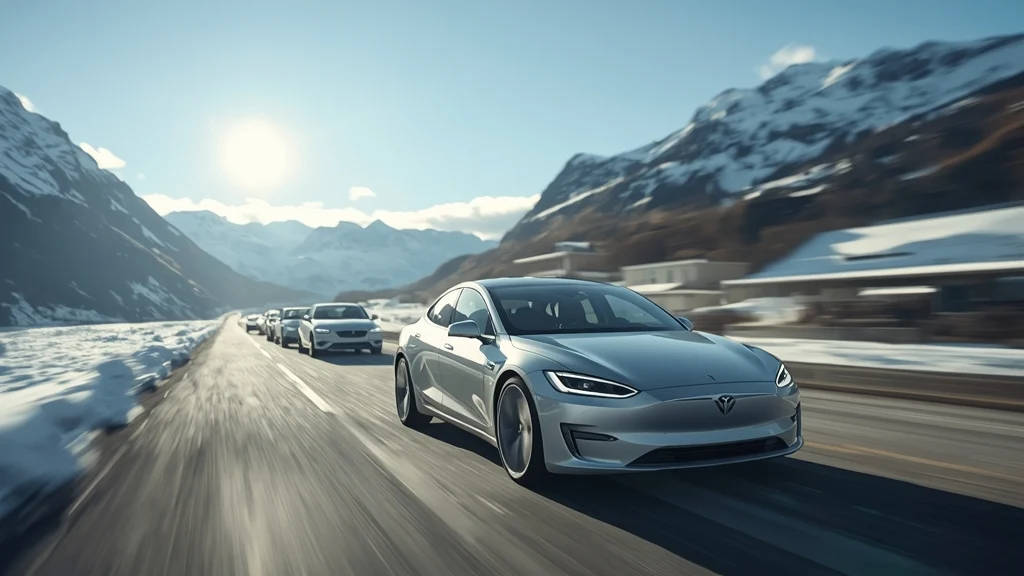
Norway’s EV market reaches 96% of new registrations by 2025, effectively ending gasoline and diesel sales. Discover the policy and demand drivers – read more now!
By the end of 2025, Norway will have achieved a historic milestone: nearly 96 % of all newly registered cars will be fully electric. The figure rose from an impressive 88.9 % in 2024 and even peaked at 98 % in December 2025, a share that remains a fantasy elsewhere in Europe.
Record‑Breaking EV Share
The surge has pushed gasoline‑ and diesel‑powered vehicles into a marginal statistical footnote. Hybrid plug‑in models, once seen as a transition technology, have virtually vanished as Norwegian buyers leapfrog straight from internal‑combustion engines to pure electric powertrains.
Policy Powering the Transition
Norway didn’t wait for the market to change organically. Decades of supportive policies have deliberately reshaped buying behaviour:
- High purchase taxes on gasoline and diesel cars.
- Zero % VAT on electric vehicles.
- Reduced road‑toll and ferry fees for EVs.
- A dense, nationwide fast‑charging network.
These incentives made conventional cars increasingly expensive while giving EV owners tangible savings every day.
Market Reaction and Sales Leaders
In October 2025 the government announced a new tax hike slated for January 2026, sparking an immediate rush to buy electric cars. For the fifth consecutive year, Tesla topped sales with a 19.1 % market share, followed by Volkswagen at 13.3 % and Volvo at 7.8 %.
China’s Quiet Surge in Norway
Perhaps the most notable story is the rise of Chinese manufacturers. Cars built in China now command 13.7 % of Norway’s EV market, up from 10.4 % in 2024. BYD alone doubled its sales, signaling that the brand transition is reshaping not just powertrains but brand hierarchies as well.
What This Means for the Rest of Europe
Norway’s rapid transition stands in sharp contrast to the slower, more cautious rollout across the continent. With electric vehicles already outnumbering diesel cars in the total passenger‑fleet, Norway is positioned to experiment with large‑scale, grid‑integrated EV systems.
Millions of parked EVs could become a distributed energy resource, feeding power back into the grid during peak demand. If other nations follow Norway’s policy playbook, the end of gasoline cars could arrive much sooner than most planners anticipate.
Stay informed on the latest developments in global electric mobility and learn how these trends could affect your market strategy.