
Discover how Slovakia, with just 5.4 million people, produces nearly one million cars yearly, becoming Europe’s top auto manufacturing hub. Learn more now!
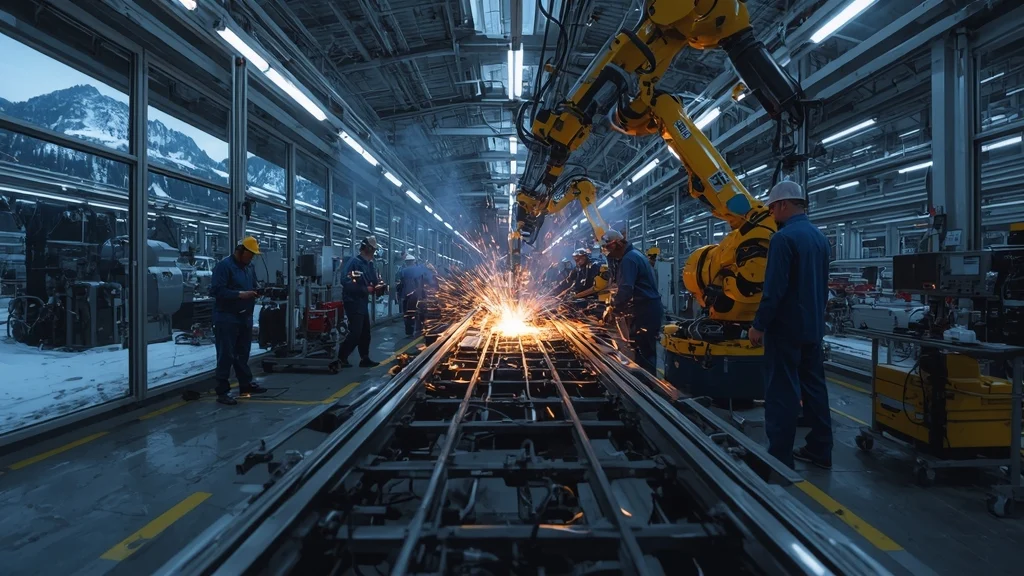
Amid the snow‑capped mountains of northern Slovakia, a sprawling factory roars to life. Massive lifts lower steel bodies onto a line where 690 industrial robots weld them with surgical precision before human hands take over for the final touches.
Why Slovakia Attracts Carmakers
With a population of only 5.4 million, Slovakia churns out close to one million vehicles each year – the highest per‑capita output in the world. The secret? A blend of low labour costs (about 60 % of Western Europe), high productivity, and a fully developed automotive supply chain of roughly 360 specialised firms.
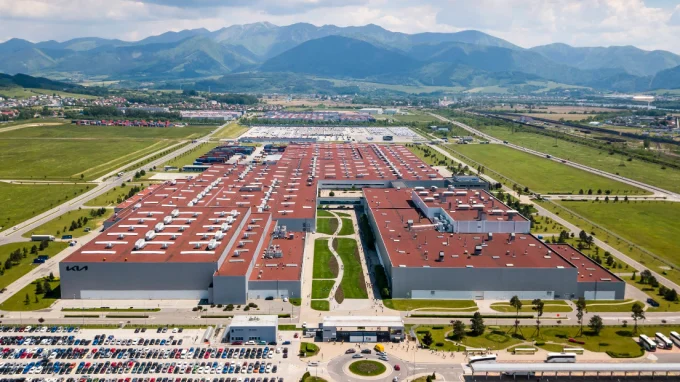
Inside the Kia Plant Near Zilina
Kia’s Zilina complex, the German‑car‑maker’s largest European site, represents a €2.5 billion investment (over $2.9 billion). About 3,700 workers assemble each vehicle, with a typical shift seeing a finished car roll off the line every minute, its headlights flashing a sign of completion.
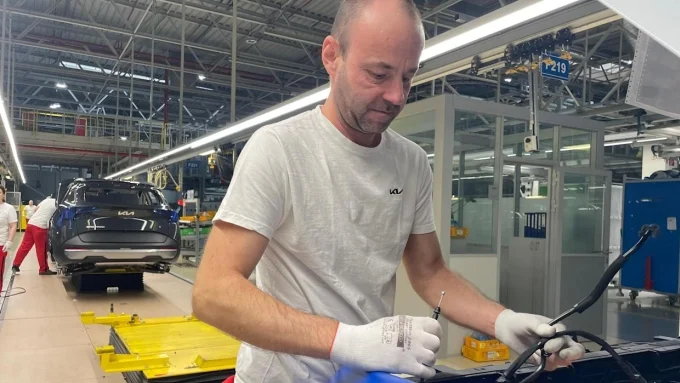
Marcel Pukhon, 48, who grew up in the UK and Northern Ireland before returning to Slovakia, says, “Now I’m part of building the cars I’ve loved since childhood – it feels like a dream job.”
Economic Impact and Workforce Earnings
Young employees benefit from wages well above the national average. Simona Krnova, 23, earns €1,300 a month (≈$1,500) installing sound‑insulating doors, while Kia reports an average monthly pay of €2,400 (≈$2,800) across its workforce.
For context, Slovakia’s overall average salary in 2023 was €1,403 (≈$1,600), still below the EU average, which makes the automotive sector especially attractive for job‑seekers.
The plant, together with other OEMs, generates more than 20,000 direct and indirect jobs in the Zilina region, boosting local tax revenues and spurring ancillary businesses.
The Road to Electric Vehicles
Slovakia’s energy mix – heavy on hydroelectric and nuclear power – positions it favourably for electric‑vehicle (EV) production. Kia has secured a €29 million tax credit to retool its line for EVs, part of a total €108 million investment aimed at future‑proofing the plant.
Volvo plans to launch an EV factory in Slovakia by 2027, adding to the country’s growing green‑mobility credentials.
Education and Skills Development
Technical University of Zilina works hand‑in‑hand with manufacturers, offering work‑study programmes that let students earn while they learn. Roughly 400 graduates each year join the automotive sector, ensuring a steady pipeline of skilled talent.
Regional Ripple Effect
Slovakia’s success mirrors a broader shift across Central and Eastern Europe. The Czech Republic hosts Hyundai, Toyota and Volkswagen; Poland houses large Toyota, Stellantis and Volkswagen sites; Hungary is home to Audi, Mercedes‑Benz and Suzuki; Romania welcomes Ford and Renault; Serbia has become a hub for Ford.
Common threads bind these economies: competitive labour rates, a legacy of industrial expertise, and well‑trained workforces, creating a magnet for global carmakers seeking efficiency and proximity to Western European markets.
Looking Ahead
Strategically located at the heart of Europe, Slovakia offers seamless logistics to key markets such as the UK, Germany, Italy and Spain. As the auto industry accelerates toward electrification, the country’s blend of cost advantage, skilled labour and green energy makes it a compelling destination for the next generation of vehicle production.