
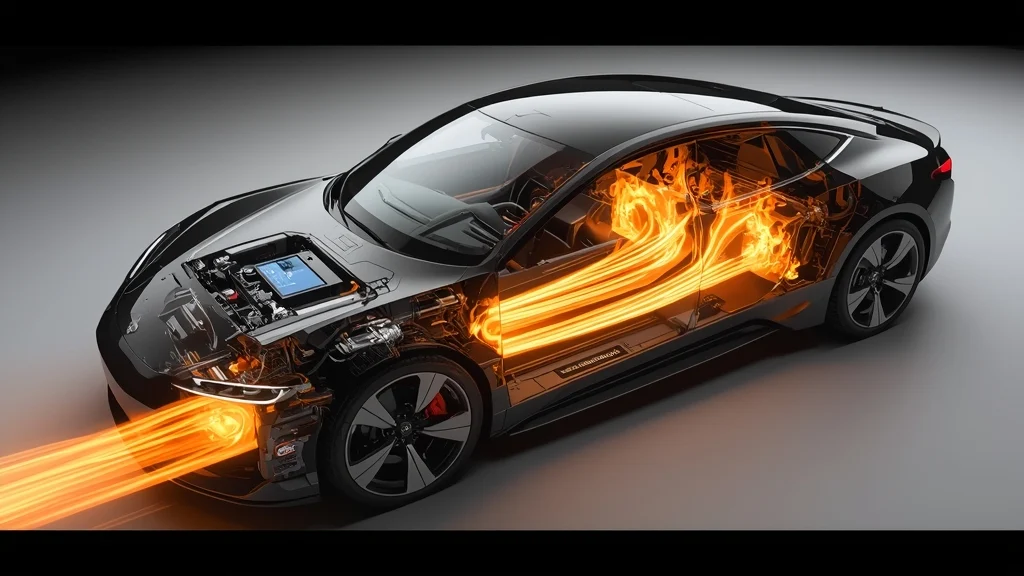
Svolt’s Dragon Armor 3.0 battery physically separates fire and electricity, preventing cabin fires and boosting range. Discover the future of EV safety now – learn more today.
Svolt, the battery arm of China’s automotive giant Great Wall Motor, has unveiled a breakthrough for electric‑vehicle (EV) safety – the Dragon Armor 3.0 pack. For the first time, a lithium‑ion battery can physically separate the electrical terminals from the paths where excess heat could ignite, effectively steering any flame away from the passenger cabin.
How the Fire‑Separation Works
The new pack uses a dual‑channel architecture. The positive electrode (the ‘+’ pole) sits on one side of the cell, while a dedicated vent channel designed to release hot gases and flames is positioned on the opposite side. This physical barrier ensures that, in a thermal‑runaway event, the flame is directed downward and outward, not toward the vehicle interior.
Cell‑to‑Chassis (CTC) Integration
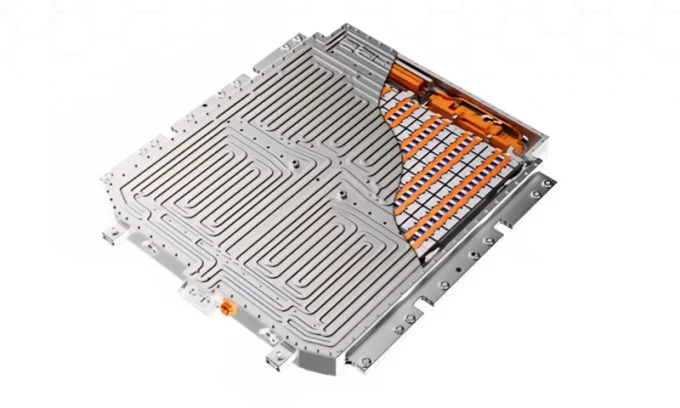
Dragon Armor 3.0 is also the first square‑cell pack to combine Cell‑to‑Chassis (CTC) and Cell‑to‑Body (CTB) technology with independent thermal‑management streams. The upper half of the module bears structural loads, while the lower half provides a pressure‑relief space that cushions impacts and helps disperse heat.
Performance Gains
- Overall energy density up 7‑10% without enlarging the pack footprint.
- Cell height increased by 5 mm to accommodate the new vent channel.
- Integrated liquid‑solid semiconductor thermal control raises the safe operating temperature by 8 °C.
- Safety margin (time before critical temperature) improved by 10%.
- Thermal runaway initiation temperature lifted by 5 °C, with a 25% lower probability of occurrence.
Two Power Options for Different EV Platforms
The 86 kWh version is aimed at plug‑in hybrid models, while the 115 kWh version targets pure‑electric vehicles. The larger pack delivers more than 400 km (250 mi) of WLTP range, and the 86 kWh pack offers over a 10% increase in cycle life compared with previous generations.
Future Potential
When paired with lithium‑iron‑phosphate (LFP) chemistry, Dragon Armor can theoretically reach up to 800 km (500 mi) on a single charge, and with nickel‑cobalt‑manganese (NCM) cells it supports rapid 4C charging for fast‑lane EV use.
Company Background
Svolt was spun off from Great Wall Motor in 2018 and now focuses on high‑performance lithium‑ion cells for cars and stationary storage. By mid‑2025, Svolt is projected to be China’s ninth‑largest EV‑battery supplier, holding roughly 2.09% of the market.
With Dragon Armor 3.0, Svolt aims to set a new safety benchmark that could reshape how manufacturers design electric powertrains worldwide.