
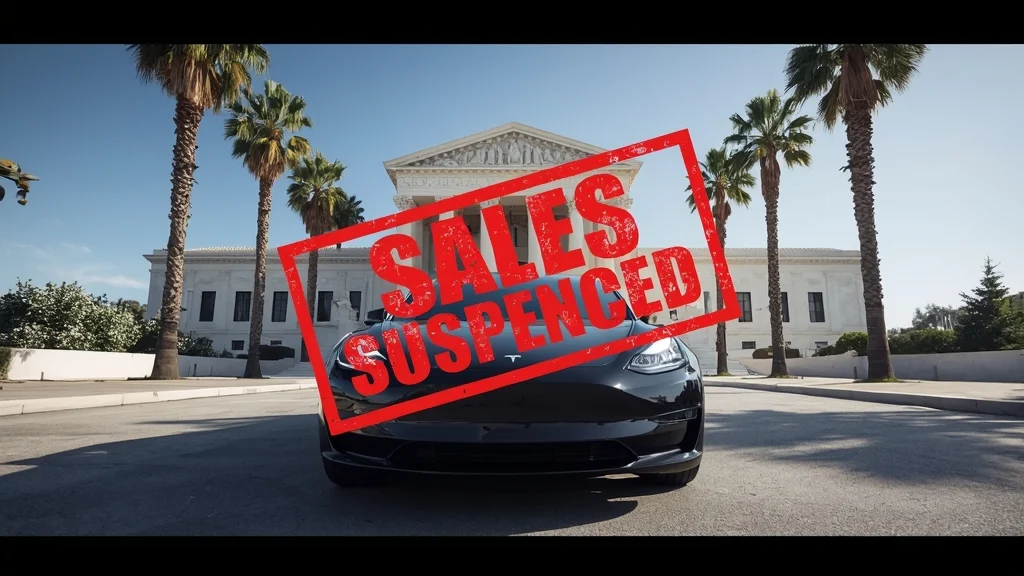
A California judge orders Tesla to pause sales for 30 days over alleged false advertising of its Autopilot and Full Self-Driving features. Read more now.
A California judge has ruled that Tesla must suspend its vehicle sales in the state for 30 days, citing potentially deceptive marketing of its Autopilot and Full Self-Driving (FSD) systems. The decision follows a long‑standing dispute with the California Department of Motor Vehicles (DMV) over the way the electric‑car maker promotes its driver‑assist technologies.
Judge’s Decision
U.S. District Judge John G. Mulkeen concluded that Tesla’s advertising could mislead consumers into believing its cars are capable of fully autonomous operation. As a result, the court ordered a 30‑day suspension of Tesla’s sales and manufacturing licenses in California, pending corrective action.
What the DMV Says
Steve Gordon, director of the California DMV, announced that the agency will enforce the judge’s order but will give Tesla a 60‑day window to rectify any misleading statements. If the issues are not resolved, the DMV will activate the full 30‑day sales suspension. However, the DMV has temporarily paused the production‑license suspension, so Tesla’s Fremont plant will continue operating.
Impact on Production
While sales in the Golden State could be halted, manufacturing will proceed uninterrupted for now. The DMV’s decision reflects a balance between protecting consumers and avoiding a disruption to a major employment hub.
Background of the Autopilot Claims
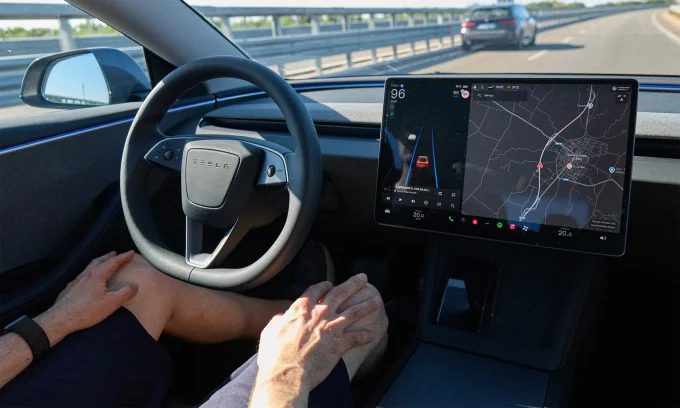
In 2022, the DMV accused Tesla of suggesting that its Autopilot and FSD features allow cars to drive themselves without driver supervision. In reality, the systems require an alert, attentive driver to intervene at any moment. After regulatory pressure, Tesla rebranded its advanced driver‑assist package as “Full Self‑Driving (Supervised),” explicitly acknowledging the need for human oversight.
Legal Battles Ahead
Beyond the state‑level action, Tesla faces a class‑action lawsuit filed in Northern California, alleging that the company has misled drivers about the capabilities of its autonomous tech for years. The outcome of both cases could set significant precedents for how automakers market driver‑assist features worldwide.
Consumers, regulators, and industry watchers will be closely monitoring Tesla’s response. Will the company amend its marketing language, or will it contest the ruling? The next few weeks could reshape the narrative around autonomous driving in the United States.
Stay tuned for updates on this evolving story and what it means for the future of electric vehicles and autonomous technology.