
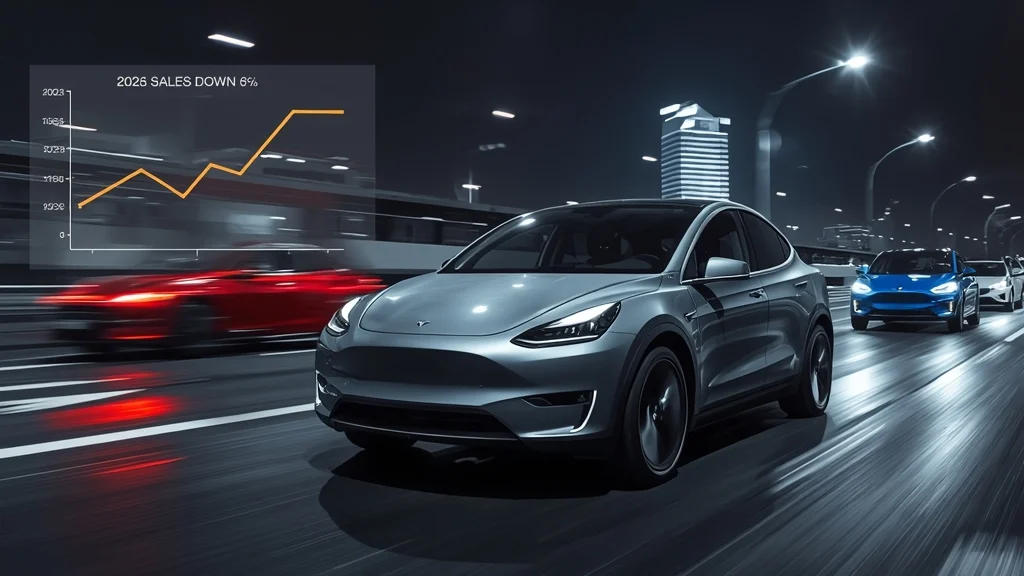
Tesla records its first drop in Chinese retail sales in 2025, signaling a pivotal shift in the world’s biggest EV market. Read more now!
According to the China Passenger Car Association (CPCA), Tesla’s Chinese wholesale deliveries hit 97,171 units in December 2025, a figure that almost maxed out the output capacity of the Shanghai Gigafactory.
Annual Sales Trend Shows a Slip
In the first eleven months of 2025, Tesla sold roughly 531,855 vehicles in China, a steep drop from the 657,105 units recorded across the full year of 2024. To match last year’s total, the company would have needed to deliver more than 125,000 cars in December – well beyond the Gigafactory’s current capability.
Applying the same retail‑to‑export ratio observed in December 2024 (about 88% retail), realistic estimates suggest Tesla could have shipped around 86,000 cars domestically in December 2025. That would bring the projected 2025 total to about 618,000 units, roughly a 6% decline from 2024.
Why Tesla Is Feeling the Pressure
While the Model 3 and Model Y have been the backbone of Tesla’s Chinese lineup, their designs are aging in a market that rewards frequent updates. Meanwhile, domestic manufacturers are launching fresh models every few months, eroding the novelty factor that once gave Tesla an edge.
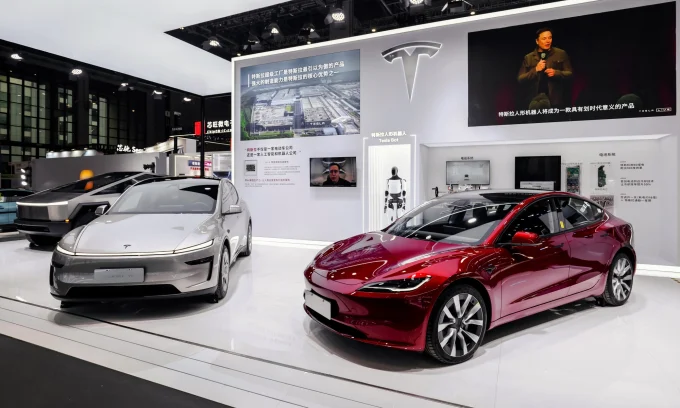
Domestic Rivals Accelerate the Race
Chinese EV makers are closing the gap on price, features, and technology:
- BYD – Offers a full spectrum of electric models at competitive price points.
- Nio – Continues to refine its premium EVs with advanced battery‑swap technology.
- Xpeng – Expands its portfolio with smart‑driven models targeting tech‑savvy buyers.
- Xiaomi – The tech giant’s recent entry brings a blend of affordable hardware and integrated software ecosystems.
These brands not only price their cars more aggressively but also roll out upgrades faster, appealing to Chinese consumers who increasingly value both cost efficiency and cutting‑edge features.
Implications for the Global EV Market
China remains the world’s largest EV market, and a slowdown for Tesla there signals broader competitive pressures. International investors are watching whether Tesla can regain momentum through new model launches, localized production tweaks, or pricing strategies.
Expert Insight
Chí Nguyên, writing for Electrek, notes: “Tesla’s slowdown in China underscores the urgency for the company to innovate faster and adapt to a market that no longer tolerates a static product line.”
As 2025 unfolds, the race to dominate China’s electric‑vehicle arena is intensifying, and Tesla’s next moves will be closely scrutinized by analysts and consumers worldwide.