
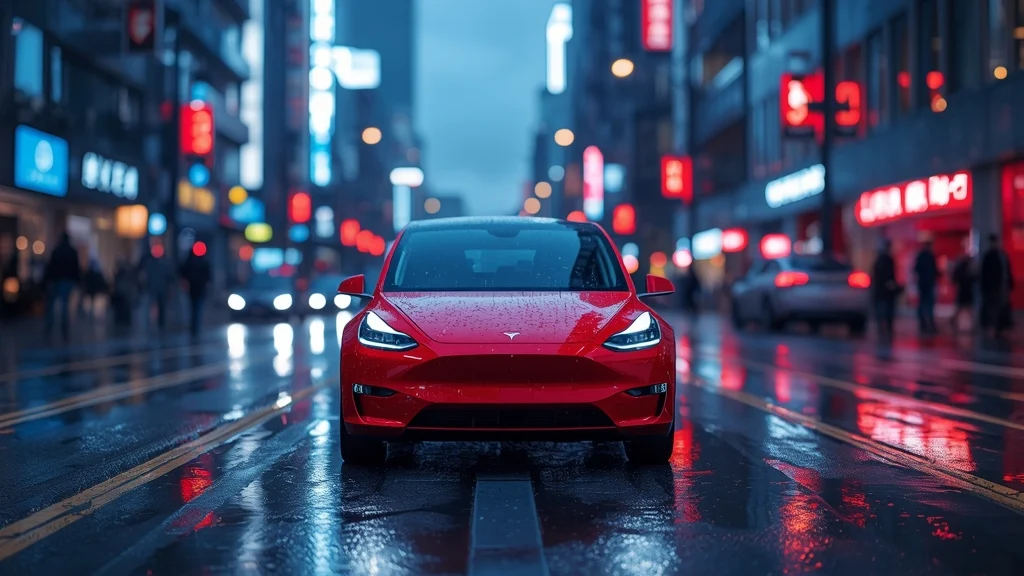
Tesla records its first decline in Chinese retail sales for 2025 amid fierce EV competition. Discover the numbers, challenges, and future outlook – read now.
For the first time since it entered the market, Tesla has seen a drop in retail sales in China during 2025. The slowdown highlights the mounting pressure from home‑grown electric‑vehicle (EV) manufacturers that are rapidly expanding their line‑ups and price appeal.
2025 sales snapshot
According to the China Passenger Car Association (CPCA), Tesla’s wholesale volume in December 2025 reached 97,171 vehicles. That figure includes both domestic sales and cars exported from the Shanghai Gigafactory. While the number approaches the plant’s maximum capacity, the overall annual performance tells a more cautious story.
In the first eleven months of 2025, Tesla sold approximately 531,855 vehicles in China. That is a sharp dip from the 657,105 units delivered in the full year of 2024, representing a year‑over‑year decline of roughly 19%.
Why December matters
To match last year’s total, Tesla would have needed to move more than 125,000 cars in December alone—well beyond the output capabilities of the Shanghai Gigafactory. A more realistic scenario, using the same 88% domestic‑to‑export ratio recorded in December 2024, suggests about 86,000 vehicles could be sold domestically that month. Under that assumption, 2025’s domestic total would settle around 618,000 units, roughly a 6% decrease compared with 2024.
The intensifying Chinese EV battleground
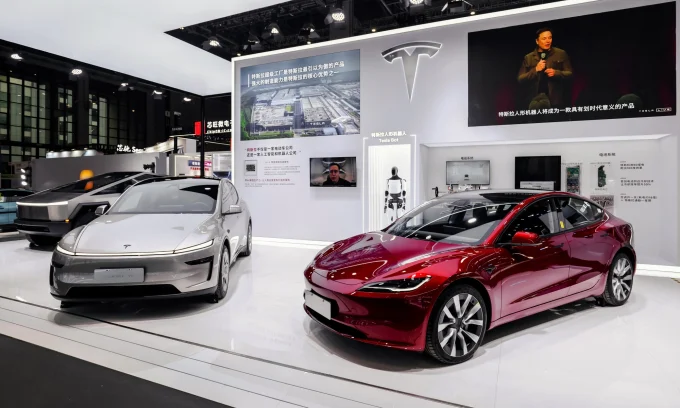
China’s EV market has become the most competitive arena in the world. While Tesla continues to rely heavily on the Model 3 and Model Y—both praised for performance but increasingly seen as dated in design—local rivals are launching fresh models at a breakneck pace.
- BYD offers a wide range of electric cars and SUVs across all price segments, often undercutting Tesla on cost.
- Nio and Xpeng are maturing their premium and mid‑range line‑ups, adding advanced driver‑assist features that appeal to tech‑savvy buyers.
- Xiaomi, a newcomer from the consumer‑electronics world, is entering the EV space with devices that blend smart‑home integration and aggressive pricing.
These manufacturers are not only lowering prices but also accelerating product development cycles, delivering new models every few months. The result is a shifting consumer perception: younger Chinese buyers increasingly view domestic EVs as comparable—or even superior—in value and technology to imported alternatives.
What the slowdown means for Tesla
With the Shanghai Gigafactory operating near its ceiling, Tesla’s ability to boost volume in the short term appears limited. The company may need to:
- Refresh its model portfolio with more locally tailored designs.
- Introduce price‑competitive variants or localized pricing strategies.
- Leverage software and over‑the‑air updates to differentiate the driving experience.
Analyst Chí Nguyên, cited by Electrek, notes that “Tesla’s edge in brand prestige and autonomous‑driving tech is being eroded as Chinese brands rapidly close the gap on quality, features, and affordability.”
Looking ahead
While 2025 marks a modest contraction, the broader EV market in China is still on a robust growth trajectory. Tesla’s challenge will be to adapt its product strategy and pricing to remain relevant amid a flood of compelling domestic alternatives.
Stay tuned for the latest updates on Tesla’s performance in China and how the global EV landscape continues to evolve.