
Discover the 2025 Chinese SUV market leaders – Tesla Model Y, Geely Xingyue L, Boyue L, Toyota RAV4, and VW Tiguan L. See why BYD fell out of the top five and what’s driving the shift. Read more now!
2025 Chinese SUV Market Overview
China remains the world’s largest automobile market, and its SUV segment continues to dominate sales. In 2025, five models captured the lion’s share of buyer interest, while the nation’s biggest electric‑vehicle maker, BYD, unexpectedly slipped out of the top five.
Who Took the Top Spots?
Tesla Model Y Leads the Pack
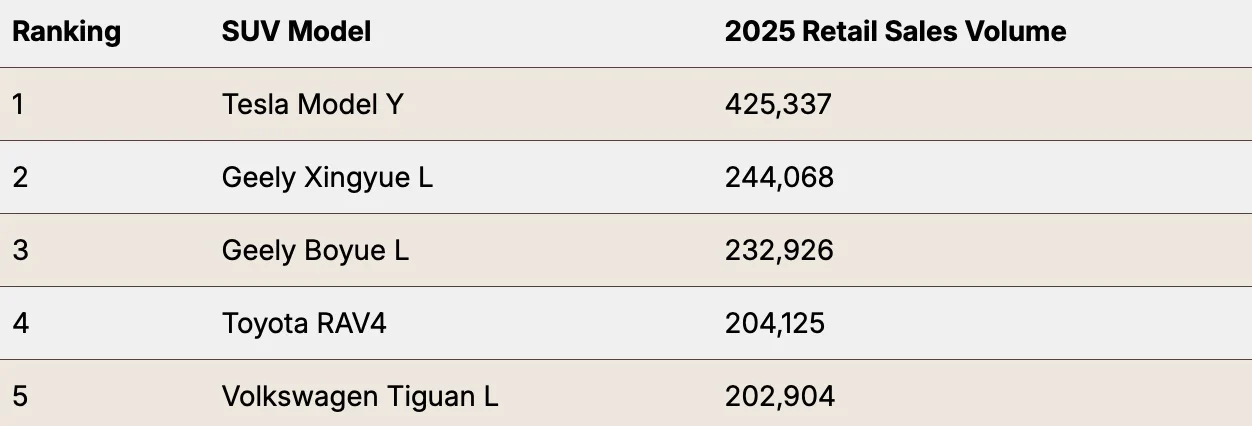
With 425,337 units delivered to Chinese customers, the Tesla Model Y retained its crown as the best‑selling SUV in the country. The electric crossover’s blend of performance, range, and a rapidly expanding Supercharger network keeps it ahead of domestic rivals.
Geely’s Dual Powerhouses: Xingyue L and Boyue L
Geely secured the second and third positions with its premium‑styled SUVs. The Xingyue L moved 244,068 units, while the Boyue L followed closely with 232,926 deliveries. Both models benefit from Geely’s strong brand equity and a portfolio of hybrid and mild‑hybrid powertrains that appeal to cost‑conscious consumers.
Toyota RAV4 Surprises the Market
In a notable shift, the Toyota RAV4 entered the top four, selling 204,125 vehicles. The Japanese stalwart’s reputation for reliability, coupled with localized production and competitive pricing, helped it capture a sizeable slice of the Chinese SUV pie.
Volkswagen Tiguan L – Tailored for China
Rounding out the top five is the long‑wheelbase Volkswagen Tiguan L, a version of the global Tiguan specifically stretched for Chinese buyers who favour extra rear‑legroom and larger cargo space. While exact sales figures are not disclosed, the model’s presence in the top‑five reflects Volkswagen’s strategic focus on market‑specific designs.
BYD’s Decline: From Leader to Seventh Place
BYD, China’s powerhouse electric‑vehicle manufacturer, fell to sixth and seventh places with its Song Plus (200,276 units) and Yuan UP (189,277 units). The two models still achieved solid numbers, but they were eclipsed by both foreign and domestic competitors.
The drop marks a continuation of BYD’s recent struggles to dominate the new‑energy SUV segment, a space now contested fiercely by Geely, Tesla, and global incumbents. Analysts point to an intensifying price war, shifting consumer preferences toward longer wheelbases, and the growing appeal of hybrid powertrains as key factors.
What This Means for the Future
BYD’s slip from the top five is a warning sign that the Chinese SUV market is no longer a one‑brand show. With strong performances from Tesla’s all‑electric Model Y, Geely’s hybrid line‑up, and internationally recognized models like the RAV4 and Tiguan L, competition is set to intensify.
For buyers, the result is greater choice and more aggressive pricing. For manufacturers, the message is clear: innovate, localize, and price competitively, or risk losing ground in the world’s biggest car market.
Stay tuned as the 2025 sales race unfolds and manufacturers adjust their strategies to win over China’s discerning SUV shoppers.