
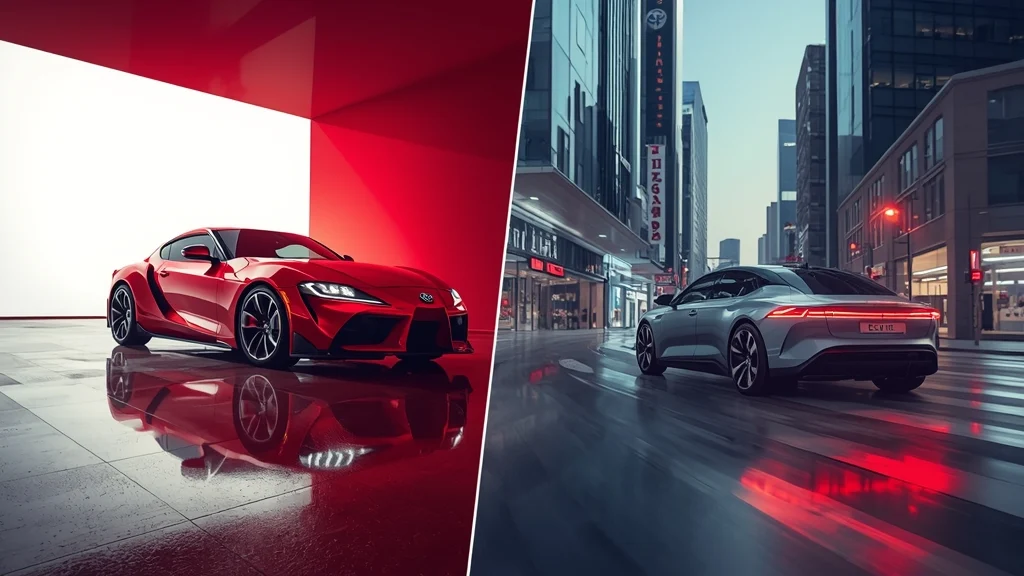
Toyota’s rapid sales surge eclipses VW, sealing its sixth straight global‑top spot. Discover how hybrid strategy fuels growth – read more now.
Record Sales Surge
Toyota is once again proving its dominance on the world stage. In the first 11 months of 2025, the Japanese automaker and its subsidiaries—Lexus, Daihatsu and Hino—delivered a combined 10,327,976 vehicles, a 4.8% increase over the same period last year.
Volkswagen Group, Europe’s largest carmaker, reported global deliveries of 8.98 million units for the full year 2025. Even with a full‑year figure, Volkswagen trails Toyota’s 11‑month total by more than 1.3 million cars.
- Toyota global sales (Jan‑Nov 2025): 10.33 million
- Volkswagen Group full‑year 2025 sales: 8.98 million
- Year‑on‑year growth for Toyota: +4.8%
- Year‑on‑year change for Volkswagen: –0.5%
Why Toyota Is Ahead
Balanced Power‑train Portfolio
While many manufacturers have bet everything on pure‑electric models, Toyota has kept its internal‑combustion engines (ICE) alive, expanded its hybrid lineup, and introduced affordable EVs. This multi‑pronged approach lets the company meet diverse buyer preferences across regions.
Hybrid Momentum
Hybrid vehicles now account for more than 13% of new‑car sales in the United States (Q3 2025) and have driven a 57% sales jump in Vietnam compared with 2024. Toyota reinforced the segment with price cuts on four hybrid models in Vietnam—Alphard, Corolla Cross, Yaris Cross and Camry—offering discounts of VND 37‑200 million.
Innovation Highlights
The upcoming GR GT supercar showcases a 4.0‑liter twin‑turbo V8 paired with a hybrid system, signaling Toyota’s commitment to performance engineering even as emissions rules tighten.
In March 2025, Toyota launched the bZ3X electric SUV through its GAC‑Toyota joint venture in China, using low‑cost LFP batteries and a starting price of ¥109,800 (≈ US$15,000). By November, the model was moving over 10,000 units per month.
R&D Investment
For the fiscal year ending March 2025, Toyota spent roughly ¥1.3 trillion (US$9.5 billion) on research and development—on par with BYD and ahead of most rivals—funding everything from high‑output V8 hybrids to next‑generation battery packs.
Volkswagen’s Challenges
Volkswagen’s total sales slipped 0.5% in 2025, with its flagship brand falling 1.4% to 4.73 million units. Audi also posted a 2.9% decline. The group’s biggest weakness remains China, where deliveries fell 8% to 2.69 million units amid fierce competition from domestic EV makers.
In the United States, Volkswagen’s performance was uneven, and the company has paused several models while reassessing its electrification roadmap, leaving it lagging behind both Toyota and leading American brands.
Future Outlook for Toyota
Looking ahead, Toyota plans to roll out a new‑generation Hilux pickup and a more affordable Land Cruiser FJ. 2026 will mark the global launch of the sixth‑generation RAV4, with a cost‑focused Wildlander variant aimed at the Chinese market.
The automaker also announced a new battery plant in North Carolina and a US$10 billion five‑year investment to expand hybrid and component production in America, underscoring its long‑term commitment to diversified powertrains.