
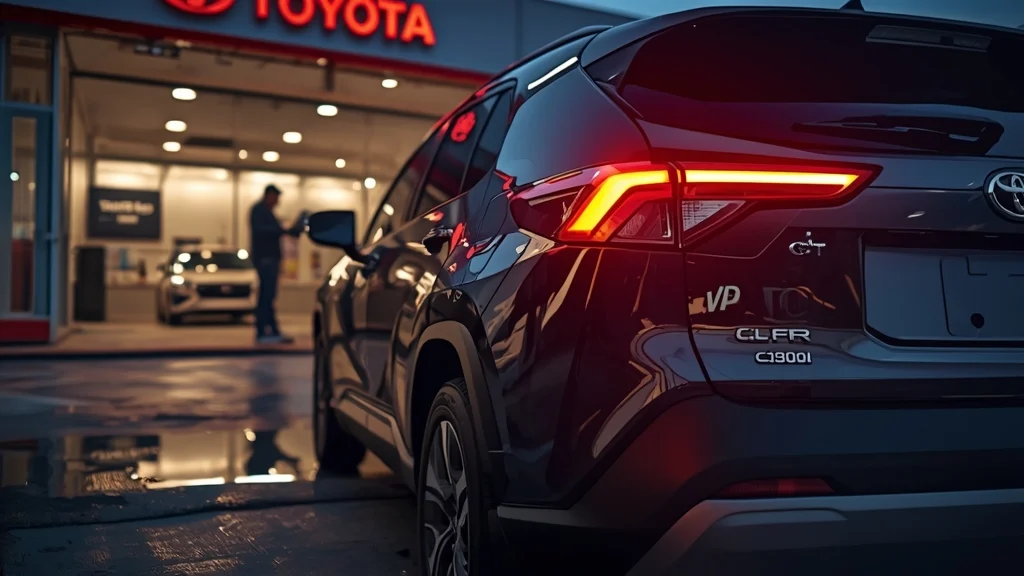
Toyota is recalling select U.S. bZ4X electric SUVs after rear lights not meeting federal safety standards were installed. Find out if your car is affected and get a free replacement today.
Toyota has announced a limited recall of its bZ4X electric SUV in the United States after discovering that a batch of rear light assemblies did not comply with federal safety requirements. The problem stems from a cataloging error that led to Korean‑specification lamps being fitted to U.S. vehicles.
What triggered the recall?
The National Highway Traffic Safety Administration (NHTSA) issued the recall notice after Toyota received an parts order from Canada that referenced a left‑hand rear‑light module designed for the Korean market. That order raised a red flag, prompting an internal review that uncovered the catalog mix‑up.
Technical differences between Korean and U.S. rear lights
In Korea, the rear‑lamp package includes a reflective mirror but lacks a dedicated side‑marker lamp. U.S. Federal Motor Vehicle Safety Standard (FMVSS) 108, however, requires an active side‑marker lamp that emits light to improve vehicle visibility from the side, especially in low‑light conditions. The Korean unit’s reflector merely bounces external light and does not satisfy this requirement.
Potential safety impact
Without a functioning side‑marker lamp, a vehicle’s profile can be harder to see from oblique angles, increasing the risk of side‑impact collisions in urban settings or on poorly lit roads. While the number of affected vehicles is relatively low, Toyota deemed the issue serious enough to warrant a recall.
Scope of the recall
Toyota estimates that about 79 rear‑light assemblies may have been incorrectly shipped and installed on U.S. bZ4X models. These are the only vehicles currently listed as affected.
What owners need to do
Owners who have had their rear lights serviced through Toyota’s official parts channels will receive a direct notification from the manufacturer. Dealerships will inspect the installed module and, if it is not compliant with U.S. standards, will replace it at no cost to the customer.
Broader implications
This incident highlights the challenges of managing parts catalogs for globally distributed vehicle platforms. Even a brand known for rigorous quality control like Toyota can encounter rare errors that underscore the importance of meticulous part‑number tracking across markets.