
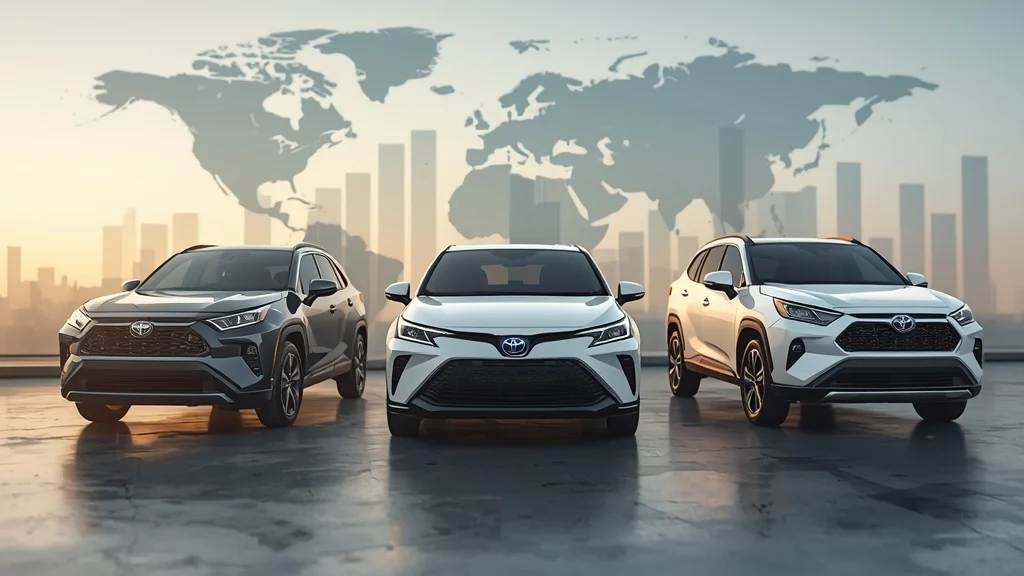
Toyota remains the world’s best‑selling car maker in 2025 and tops Brand Finance’s 2026 brand value ranking. Discover how its hybrid and hydrogen strategy fuels growth – read more now.
According to Brand Finance’s Global 500 report for 2026, Japan ranks fourth worldwide in total brand value, trailing only the United States, China and Germany. Within that hierarchy, Toyota continues to be the cornerstone of Japan’s automotive industry on the global stage.
Brand Strength in Numbers
Toyota’s brand value stands at US$62.7 billion – a modest 3% dip from the previous year. Despite the decline, the company climbs four places on Brand Finance’s Brand Strength Index (BSI) to become the 15th strongest brand worldwide, earning a AAA+ rating, the highest possible score.
Remarkably, Toyota is the lone Japanese marque to break into the top‑20 Global 500 list, underscoring the resilience of its brand amid a sector grappling with electrification, fierce tech competition and supply‑chain volatility.
Sales Superiority Over Rivals
Volkswagen Group reported delivering 8.98 million vehicles globally in 2025. Yet Toyota’s cumulative sales from January through November – 10,327,976 units – already outpaced VW for the entire year, confirming Toyota’s position as the world’s best‑selling car maker.
Strategic Multihybrid Approach
While many manufacturers pivot exclusively toward battery‑electric vehicles (BEVs), Toyota pursues a diversified pathway. Chairman Akio Toyoda argues that relying solely on pure‑electric cars will make achieving net‑zero emissions by 2050 unrealistic. Instead, Toyota blends hybrids, plug‑in hybrids (PHEVs) and hydrogen fuel‑cell technology to meet diverse market needs – from dense urban commuters to long‑haul freight.
- Hybrid dominance: Over 27 million electrified vehicles (primarily hybrids) have been sold under the Toyota and Lexus badges worldwide.
- Plug‑in hybrids as a bridge: Toyota is enhancing PHEV range to exceed 200 km on electric power alone, positioning them as practical, low‑emission daily drivers.
- Hydrogen for heavy duty: Fuel‑cell electric vehicles (FCEVs) are being rolled out in trucks and buses, capitalising on rapid refuelling and lighter weight compared with batteries.
Investment Highlights
In Vietnam, Toyota will invest US$360 million to build a hybrid assembly plant in Phú Thọ province. Although a start‑up date has not been announced, the move aligns with Toyota’s broader pricing strategy that has already slashed retail prices for four hybrid models by up to VND 200 million, coupled with an extended warranty of up to 10 years or 185,000 km.
Globally, the automaker has pledged US$70 billion by 2030 for electrified‑vehicle development, with roughly half earmarked for BEVs. Nonetheless, Toyota maintains that hydrogen will remain a critical component for sectors where batteries face limitations.
Future Outlook
Brand Finance notes that Toyota’s continued brand strength stems from balancing a storied heritage with adaptive innovation. The next challenge lies in translating domestic market dominance into sustainable, long‑term global growth.
Whether through hybrid reliability, plug‑in versatility, or hydrogen’s clean‑fuel promise, Toyota is positioning itself to stay at the forefront of the automotive transition while keeping its brand appeal firmly intact.