
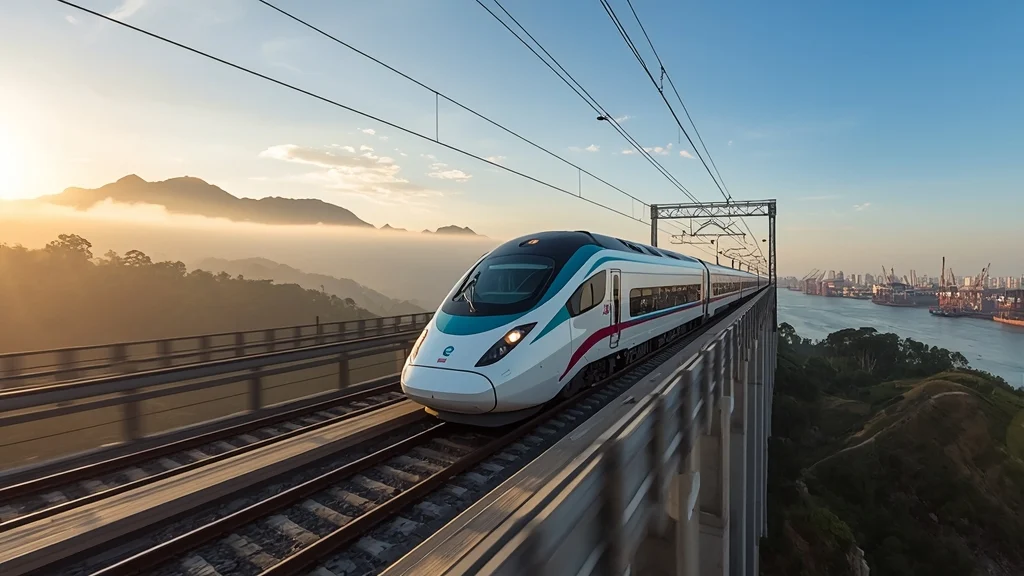
Vietnam aims to fast‑track a 390km high‑speed rail linking Lao Cai, Hanoi and Hai Phong, seeking top Chinese consortiums for construction. Learn more now!
Project Overview
Vietnam is moving ahead with a landmark railway project that will stretch nearly 400 kilometres from the border town of Lao Cai, through the capital Hanoi, to the coastal port city of Hai Phong. The main line covers about 390.9 km, with an additional 27.9 km branch line.
Key Technical Features
- Standard gauge (1,435 mm) tracks designed for mixed passenger and freight traffic.
- Design speeds: 160 km/h on the main Lao Cai–Hai Phong segment, 120 km/h through the Hanoi hub, and 80 km/h on remaining sections.
- Six provinces and cities will be served: Lao Cai, Phú Thọ, Hanoi, Bắc Ninh, Hưng Yên and Hai Phong.
- Terminal points: the Lao Cai border crossing (linking to China) and the Lạch Huyện cargo terminal in the Cat Hai special economic zone.
Investment and Timeline
The total investment exceeds VND 203,000 billion (roughly US$8.7 billion). The project is being funded as a public‑private partnership with the state spearheading financing and oversight.
Key milestones include:
- Feasibility study report expected by 2025.
- Selection of design consultants and construction contractors during the first quarter of 2026.
- Finalisation of land‑acquisition and right‑of‑way plans by March 2026.
- Commencement of civil works slated for late 2026.
- Full commercial operation aimed for no later than 2030.
Contractor Selection Strategy
Minister of Construction Trần Hồng Minh has ordered a rapid yet rigorous procurement process. Vietnam intends to partner with four to five leading Chinese construction giants, forming joint ventures with qualified Vietnamese firms. These consortia must meet strict technical and financial criteria to handle the complex terrain and high‑speed specifications.
Critical deadlines:
- Complete design surveys for the remaining 16 stations (Component 1) by Q1 2026.
- Choose a design‑consultancy team for Component 2 by January 2026.
- Finalize the selection of the Chinese‑Vietnamese joint‑venture contractors by the end of March 2026.
Land Acquisition and Coordination
Securing the right‑of‑way is deemed the linchpin for the project schedule. The Ministry stresses close collaboration between investors, consultants, contractors, and local authorities responsible for land clearance. Early relocation of utilities—electricity, water, telecommunications—is essential to avoid bottlenecks.
Officials will hand over all surveyed alignments, control points and land‑acquisition zones to provincial governments once legal clearances are in place.
Standards and Cost Management
Vietnam will adopt certain Chinese construction standards for this railway. The Ministry of Construction requires the consultancy contract to be signed no later than 20 January 2026 so that cost‑norms and unit‑price tables can be harmonised and later codified into a regulatory decree for Component 2.
Strategic Significance
Beyond boosting domestic mobility, the line will create a seamless freight corridor linking China’s rail network to Vietnam’s deep‑water ports. It is the largest infrastructure undertaking in the country to employ such advanced rail technology, crossing densely populated urban areas, industrial zones and geologically challenging regions.
The railway is expected to stimulate regional trade, attract foreign investment, and lay the groundwork for future high‑speed connections across Southeast Asia.
Next Steps
All parties are urged to accelerate studies, finalise tender documents, and maintain transparent communication with communities along the route. The government’s commitment to meet the 2030 completion target hinges on disciplined execution and swift resolution of land‑acquisition issues.