
Xiaomi scores a legal victory in the carbon fiber spoiler dispute, clearing fraud claims and setting a precedent. Learn the details now.
On March 3, 2026, the People’s Court of Kaifeng District in Henan Province dismissed the fraud and breach‑of‑contract accusations lodged against Xiaomi by a group of SU7 Ultra owners. The ruling marks the first judicial decision involving the high‑priced carbon‑fiber spoiler accessory – a component priced at 42,000 CNY (about $5,810) for the flagship SU7 Ultra electric sedan.
Background of the controversy
When Xiaomi launched the SU7 Ultra, it promoted a dual‑air‑flow carbon‑fiber spoiler that supposedly restored the prototype’s aerodynamic performance and added extra cooling. Early 2025 buyers, however, reported that the interior structure of the spoiler looked almost identical to a standard aluminum cover, differing only by a small plastic brace.
Independent wind‑tunnel tests (source) showed negligible airflow through the spoiler’s vents, contradicting Xiaomi’s marketing claim of “high‑efficiency airflow.”
Court decision and compensation
On May 8, 2025, Xiaomi clarified that the spoiler’s primary role was supplemental cooling for the front compartment, not a performance‑boosting aero device. The company offered customers who had not yet received the part a replacement aluminum cover (with a 30‑40‑week wait) and awarded existing owners 20,000 reward points, valued at roughly 2,000 CNY ($276).
The Kaifeng court rejected the plaintiffs’ request for double repayment of the 10,000 CNY ($1,380) deposit. The original sales contract, signed on March 5, 2025, was terminated effective September 13, 2025, by mutual agreement. Court fees of 800 CNY ($110) were split, with the plaintiff paying 500 CNY ($70) and Xiaomi 300 CNY ($40).
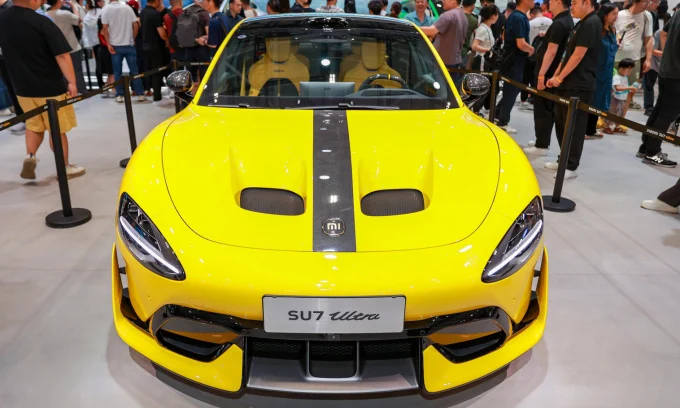
The judge reasoned that marketing terms such as “high‑efficiency airflow” did not conflict with the verified function of “localized venting.” Moreover, no evidence of intentional deception was found in Xiaomi’s public statements.
Contrast with earlier rulings
This verdict differs from a October 2025 decision by the Tongzhou Court, which upheld fraud findings and ordered Xiaomi to pay 156,000 CNY ($21,547). Similar cases remain pending in Nanjing and Tongzhou, where Xiaomi has submitted an 84‑page technical dossier defending the spoiler’s performance claims.
Market impact
The legal win comes as demand for the SU7 Ultra plummets. Monthly deliveries fell from a peak of over 3,000 units to just 45 in January 2026 – a 98.5% drop. Despite the sales slump, Xiaomi recorded 22,100 insurance registrations in January, a 15% increase over December 2025’s average, indicating continued consumer interest in the model’s broader features.
Broader implications
The Kaifeng judgment establishes a precedent as Xiaomi faces more than 100 similar lawsuits nationwide over high‑end accessory specifications. Legal experts suggest the outcome could shape how Chinese EV manufacturers describe optional components and handle post‑sale disputes.
For owners and prospective buyers, the decision underscores the importance of transparent product communication and the potential for legal recourse when expectations aren’t met.
What’s next?
While the Kaifeng case closed in Xiaomi’s favor, the ongoing litigation in other jurisdictions means the company’s legal strategy and product messaging will stay under close scrutiny. Consumers are advised to retain purchase documents, monitor official communications, and consider warranty or reward options offered by manufacturers.