
Explore how Vietnam, Thailand and Indonesia tax hybrid vehicles, compare rates, and see the strict rules each government sets to boost green car sales. Learn more now!
Governments across Southeast Asia are racing to lure eco‑friendly drivers by slashing taxes on hybrid vehicles. Vietnam, Thailand and Indonesia each have their own playbook, mixing lower rates with strict eligibility rules. Below we break down the numbers, requirements and what they mean for car makers and buyers.
2026 Tax Landscape at a Glance
All three countries calculate the tax discount as a percentage of the vehicle’s pre‑tax price. For locally assembled cars the base is the export price; for imports it’s the landed cost after customs duties.
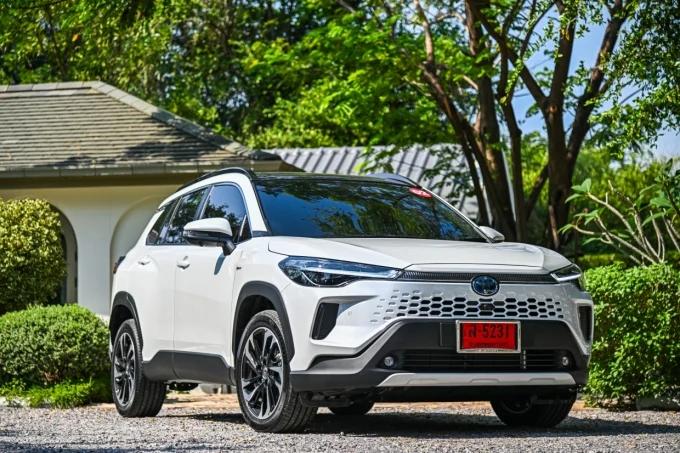
- Vietnam: Special consumption tax (SCT) for HEVs set at 70% of the rate applied to comparable gasoline models. Typical gasoline SCT ranges from 35% to 150% for 9‑seat‑or‑less cars, so hybrids fall between 24.5% and 105%.
- Thailand: Excise tax for hybrids runs 5%‑10%, translating to roughly 30%‑50% of the gasoline rate (which itself varies 14%‑34% based on CO₂ emissions). Vehicles over 3 L or classified as luxury face a 50% excise.
- Indonesia: Luxury Sales Tax (PPnBM) for gasoline cars sits at 10%‑40% for models under 3 L. Hybrids enjoy a reduced rate—still under 10% of the gasoline benchmark—while larger‑engine cars are taxed 40%‑125%.
Eligibility Rules – What It Takes to Earn the Discount
Vietnam
- The hybrid must consume no more than 70% of the fuel energy of an equivalent gasoline‑only model (same displacement).
- Energy efficiency is measured by the R‑ratio: hybrid fuel consumption divided by the average fuel consumption of conventional ICE cars (FCconv) announced annually by the Ministry of Transport.
- Only vehicles meeting the 70% threshold qualify for the 70% SCT reduction.
Thailand
- MHEV (Mild‑Hybrid): 10% tax if CO₂ ≤ 100 g/km (≈ 4.3 L/100 km); 12% if 101‑120 g/km (≈ 4.3‑5.2 L/100 km).
- HEV (Full Hybrid): 6% tax if CO₂ ≤ 100 g/km; 9% if 101‑120 g/km.
- PHEV (Plug‑in Hybrid): 5% tax for electric‑only range ≥ 80 km; 10% for range < 80 km.
- Local parts content must be 17%‑45% depending on the model, and manufacturers must commit at least US$84 million in hybrid localisation between 2024‑2027.
Indonesia
- Benefit applies only to vehicles produced or assembled domestically and certified under the Low‑Carbon Emission Vehicle (LCEV) programme.
- Fuel consumption limits: ≤ 6.45 L/100 km for gasoline hybrids; ≤ 5.71 L/100 km for diesel hybrids.
- Minimum local content: 40% of the vehicle’s value.
What the Numbers Mean for Buyers
While Thailand and Indonesia currently offer the most aggressive tax cuts, their programmes come with tighter emissions caps, mandatory local‑part sourcing and sizeable investment commitments from automakers. Vietnam’s approach is more straightforward—simply meeting a 70% fuel‑efficiency benchmark unlocks a sizeable SCT reduction—but the base tax rates remain higher.
For consumers, the takeaway is clear: a cheaper sticker price can be found in Thailand or Indonesia if you choose a hybrid that satisfies stringent CO₂ or electric‑range criteria. In Vietnam, the savings are more modest, but the rule‑of‑thumb is easier to meet—any hybrid that beats a conventional car’s fuel consumption by 30% or more qualifies.
Looking Ahead
All three governments say they will keep tweaking rates as the market evolves, aiming to balance environmental goals with the desire to grow domestic auto production. Keep an eye on upcoming decrees, especially Vietnam’s 2025‑2026 rollout, if you’re planning to import or locally source hybrid models in the region.