
Three new Chinese SUVs just hit the Vietnam market. Will Geely and Omoda shake up the status quo? Explore specs, pricing, and market impact here.
In a sudden surge of activity during the final week of March, the Vietnamese automotive market witnessed an aggressive expansion by Asian manufacturers. Three new SUV models from Chinese brands have officially landed, signaling a bold attempt to capture market share from established industry giants. But the real question remains: do these newcomers have what it takes to convert hype into actual sales?
Geely EX2: The Urban Electric Contender
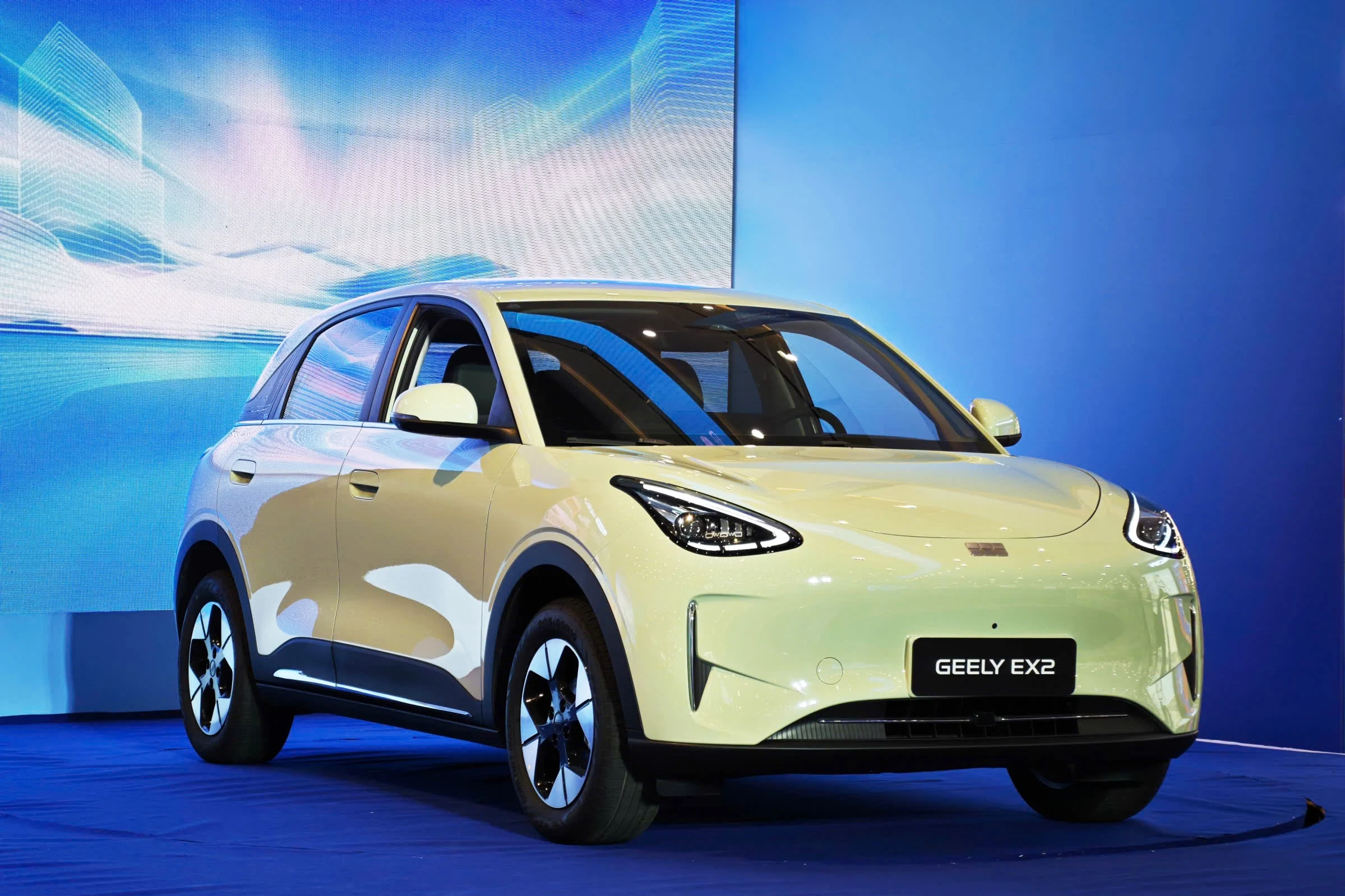
Leading the charge is the Geely EX2, a compact all-electric SUV designed specifically for the urban jungle. With a wheelbase of approximately 2,650 mm and a sleek, rounded aesthetic, the EX2 is clearly positioned to attract city dwellers, particularly female drivers looking for a stylish and manageable commute.
Performance and Range
Under the hood, the EX2 features a Permanent Magnet Synchronous Motor (PMSM) delivering 113 horsepower and 150 Nm of torque, powering the rear wheels. Its 44.1 kWh battery pack offers a respectable range of 395 km on a single charge, making it a viable option for daily city driving.
Pricing and Market Positioning
- Pro Version: 459 million VND
- Max Version: 499 million VND
This competitive pricing puts the EX2 in direct competition with other affordable EVs, most notably the BYD Dolphin. However, the biggest hurdle for Geely isn’t the price, but the infrastructure. While Geely vehicles can potentially share charging networks with Lynk & Co, Volvo, and Zeekr, the current density of charging stations at dealerships remains a point of anxiety for potential buyers.
Geely EX5 PHEV: Bridging the Gap with Hybrid Power
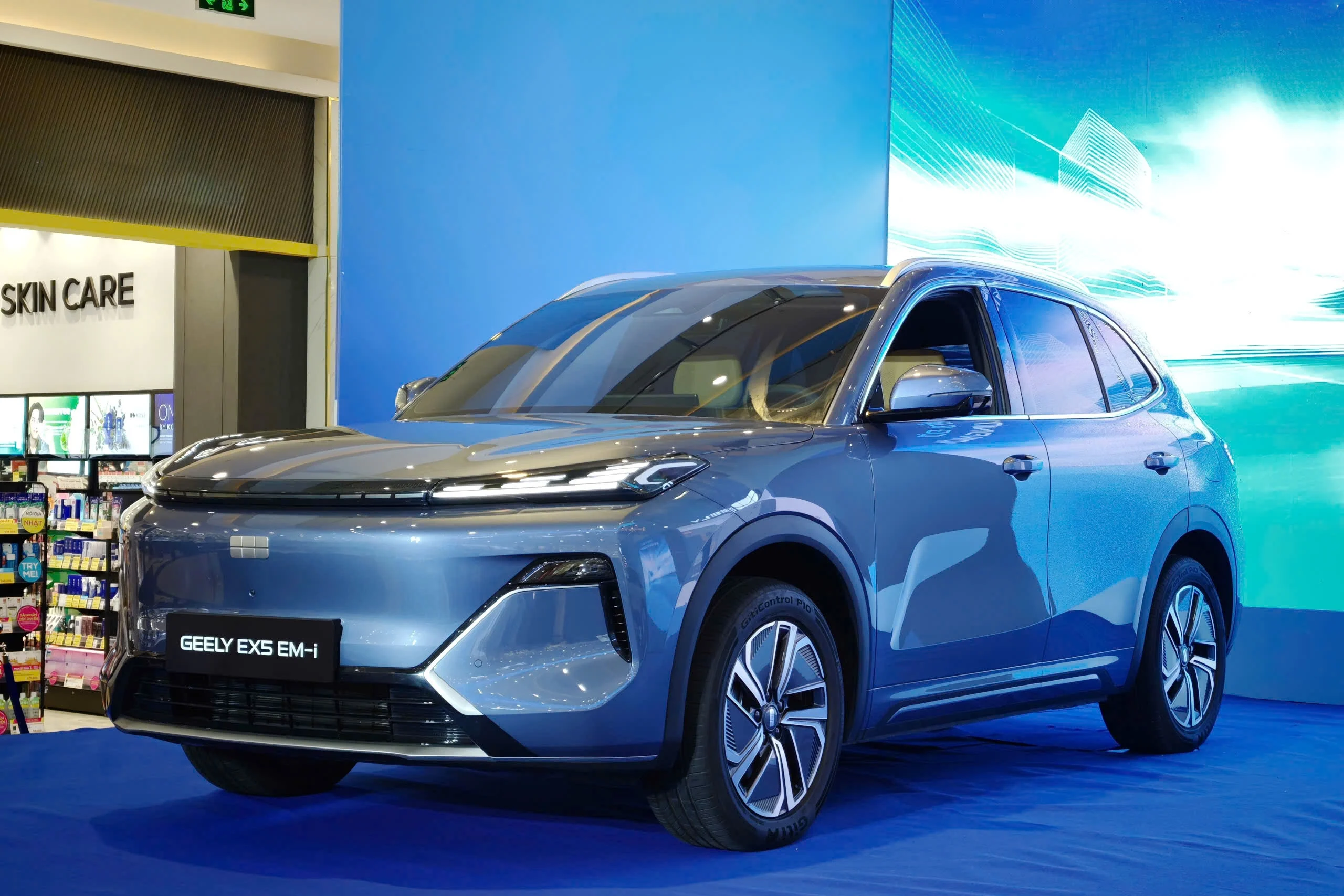
Recognizing the “range anxiety” associated with pure EVs, Geely also introduced the EX5 PHEV. This plug-in hybrid is expected to be the brand’s primary volume driver this year, targeting families who desire luxury and versatility without sacrificing convenience.
The Power of Hybridity
The EX5 PHEV is a powerhouse, combining a 1.5L gasoline engine (110 hp) with an electric motor to produce a total system output of 215 horsepower. The results are impressive:
- Pure Electric Range: Over 228 km
- Total Combined Range: Approximately 1,823 km on a full tank and charge
- Fuel Efficiency: A combined consumption of roughly 3.02 liters/100 km
Priced between 789 and 969 million VND, the EX5 PHEV enters a crowded segment. It must fight for attention against gasoline stalwarts like the Honda CR-V, Ford Territory, and Mazda CX-5, as well as new energy rivals like the BYD Sealion 6 and Jaecoo J7 PHEV.
Omoda C5 SHS-H: The Strategic Local Play
Rounding out the trio is the Omoda C5 SHS-H, a “Super Hybrid” urban SUV. Beyond its impressive specs—including a fuel consumption rate of just 4.9 liters/100 km—the Omoda C5 carries a strategic advantage that its competitors lack: local assembly.
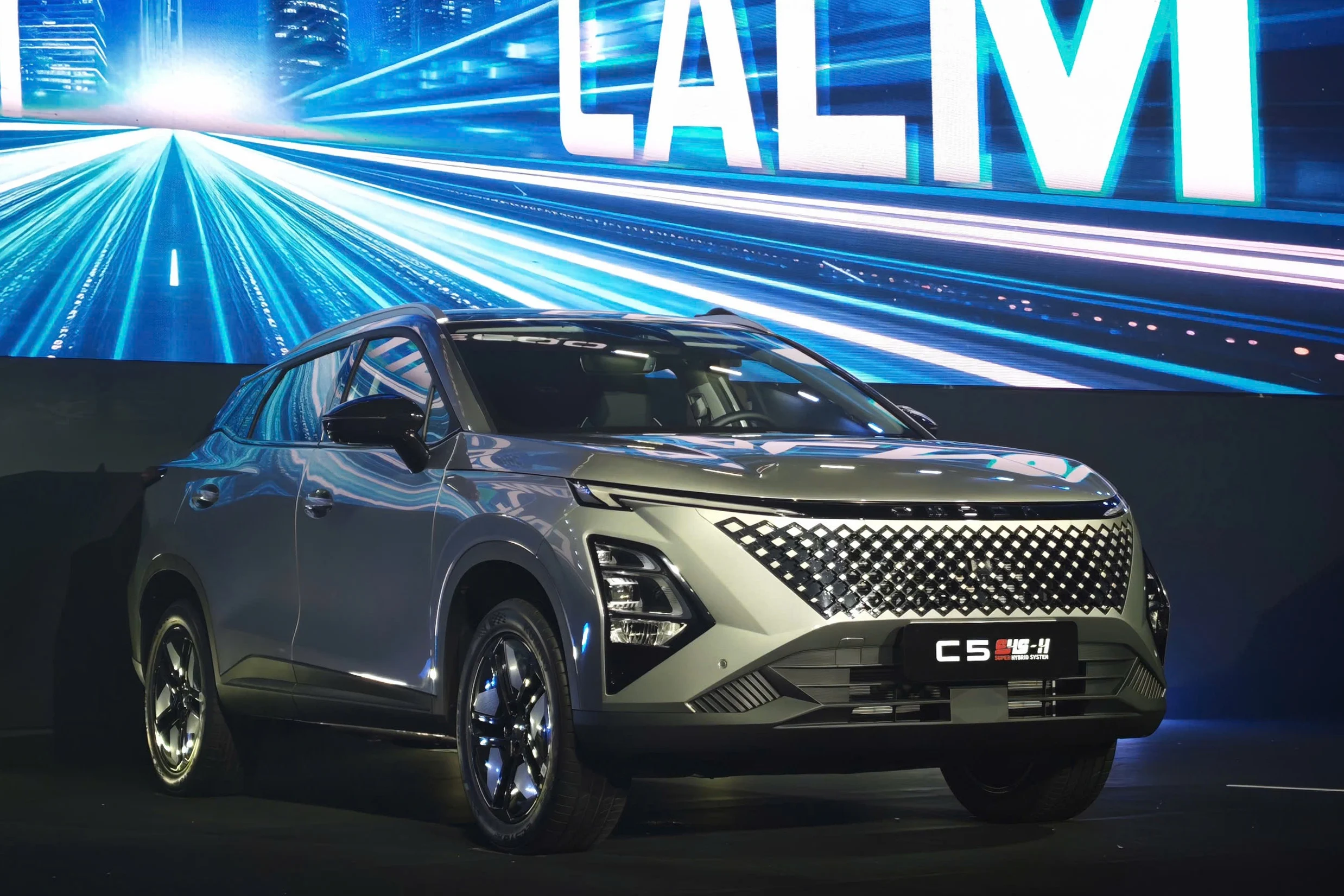
As the only Chinese brand currently operating a manufacturing plant in Vietnam, Omoda is betting that local production will build consumer trust and streamline after-sales service. By offering high-tech features at a lower price point than traditional rivals, Omoda is positioning itself as the “smart choice.” However, they are facing stiff competition from Japanese favorites like the Mitsubishi Xforce and the Toyota Yaris Cross HEV.
The Verdict: Tech vs. Trust
The arrival of these three SUVs proves that Vietnam has become a lucrative “fertile ground” for New Energy Vehicles (NEVs). Whether it is the affordability of the Geely EX2, the incredible range of the EX5 PHEV, or the local manufacturing edge of the Omoda C5, the value proposition is clear.
However, the battle for the Vietnamese consumer is not won on a spec sheet. In a market where practicality, brand reliability, and after-sales support are paramount, these Chinese newcomers face a steep uphill battle regarding consumer trust. To truly disrupt the market, these brands will need a long-term strategy centered on quality and service, rather than relying on the initial glitz of a product launch.