
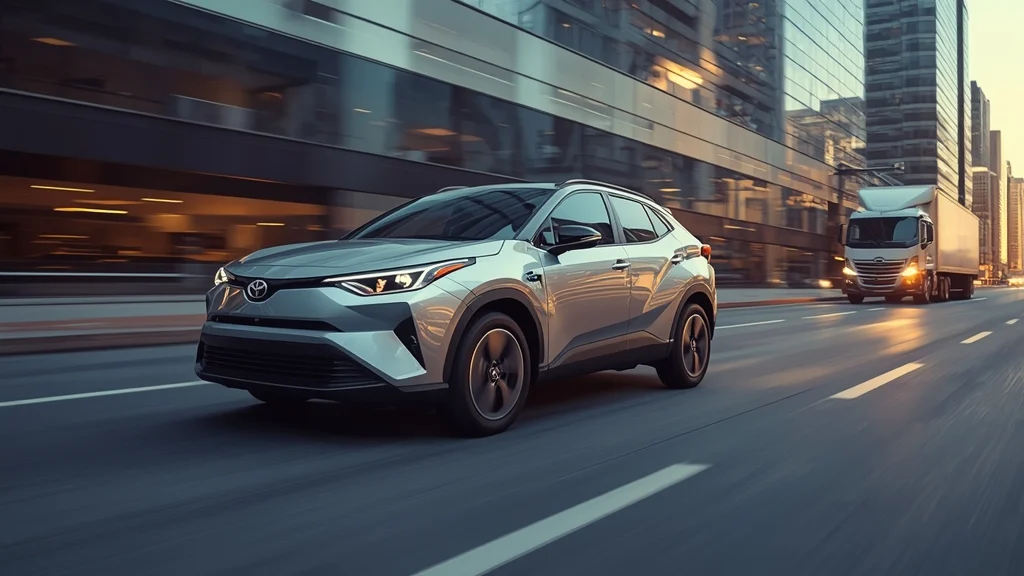
Toyota’s EV sales surge in the US, outpacing Ford. Discover how the hybrid giant is conquering the electric vehicle market. Read more!
Just a year ago, the idea of Toyota outselling Ford in the electric vehicle (EV) sector within the United States seemed improbable. However, recent data reveals a surprising shift in the landscape. Toyota, long criticized for its cautious approach to full electrification, is now finding its stride while legacy American competitors stumble.
The Numbers: A Surprising Lead
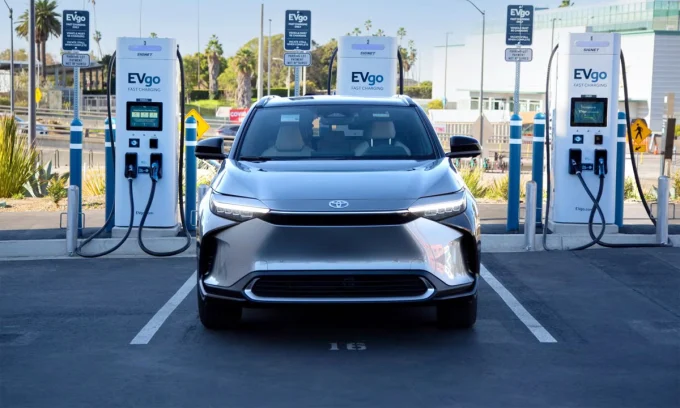
In the first quarter of the year, Toyota’s performance in the US EV market reached a pivotal milestone. The company’s bZ series alone recorded sales of over 10,000 units, significantly outpacing Ford’s total electric vehicle sales, which stood at 7,000 units for the same period.
Toyota currently offers four imported EV models in the US, with a fifth slated for release this month. This aggressive expansion comes at a time when many other automakers are scaling back their ambitions.
Navigating a Volatile Market
The US EV market has faced significant headwinds. Demand dipped sharply following the removal of various tax credits and subsidies under the Trump administration’s 2025 policies. According to Cox Automotive, EV market share peaked at 10.5% in Q3 2025 but slid to 5.8% by the end of the year.
Despite this downturn, Toyota is seeing a recovery. A combination of increasing consumer interest in plug-in options and geopolitical tensions—specifically the conflict in Iran driving up fuel costs—is pushing American buyers back toward electric alternatives.
A Contrarian Strategy: Doubling Down While Others Retreat
Toyota’s current momentum is particularly striking because it occurs while its rivals are in retreat. Honda recently scrapped plans for three US-made EVs, warning of potential losses totaling 2.5 trillion yen (approximately $15.7 billion). Similarly, General Motors and Ford have scaled back their EV targets, and even Tesla has ceased production of the Model S and Model X SUVs.
Where others see a dying trend, Toyota sees an opening. By leveraging its global dominance in hybrid technology, Toyota is strategically transitioning its customer base toward battery-electric vehicles (BEVs) without abandoning the versatility of gasoline-electric hybrids.
Overcoming Early Stumbles
The road to success wasn’t seamless. Toyota’s first mass-market effort, the bZ4X, suffered a rocky start with a high-profile recall in 2022 due to wheel stability issues. For a time, these vehicles sat idle in showrooms while hybrids flew off the lots.
However, the 2025 rebranding and iteration of the bZ line have turned the tide. Sales for the bZ and its luxury sibling, the Lexus RZ, more than doubled last month, with the bZ even outselling the legendary Prius in the first quarter of the year.
The Roadmap for US Production
Toyota is not just importing cars; it is investing heavily in American soil to avoid tariffs and optimize logistics. The company has committed roughly $10 billion to US operations over the next five years.
- The EV Highlander: Toyota is reimagining the popular three-row SUV as a fully electric model, with production beginning late this year at the Georgetown, Kentucky plant.
- Battery Power: These vehicles will be powered by a new $14 billion lithium-ion battery plant in North Carolina.
- Future Expansion: A second, yet-to-be-named electric SUV is scheduled to join the lineup in 2027.
The Hybrid Safety Net
While Toyota is accelerating its EV push, it remains the undisputed king of hybrids. In March, electrified powertrains—mostly hybrids—accounted for 55% of Toyota’s total US sales, up from 49% the previous year. The demand is so high that many buyers face month-long waiting lists for popular hybrid models.
This financial stability allows Toyota to experiment and expand into the BEV market with far less risk than its competitors. By maintaining a “multi-pathway” approach, Toyota is ensuring that no matter which direction the energy market swings, they are positioned to win.