
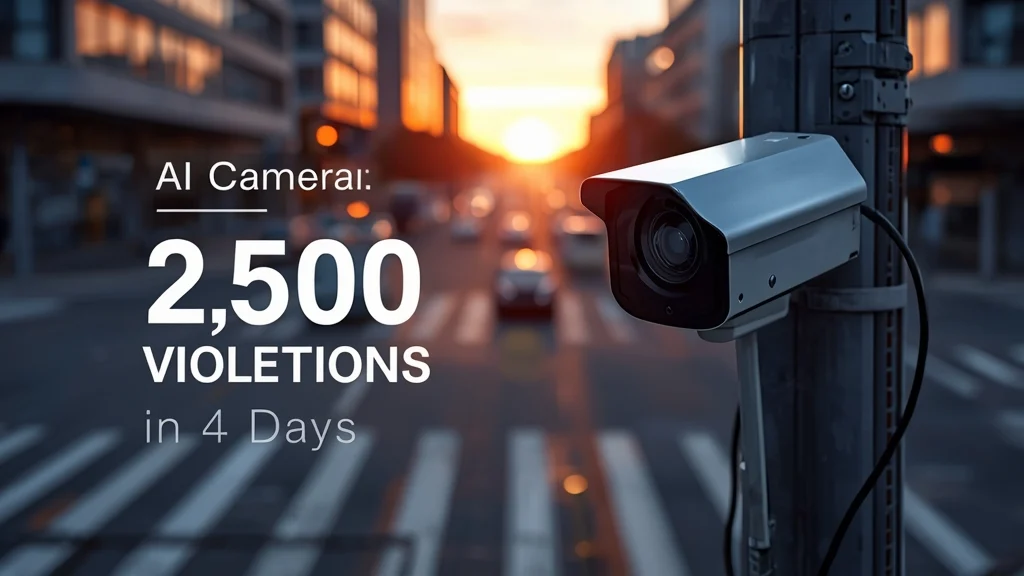
AI traffic camera logged 2,500 violations in four days in Greece, showing smart road enforcement’s impact. Learn how technology boosts safety. Read more.
In a striking demonstration of how artificial intelligence is reshaping road safety, a single AI‑powered traffic camera in Athens recorded more than 2,500 traffic violations within just four days of operation. The pilot, part of a broader smart‑city initiative, underscores the speed and accuracy with which modern surveillance can identify breaches of the law.
Greek Pilot: Numbers That Speak Volumes
Deployed across eight test zones around the capital, the camera captured roughly 2,500 offenses in the first 96 hours. The system automatically captures high‑resolution images, timestamps each incident, logs the exact location, and transmits the data to a central processing hub for immediate review.
How AI Traffic Cameras Work
Unlike traditional red‑light cameras that rely on manual oversight, AI cameras use advanced image‑recognition algorithms to spot illegal behavior in real time. The technology can differentiate between a vehicle that runs a red light, exceeds the speed limit, or makes an illegal turn, and it stores clear evidence—including license‑plate numbers—without human intervention.
Parallel Success in Hanoi
Vietnam’s smart‑traffic control centre reported similar results. Over 1,800 AI cameras installed at key intersections captured nearly 400 violations during the first three days of operation. The rapid detection rates mirror the Greek experience and suggest a global shift toward automated enforcement.
What Types of Violations Are Detected?
- Red‑light running: By far the most common offense, accounting for the majority of recorded incidents.
- Speeding: Detected through calibrated frame‑rate analysis.
- Illegal lane changes and turns: Recognised by pattern‑recognition models trained on local traffic rules.
High‑resolution snapshots provide clear evidence for “cold” ticketing processes, allowing authorities to issue fines after the fact, which reduces the need for on‑site police stops.
Beyond Enforcement: Traffic Management Benefits
AI systems can also monitor overall traffic flow, flag congestion hotspots, and detect accidents as they happen. Real‑time alerts enable traffic managers to adjust signal timings, deploy emergency services faster, and keep commuters moving more efficiently.
Challenges and Controversies
While the technology promises greater safety, it raises questions about driver privacy, the cost of implementing and maintaining the systems, and the fairness of automated ticketing. Policymakers must balance the benefits of constant surveillance with the public’s right to privacy.
Looking Ahead
More cities across Europe, Asia, and North America are piloting similar AI‑driven solutions. As algorithms improve and hardware costs fall, AI traffic cameras are set to become a staple of modern urban infrastructure, delivering faster, more consistent enforcement while freeing police resources for higher‑impact tasks.
For drivers, the message is clear: adapt to smarter roads, and expect the eyes of technology to be watching.