

BYD’s shares fell 5% as January sales dropped 30%, triggering a wider Chinese EV stock sell‑off. Read the full analysis now.
Sharp Decline Triggers Market Turmoil
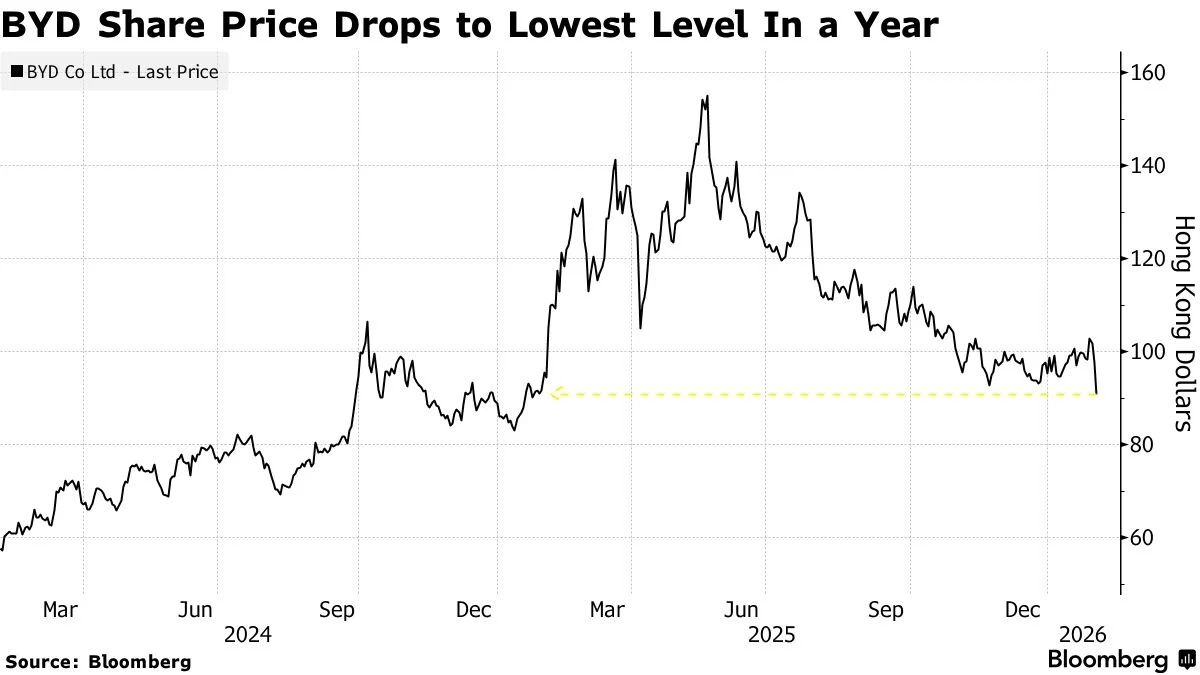
On Monday, BYD’s shares tumbled 5.1% in early trading on the Hong Kong exchange – the steepest slide in three months. The drop followed the company’s latest earnings release, which revealed that January 2026 vehicle deliveries fell 30% year‑on‑year, stoking fears of waning demand in the world’s biggest auto market.
Ripple Effect Across Chinese EV Makers
The sell‑off quickly spread to other pure‑play EV manufacturers. Xpeng and Nio both lost more than 6% after reporting weaker‑than‑expected sales for the first month of the year. Even larger, more diversified players felt the pressure: Geely, which sold roughly 60,000 more units than BYD in January, saw its stock slip 2.6%.
Why Demand Is Cooling
Analysts point to a “post‑subsidy” slowdown that has swept the Chinese auto sector. Many regional green‑car incentives expired at the end of December, pulling forward orders that would have otherwise filled 2025‑2026. In addition, the introduction of a new 5% purchase tax on electric vehicles has made consumers more cautious, especially for mid‑range models.

BYD’s Global Growth Strategy
Facing a soft domestic market, BYD – the world’s largest EV producer in 2025 – is banking on international expansion to bolster its valuation. Morgan Stanley’s Tim Hsiao notes that BYD’s export volume in January fell 25% versus the previous month, likely because shipments were accelerated to meet year‑end targets last year.
Nevertheless, BYD has set an ambitious goal to boost overseas deliveries by nearly 25% this year, targeting around 1.3 million vehicles abroad. Analysts expect the company’s total global sales to surpass 5 million units in 2026, up from 4.6 million in 2025, underscoring a long‑term growth trajectory despite short‑term volatility.
What Investors Should Watch
Investors need to monitor several key indicators: the pace of re‑launching subsidies, consumer reaction to the new tax regime, and BYD’s ability to capture market share in Europe, North America, and emerging markets. The broader Chinese EV sector’s recovery will likely hinge on policy adjustments and renewed consumer confidence.