
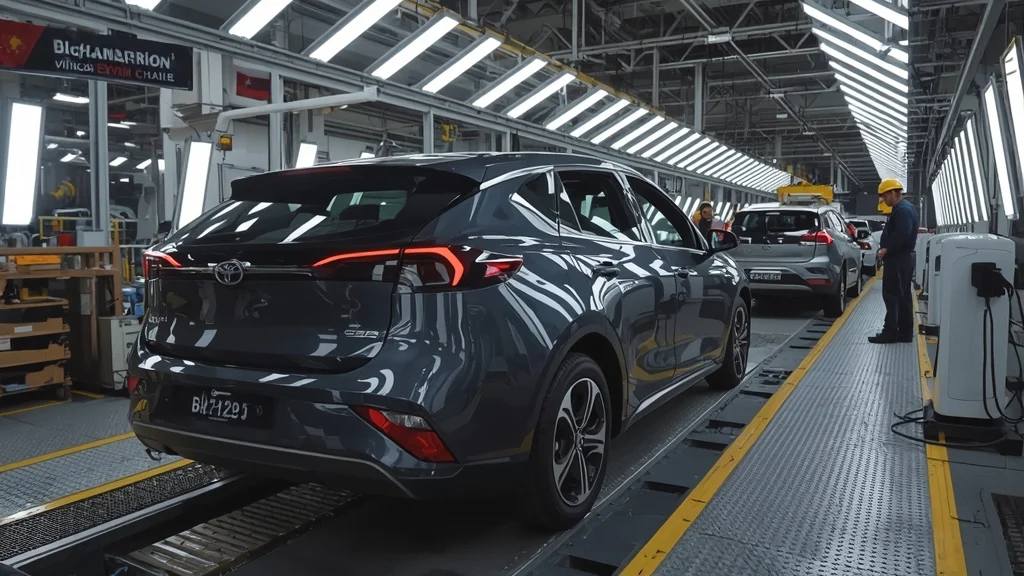
Cambodia celebrates the debut of its first locally assembled electric cars by BYD, marking a new era for Asian EV manufacturing. Discover the details now!
In a landmark move for Southeast Asian industry, Cambodia has handed over its first batch of electric cars assembled locally. The announcement came from Deputy Prime Minister Sun Chanthol, who highlighted the strategic shift away from imported vehicles toward a sustainable, homegrown automotive sector.
BYD’s New Assembly Plant in Phnom Penh
Following high‑level talks with BYD Group’s senior leadership, the Chinese electric‑vehicle giant confirmed that the first cars rolled off its Cambodia factory are now in the hands of customers. The plant, located in the Sihanoukville Special Economic Zone, broke ground in April 2025 with an investment of roughly US$32 million and a designed capacity of 10,000 vehicles per year.
BYD plans to establish a large‑scale “Automotive Hub” in Phnom Penh, complete with two service centres and an ambitious rollout of 200 charging stations across the country. Deputy Prime Minister Chanthol called the assembly line a “new source of national pride” and pledged continued support for BYD’s operations.
China’s eVTOL Taxi Ambitions
Meanwhile, China is taking another bold step in urban mobility by commercialising electric vertical take‑off and landing (eVTOL) aircraft as passenger taxis. Industry reports indicate that at least seven Chinese manufacturers are preparing eVTOL models capable of flying up to 1,000 metres altitude for short‑haul trips, aiming for a 2026 market launch.
Regulatory easing in megacities such as Shanghai, Shenzhen and Chongqing has opened low‑altitude airspace for commercial use. GOVY, a subsidiary of the GAC Group, has already secured around 2,000 pre‑orders valued at over CNY 3.3 billion. Experts acknowledge remaining legal and infrastructure challenges but agree that China’s early mover advantage could translate into the world’s first operational eVTOL taxi networks.
Changan Unveils the World’s First Sodium‑Ion Battery Bus
On the battery front, Changan Automobile announced a global strategy centered on sodium‑ion technology and introduced the Changan Nevo (Qiyuan) A06—the first mass‑produced passenger‑capacity electric vehicle powered by a sodium‑ion battery.
- Battery: CATL Naxtra 45 kWh, Cell‑to‑Pack (CTP) third‑generation design.
- Energy density: 175 Wh/kg.
- Range: over 400 km per charge.
- Cold‑weather performance: retains >90% capacity at –40 °C and operates down to –50 °C.
- Safety: passed rigorous fire‑ and explosion‑resistance tests.
The Naxtra battery’s stability and lower reliance on lithium position it as a promising alternative for future EVs. Changan plans to extend sodium‑ion powertrains across its brand portfolio, aiming to reduce raw‑material dependence while boosting overall vehicle efficiency.
What This Means for the Region
These three developments—Cambodia’s domestic EV assembly, China’s upcoming eVTOL taxi services, and Changan’s sodium‑ion breakthrough—signal a rapid acceleration of clean‑transport technologies across Asia. They also illustrate how strategic partnerships with Chinese innovators are reshaping manufacturing, urban mobility, and battery chemistry on a global scale.
Stay tuned as these projects move from prototype to everyday reality, driving the next wave of sustainable transportation.