
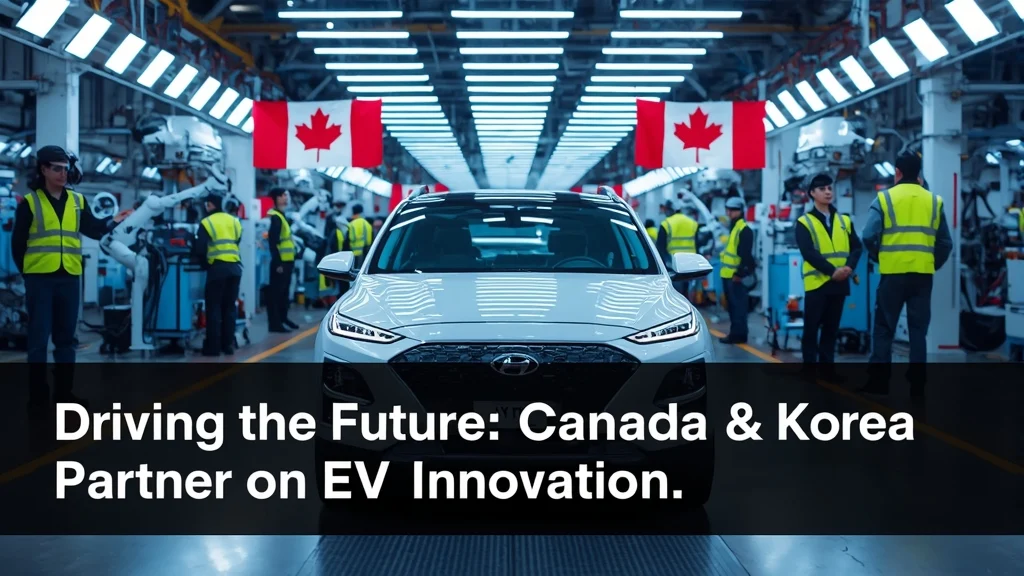
Canada eyes new deals with Korean car makers like Hyundai to produce electric vehicles locally—learn how this could boost the auto market. Read more now.
After clinching a major electric‑vehicle (EV) tariff reduction with China, Canada is setting its sights on another Asian powerhouse: South Korea. A fresh memorandum of understanding (MoU) signals that Canadian officials are actively courting Korean automakers—most notably Hyundai—to establish EV production facilities on North American soil.
Building on an Existing Free‑Trade Framework
Canada and South Korea have enjoyed a free‑trade agreement (FTA) since 2015, which eliminated tariffs on the majority of goods exchanged between the two nations. The newly signed MoU deepens that relationship, aiming to expand cooperation beyond traditional trade into high‑tech automotive manufacturing and battery supply chains.
Why Canada Is Looking South
Both countries are navigating the uncertainties of U.S. trade policy under the Trump administration. Diversifying economic partnerships has become a strategic priority, and Korea emerges as a natural ally with advanced EV technology and a robust automotive sector.
Targeted Opportunities for Korean Automakers
The immediate goal is to increase the presence of Korean‑made cars in Canada. Potential initiatives include:
- Setting up full‑scale EV assembly plants in Canada to serve local demand.
- Expanding production of electric‑powertrain components and battery packs.
- Collaborating on the development of a domestic battery material supply chain, from mining to recycling.
Hyundai in the Spotlight
Industry analysts note that Hyundai, in particular, could benefit from the Canadian invitation. The Korean automaker already boasts a strong market share—recording 2,298,257 vehicle deliveries in Canada for 2024, representing roughly 12 % of total sales.
Beyond Cars: A Submarine Tie‑In
Hyundai’s involvement isn’t limited to automobiles. Together with defence contractor Hanwha, the group is pitching a proposal to build and maintain 12 new submarines for the Royal Canadian Navy. If awarded, the deal could be worth up to $100 billion over a 30‑ to 40‑year timeframe, further cementing Korea’s strategic foothold in Canada.
Government Incentives and Industry Outlook
The Canadian government has recently emphasised the need to secure a home‑grown battery supply chain. New incentives aim to attract investment in battery manufacturing, raw‑material processing, and recycling of critical minerals.
Flavio Volpe, President of the Automotive Parts Manufacturers’ Association, says the timing is “perfect to build an EV plant in Canada that can serve Canadian consumers.” He adds that leveraging defence‑related investment could accelerate the growth of the domestic auto sector.
What This Means for the Future
If Korean automakers commit to local production, Canada could see a surge in EV availability, job creation in high‑tech manufacturing, and a more resilient supply chain less dependent on any single global power.
Stay tuned as Canada and South Korea negotiate the next steps in what could become a landmark partnership for the global automotive industry.