
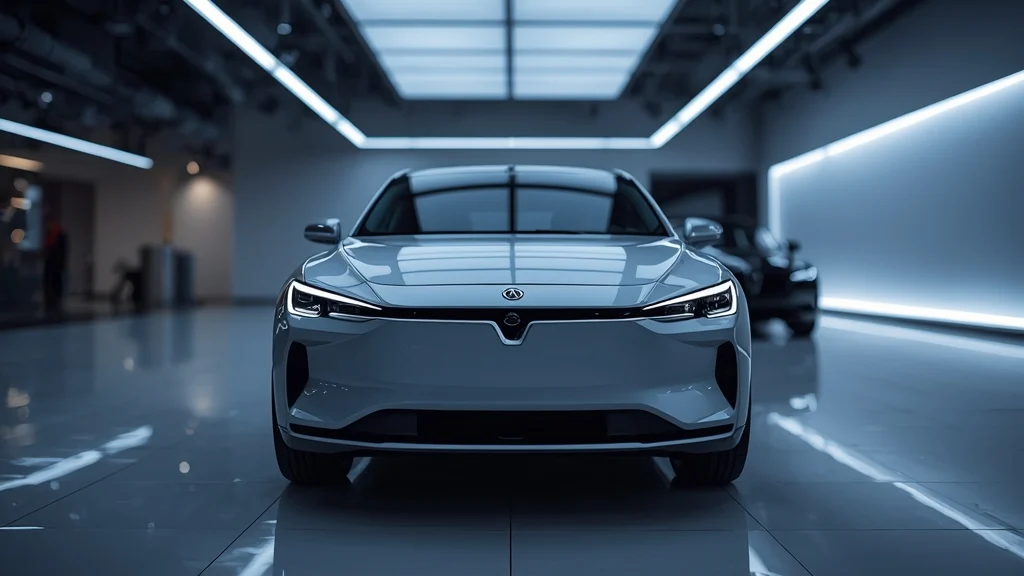
Chinese automakers are shifting from budget EVs to high-end luxury, challenging Porsche and BMW. Discover the new era of automotive value. Read more!
For years, Chinese automakers have been known for producing the world’s most technologically advanced and affordable electric vehicles (EVs). However, a significant strategic shift is underway. At the upcoming Beijing Auto Show, industry giants like Geely and Nio are pivoting toward the high-end market, aiming directly at the heart of German luxury strongholds such as Porsche, BMW, and Audi.
From a Price War to a Value War
The Chinese automotive sector has spent the last three years embroiled in a brutal price war. Now, that strategy is evolving. According to Bo Yu, a director at research firm JATO Dynamics, the industry is transitioning from a “price war” to a “war of value for money.”
The scale of this ambition is evident in the numbers. The Beijing Auto Show, opening April 25, is expected to showcase 181 new models and 71 concept cars, with a heavy emphasis on premium, full-size SUVs.
German Brands Lose Ground in China
This surge in domestic luxury offerings comes as traditional German manufacturers face a steep decline in the world’s largest auto market. Data from S&P Global Mobility reveals a sobering trend: cumulative sales for German automakers in China have plummeted by nearly 25%, dropping from 5.1 million vehicles in 2019 to 3.85 million.
Industry leaders including Mercedes, BMW, and Volkswagen subsidiaries—specifically Porsche and Audi—all reported sales declines in the first quarter of the year.
Case Study: The Zeekr 8X
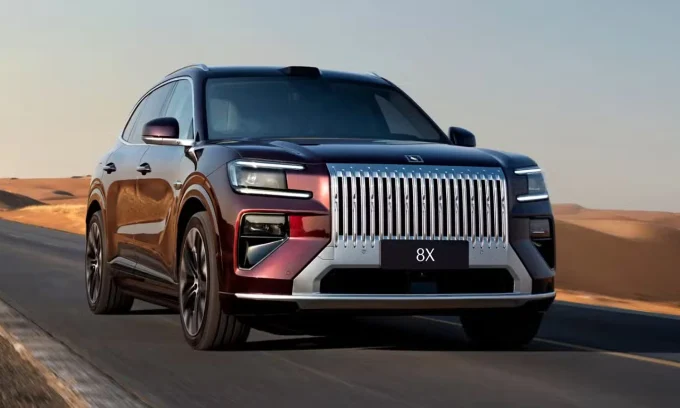
A prime example of this new luxury offensive is the Zeekr 8X, a high-end plug-in hybrid SUV from Geely. The 8X isn’t just about luxury; it’s about futuristic utility. Key features include:
- Advanced Safety: The vehicle can tilt slightly to the side before a side-impact collision to better protect passengers.
- Intelligent Parking: In tight spaces, the driver can simply wave, and the car will autonomously maneuver out to make boarding easier.
- Aggressive Pricing: With a starting price under $53,000, the 8X presents a staggering contrast to the Porsche Cayenne (approx. $135,000) and the BMW M5 (approx. $205,000).
“This is the new king of the street,” declared Geely CEO Gan Jiayue during a recent event in Ningbo.
A “Warning Shot” to Detroit and Beyond
The ambition doesn’t stop at German borders. Tu Le, Managing Director of Sino Auto Insights, suggests that the push into large luxury SUVs is a “warning shot” to American manufacturers like General Motors, Ford, and Stellantis—companies that have long relied on high-margin SUVs as their primary profit engines.
While U.S. consumers cannot currently purchase Chinese vehicles, experts predict this could change, leaving the “golden goose” of Detroit increasingly vulnerable.
Changing Consumer Psychology
The rise of domestic luxury is driven by a fundamental shift in Chinese demographics and tastes. According to Cui Dongshu of the China Passenger Car Association (CPCA), the average age of the Chinese car buyer has risen from 30 to over 40. These buyers are seeking larger, more premium family vehicles over entry-level models.
Furthermore, younger buyers are less impressed by the long-standing heritage of European brands. They are instead drawn to the cutting-edge software and tech-centric interiors of domestic EVs. As JATO Dynamics noted, “German brands are stuck in the past, while Chinese consumers want to embrace the future.”
The Global Outlook
While the disruption in China is clear, the global impact remains to be seen. Automotive consultant Felipe Munoz notes that while it was unimaginable five years ago that Chinese luxury cars would outperform German ones, the tide has turned domestically.
However, the European market remains a tougher nut to crack. “In Europe, German luxury brands are the benchmark for quality. That will be very difficult to change,” Munoz added.