
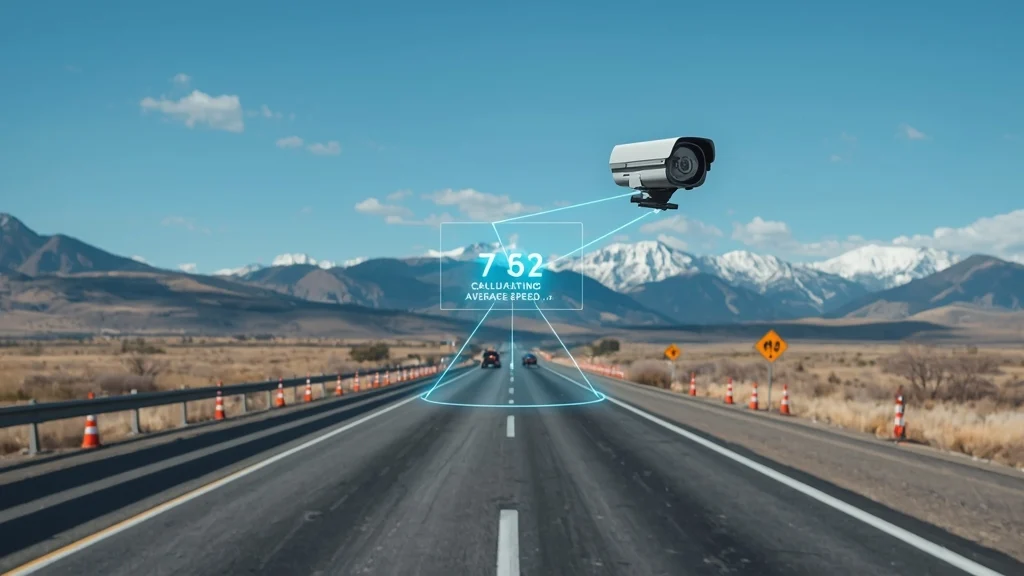
Colorado introduces AVIS average speed cameras to stop ‘brake-and-zoom’ drivers. Learn how they work and how to avoid fines. Read more!
For years, “speed demons” in Colorado have relied on a simple trick: slam on the brakes the moment they spot a speed camera, then accelerate back to high speeds once they’ve passed it. However, that era of gaming the system is officially over.
The state has deployed the Automated Vehicle Identification System (AVIS), a sophisticated network of cameras that is making popular navigation apps like Waze almost obsolete on several key highway stretches. Unlike traditional cameras, AVIS doesn’t just look at a single moment in time—it looks at the whole journey.
What Makes AVIS Different from Traditional Speed Cameras?
Most drivers are familiar with point-based speed cameras. These devices capture your speed at one exact location; if you are over the limit at that split second, you get a ticket. AVIS operates on an entirely different logic: average speed calculation.
Instead of a single snapshot, the AVIS network uses multiple cameras strategically placed along a stretch of road. Here is how the process works:
- Entry Point: The system records the exact time a vehicle passes the first camera.
- Exit Point: The system records the time the same vehicle passes a second camera further down the road.
- The Calculation: By dividing the distance between these two points by the time taken to travel it, the system determines the vehicle’s average speed.
If your average speed exceeds the limit by 10 mph (approximately 16 km/h) or more, a citation is automatically triggered, regardless of whether you slowed down right before the camera.

The Cost of Speeding: Fines and Penalties
The financial sting of these new cameras is immediate. Each violation carries a $75 fine. One of the most critical aspects of this system is that the ticket is sent directly to the registered owner of the vehicle, regardless of who was behind the wheel at the time of the infraction.
On the bright side, these automated violations currently do not result in points being added to the driver’s license, making them more of a financial penalty than a legal threat to one’s driving privileges.
Why Now? Safety in Construction Zones
The rollout of AVIS follows a 2023 change in Colorado law that granted law enforcement broader authority to use automated systems. After a trial period consisting of warning letters to educate the public, actual fines began rolling out late last year.
A primary focus for these cameras is construction zones. By ensuring drivers maintain a steady, legal speed, the state aims to drastically reduce accidents and protect road workers who are often put at risk by erratic braking and acceleration patterns.
A New Era of Traffic Surveillance
Some critics have compared this system to a “panopticon”—a model of total surveillance where the driver is always being watched, not just at specific checkpoints. This shift marks a significant evolution in how technology is used to govern road behavior.
The message to motorists is clear: the days of relying on app alerts to “dodge” cameras are gone. The only foolproof way to avoid a $75 ticket in Colorado is to maintain a consistent, legal speed throughout your entire trip.